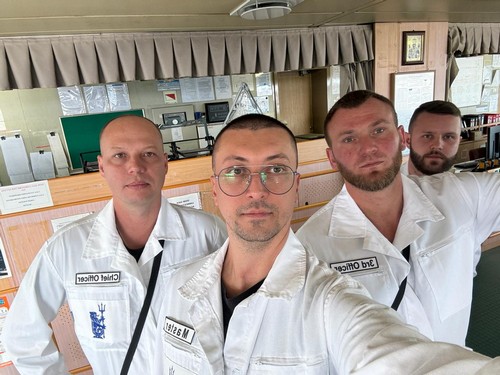
Qualified seafarers. Effective crew management. Reliable vessel operations.
Trident Maritime provides crew management for shipowners requiring qualified seafarers, dependable crew planning and disciplined control of employment, certification, travel, payroll and welfare matters.
Our role extends beyond filling vacancies. We build each crew around the vessel type, rank structure, trading pattern, technical condition and operational requirements. We then manage the employment cycle from selection and document verification through mobilisation, service onboard, performance review and relief.
Crew management can be provided as a standalone service or integrated with Technical Ship Management under a full-management agreement.
Trident Maritime coordinates the complete crewing cycle so that competence, certification, continuity and vessel requirements remain aligned before joining and throughout service onboard.
Effective crew management begins before recruitment.
Trident Maritime reviews the vessel's Minimum Safe Manning Document, Flag State requirements, vessel type, machinery, cargo operations, trading area, work schedule and owner's operating standards. We then develop the required rank structure and crew plan.
The agreed scope may include:
Minimum safe manning is the statutory baseline. The practical manning plan must also reflect the vessel's workload, maintenance demands, cargo operations and intended trade.

A valid certificate confirms eligibility for a rank. It does not, by itself, establish that a candidate is suitable for a particular vessel.
Trident Maritime applies a structured selection process based on rank, experience, competence, conduct and vessel-specific requirements.
Depending on the position, the process may include:
Selection decisions are based on documented requirements and the information available at the time. Material gaps or limitations are identified before appointment.
Certification control must begin before travel is booked.
Trident Maritime reviews the documents required for the seafarer's rank, duties, vessel and Flag. This helps prevent avoidable joining delays, non-compliance and manning gaps.
Document control may include:
The issuing authority, Flag State and other competent bodies retain responsibility for recognising, endorsing and validating seafarer certification.
Crew competence must match the work the vessel will actually perform.
Trident Maritime considers vessel type, cargo, machinery, automation, trading pattern and the duties assigned to each rank. Where a position requires experience that is not demonstrated by certificates alone, this is addressed through selection, assessment, familiarisation, supervised service or additional training.
Vessel-specific requirements may include:
The objective is to place people who can perform the assigned role safely - not simply people who meet the minimum documentary requirement.

A crew change is a coordinated operational event involving the vessel, ports, agents, immigration authorities, airlines and the seafarers concerned.
Trident Maritime plans crew movements around the vessel schedule, joining requirements and applicable travel restrictions.
The scope may include:
Travel is arranged only after the seafarer's readiness, documentation and joining requirements have been checked within the agreed process.
Clear employment terms protect both the seafarer and the vessel's operation.
Where included in the management scope, Trident Maritime coordinates the employment documentation and administration required by the applicable Flag State, national law, collective bargaining arrangements and Maritime Labour Convention requirements.
This may include:
The employing entity, applicable law and contractual responsibilities are defined before mobilisation.
Seafarers must be paid accurately, transparently and in accordance with their employment terms.
Subject to the agreed scope, Trident Maritime can administer:
Payroll procedures are aligned with the relevant employment agreements, Flag requirements, applicable collective arrangements and owner-approved wage structure.
A seafarer must be medically fit for the assigned duties and working environment.
Trident Maritime coordinates the required pre-employment medical process and checks that medical certification is valid for the proposed service.
Depending on the vessel and appointment, the process may include:
Medical examinations and fitness decisions remain with the appropriately authorised medical practitioner.
Mobilisation is not complete when the seafarer reaches the gangway.
Joining personnel must understand their duties, emergency responsibilities, reporting lines and the vessel-specific systems relevant to their work.
The onboarding process may include:
The Master and senior officers remain responsible for effective onboard familiarisation and the safe assignment of duties.
Training should address the seafarer's actual responsibilities and the risks of the vessel - not simply produce additional certificates.
Trident Maritime reviews statutory, company, vessel-specific and developmental training requirements as part of crew planning.
Training may include:
Training providers, courses and certificates are selected or accepted according to the applicable authority, Flag State and company requirements.

Performance management must identify strengths, address concerns and support better appointment decisions.
Trident Maritime can administer a structured appraisal process covering professional competence, safety behaviour, leadership, communication, teamwork, maintenance standards and conduct onboard.
The process may include:
Serious performance or conduct concerns are reviewed with the relevant facts, contractual requirements and applicable employment procedures.
Vessel knowledge is lost when crew changes are poorly planned or key personnel rotate without continuity.
Trident Maritime seeks to maintain stable officer teams and retain suitable seafarers where performance, availability and the owner's requirements allow.
The management approach may include:
Retention is not pursued at the expense of standards. Re-employment remains subject to performance, conduct, competence, medical fitness and operational requirements.
A compliant work-and-rest record does not automatically prove that fatigue risk is under control.
Trident Maritime supports the vessel in maintaining applicable hours-of-work or hours-of-rest arrangements and reviewing the factors that may affect fitness for duty.
This may include:
The Master retains authority and responsibility for the safe organisation of work onboard.
Crew welfare is an operational responsibility, not a marketing statement.
Trident Maritime coordinates welfare and employment matters within the agreed scope and supports the Master in maintaining appropriate living and working conditions onboard.
This may include:
Complaints and sensitive matters are managed through the applicable onboard, company and legal procedures.
Crew management must satisfy multiple connected requirements: competence, certification, employment, manning, working conditions and onboard records.
Trident Maritime maintains the crew-management controls included in the agreed scope with reference to:
Regulatory and employment requirements vary by Flag, employing entity, seafarer nationality and trade. These interfaces are reviewed when the crew-management structure is established.
Crew decisions depend on complete, current and accessible records.
Trident Maritime can maintain controlled personnel files and planning information covering:
Personal information is handled according to applicable data-protection requirements and authorised access arrangements.
Crew cost should be visible before it becomes a budget variance.
Trident Maritime prepares and monitors crew budgets based on the agreed manning level, wage structure, rotation, travel requirements, training needs and applicable employment costs.
Reporting may include:
Cost control is applied without compromising certification, safe manning, employment obligations or necessary crew changes.
Illness, injury, family emergencies, visa issues or unexpected operational changes can require immediate crew action.
Within the agreed scope, Trident Maritime can coordinate:
Medical, legal, insurance and immigration decisions remain with the responsible authorities and appointed specialists.
Crew management and technical management should operate to the same vessel priorities.
When Trident Maritime provides both services, crew planning, maintenance requirements, safety performance, inspection readiness and budget decisions are coordinated within one management structure.
This allows:
For maintenance, Class, dry-docking, procurement, environmental compliance and full-management arrangements, see Technical Ship Management.
A continuing service covering crew planning, recruitment, employment administration, certification, payroll, travel, training, welfare, appraisals, relief and owner reporting.
Crew management integrated with technical, safety, environmental, procurement and vessel-operation functions under an agreed full-management structure.
Recruitment and mobilisation for agreed ranks or departments, subject to a clearly defined responsibility for employment, payroll, travel, training and ongoing administration.
Planning and deployment of the crew required for a newly acquired vessel, change of manager, reactivation or other management transition.
Crew planning for repair periods, dry-docking, delivery voyages, reactivation or another time-limited operational requirement.
The scope, employing entity, authority, costs and division of responsibility are agreed before recruitment or mobilisation begins.
Trident Maritime provides crew-management services for:
Each proposal is developed around the vessel, Flag, rank structure, trading pattern, technical systems, cargo requirements, operating schedule and owner's preferred management model.
The owner remains informed and retains the approvals defined in the crew-management agreement.
Trident Maritime reports material personnel matters with the relevant facts, available options, cost implications and recommended action.
Owner reporting may include:
The reporting structure and approval thresholds are agreed at the start of the service.

Candidates are assessed against the position, vessel type, machinery, cargo operations and intended trade - not only their rank and availability.
Certification, employment records, travel readiness, appraisals and crew rotations are maintained within a defined management process.
Crew requirements are coordinated with the Master, Chief Engineer, technical management team and owner.
The employing entity, payroll arrangements, insurance, travel, welfare and repatriation responsibilities are defined before mobilisation.
Trident Maritime can coordinate crew planning from acquisition and takeover through routine operation, dry-docking, management transition or vessel reactivation.
Full crew management can include manning planning, recruitment, interviews, certification checks, Flag documentation, employment administration, payroll, travel, training, appraisals, welfare, crew changes, repatriation and owner reporting. The final scope is defined in the crew-management agreement.
Candidates are reviewed against the rank, vessel type, machinery, cargo operations, trading requirements and owner's criteria. The process may include employment-history review, technical and behavioural interviews, reference checks, document verification and assessment of previous appraisals.
Trident Maritime checks the certificates and documentary evidence required for the position and coordinates Flag endorsements where applicable. The issuing and recognising authorities remain responsible for the validity and acceptance of certificates.
Yes, subject to the vessel, Flag, required rank structure, mobilisation schedule and agreed employment arrangements. Trident Maritime can also provide crew management for selected ranks or departments under a clearly defined scope.
Yes. Crew management can be provided as a standalone service while the owner or another appointed manager retains technical responsibility.
Yes. Trident Maritime can integrate crew management with technical management, safety, procurement, compliance, accounting and vessel-operation functions under an agreed full-management structure.
Payroll and crew travel can be included within the agreed management scope. Payroll administration may cover wage calculations, overtime, leave pay, allotments, crew accounts and final settlements. Trident Maritime’s in-house travel desk coordinates cost-effective travel arrangements, including flights, accommodation, visas, ground transport, port transfers and repatriation. Crew movements are planned around vessel schedules, joining requirements and operational priorities, with close control of routing and travel expenditure.
Performance can be managed through structured appraisals, senior-officer reviews, training plans, improvement actions, promotion assessments and documented re-employment decisions.
Yes. Trident Maritime can develop the manning plan, recruit and mobilise the crew, coordinate Flag documentation, arrange travel and support delivery, takeover and initial vessel operation.
Trident Maritime normally requires the vessel particulars, Flag, Minimum Safe Manning Document, required crew complement, trading area, proposed takeover date, wage structure or applicable collective agreement, preferred rotation and the services the owner wishes to include.
Send Trident Maritime the vessel particulars, Flag, required manning structure, trading profile, mobilisation date and requested service scope. We will review the requirements and prepare a structured crew-management proposal.