Technical Ship Management
Safe, compliant and technically reliable vessel operation.
Trident Maritime provides full technical ship management for owners who require safe operation, reliable machinery, regulatory readiness and disciplined control of operating expenditure.
We manage the vessel as an operating asset. That means maintaining its physical condition, keeping Class and statutory matters under control, supporting the crew, planning expenditure and resolving technical issues before they become operational disruption.
The owner retains strategic and commercial control. Trident Maritime takes responsibility for the agreed management scope, maintains clear reporting lines and provides the technical, marine, crewing and administrative structure required for dependable vessel operation.
One Management Structure. Every Operating Priority.
- 01Takeover and Technical Baseline
- 02Safe and Compliant Operation
- 03Maintenance and Reliability
- 04Budget and Procurement Control
- 05Performance and Owner Reporting
From the first condition review to daily operation, dry-docking and long-term asset planning, Trident Maritime keeps technical condition, compliance, people and expenditure within one coordinated management framework.
Full Technical Management
Technical management must keep the vessel safe, compliant, operationally available and technically prepared for its intended trade.
Trident Maritime coordinates day-to-day vessel management through the Master, Chief Engineer, crew, technical superintendents, marine personnel, Class, Flag, approved suppliers and the owner's appointed counterparties.
Subject to the agreed management scope, services may include:
- Vessel takeover and entry into management
- Planned and corrective maintenance
- Machinery performance and reliability control
- Defect reporting, prioritisation and close-out
- Class and statutory survey planning
- Dry-docking, repairs and major technical projects
- Spares, stores and technical procurement
- Budget preparation and OPEX control
- Safety, quality and environmental management
- Crew management and marine personnel administration
- Emergency response and incident coordination
- Environmental performance and emissions compliance
- Technical accounting and owner reporting
- Vessel inspections and superintendent attendance
- Support for Port State Control, Flag, Class and vetting requirements
Every vessel enters management under an agreed scope, authority structure, operating budget and reporting format.
Planned Maintenance and Vessel Reliability
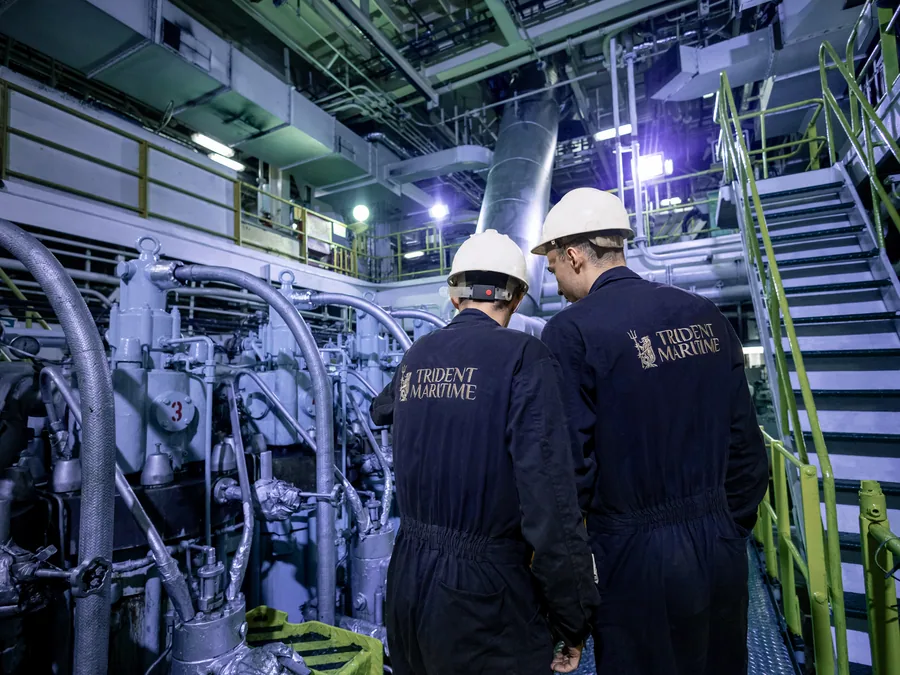
A Planned Maintenance System should provide control - not merely record completed jobs.
Trident Maritime reviews machinery histories, running hours, maintenance intervals, critical-equipment requirements, recurring defects, spare-parts availability and outstanding work. Maintenance is then planned around safety, Class requirements, maker recommendations, vessel condition and the operating schedule.
Our approach includes:
- PMS administration and maintenance planning
- Critical-equipment identification and control
- Machinery condition and performance monitoring
- Defect-list management and technical follow-up
- Root-cause review of recurring failures
- Lubricating-oil, fuel and other condition-monitoring results
- Maker and service-engineer coordination
- Maintenance-history and completion-evidence control
- Planning of overhauls, renewals and lifecycle expenditure
The objective is not to eliminate every technical issue. It is to identify exposure early, make informed decisions and prevent manageable defects from becoming avoidable failures, delays or off-hire.
Dry-Docking, Repairs and Major Projects
Dry-docking requires early preparation, an accurate work scope and strict control of additions.
Trident Maritime can manage the process from initial planning through yard completion, including:
- Condition and records review
- Dry-dock and repair-specification preparation
- Class and statutory survey integration
- Shipyard tendering and technical comparison
- Budget development and expenditure approval controls
- Planning of spares, materials, makers and service attendance
- Shipyard, Class, Flag and contractor coordination
- Progress, quality and cost monitoring
- Management of additional work and technical changes
- Testing, trials, documentation and close-out
- Final account review and outstanding-items control
Technical decisions are assessed against safety, compliance, reliability, cost, available time and the vessel's intended operating profile.
Class, Flag and Statutory Compliance
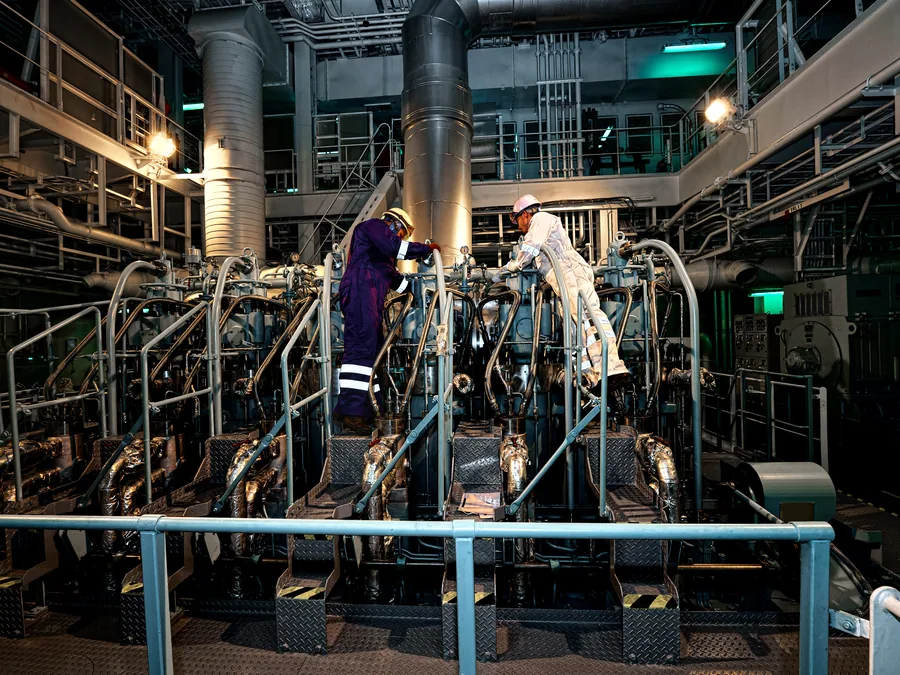
A vessel must remain ready for survey, inspection and trade - not prepared only when a deadline approaches.
Trident Maritime maintains oversight of the vessel's Class and statutory position, including survey windows, certificates, recommendations, conditions of class, exemptions and outstanding technical matters.
The management process may include coordination relating to:
- SOLAS, MARPOL and applicable statutory conventions
- ISM Code and Safety Management System requirements
- ISPS Code and ship-security arrangements
- MLC, 2006 requirements within the agreed management scope
- Load Line and tonnage certification
- Ballast Water Management requirements
- Anti-fouling and pollution-prevention requirements
- Flag State and recognised-organisation requirements
- Port State Control preparation and deficiency close-out
- Class surveys, audits and technical submissions
- Change of Flag, Class, ownership or management
Class, Flag and statutory authorities retain their respective approval, survey and certification functions. Trident Maritime prepares the vessel, coordinates the required work and maintains follow-up until matters are properly closed.
Safety, Quality and Environmental Management
Safe operation depends on whether the management system is understood and applied onboard.
Trident Maritime maintains a structured ship-to-shore framework covering operational procedures, risk control, reporting, audits, corrective actions and management review.
The agreed scope may include:
- Safety Management System implementation
- Risk assessments and permit-to-work controls
- Navigational and engineering procedures
- Emergency preparedness and drills
- Incident, near-miss and non-conformity reporting
- Investigation and corrective-action follow-up
- Internal audits and management reviews
- Environmental procedures and pollution-prevention controls
- Management of Change
- Safety meetings and shipboard communication
- Contractor and service-provider controls
- Performance monitoring and improvement actions
The objective is a working management system that supports decisions onboard and ashore - not a collection of documents maintained only for audit purposes.
Port State Control, Vetting and Inspection Readiness
Operational readiness is built through daily standards, not last-minute preparation.
Trident Maritime monitors technical condition, certification, records, housekeeping, onboard procedures and the close-out of previous findings. Where required by vessel type and trade, the management plan can incorporate preparation for Port State Control, charterer inspections, terminal requirements, SIRE 2.0 or RightShip-related assessments.
Preparation may include:
- Review of previous deficiencies and observations
- Vessel condition and documentation checks
- Critical-equipment and emergency-system verification
- Crew familiarisation and interview readiness
- Navigation, cargo and engineering record review
- Corrective-action planning and close-out evidence
- Superintendent attendance and focused pre-inspection review
No manager can guarantee an inspection outcome. Trident Maritime can ensure that risks are identified, responsibilities are assigned and the vessel is prepared on the basis of its actual condition and operating requirements.
Technical Procurement and Supply Control
Procurement must provide the correct item, from an acceptable source, when the vessel needs it - and at a commercially responsible cost.
Trident Maritime coordinates technical purchasing for spares, stores, consumables, repairs and services within the approved budget and authority structure.
The process may include:
- Purchase requisition review
- Technical specification and part-number verification
- Supplier and service-provider selection
- Competitive quotation and comparison
- Owner approval at agreed expenditure levels
- Order placement and delivery coordination
- Certification and quality-document review
- Logistics, customs and vessel delivery
- Invoice verification and cost allocation
- Claims, shortages and non-conformity follow-up
- Critical-spares and minimum-stock monitoring
Price is considered together with suitability, quality, lead time, certification, lifecycle cost and operational risk.
OPEX, Budgets and Financial Control
A technically sound vessel requires realistic expenditure planning and transparent control.
Trident Maritime prepares an operating budget based on the vessel's condition, trading profile, maintenance plan, survey schedule, crew requirements and known technical exposure.
Financial control may include:
- Annual OPEX budget preparation
- Monthly and year-to-date expenditure reporting
- Budget-versus-actual analysis
- Accruals and committed-cost visibility
- Invoice review and allocation
- Cash-call planning
- Repair and dry-dock budget control
- Forecasting of major maintenance and CAPEX
- Variance explanation and corrective action
- Periodic budget review with the owner
Budget discipline does not mean deferring necessary maintenance. Trident Maritime identifies where expenditure is required, where it can be planned more effectively and where a technical decision should be escalated to the owner.
Crew Management Within Full Ship Management
The vessel's condition and performance depend on the people operating it.
Where crew management forms part of the agreed service, Trident Maritime coordinates the personnel required to operate the vessel safely and in accordance with Flag State, STCW and MLC requirements.
The scope may include:
- Crew planning and officer continuity
- Recruitment, screening and selection
- Qualification and certificate verification
- Flag State endorsements and documentation
- Medical and pre-employment requirements
- Employment administration and payroll
- Travel, visas and joining arrangements
- Appraisals and performance follow-up
- Training and vessel-specific familiarisation
- Crew-change planning
- Welfare and onboard personnel matters
- Relief planning and retention management
Technical and crew management are connected through common operating priorities, maintenance expectations, safety procedures and vessel-specific competence requirements.
Related Service
For a detailed standalone crewing scope, see Crew Management.
Environmental and Energy-Performance Management
Environmental compliance now affects technical operation, voyage decisions, fuel strategy, operating cost and the vessel's future trading position.
Trident Maritime integrates applicable environmental and energy-efficiency requirements into the vessel's management plan. Depending on vessel type, size, trade and contractual responsibility, this may include:
- MARPOL compliance and pollution-prevention controls
- IMO Data Collection System reporting
- Ship Energy Efficiency Management Plan administration
- EEXI-related technical documentation and controls
- Carbon Intensity Indicator monitoring and review
- Corrective-action planning for CII performance
- Fuel-consumption and emissions-data quality control
- EU MRV monitoring and reporting coordination
- EU ETS operational data and compliance administration
- FuelEU Maritime monitoring and reporting
- Ballast Water Management System operation and records
- Ozone-depleting substances and refrigerant controls
- Garbage, sludge, sewage and waste-management records
- Energy-efficiency measures and technical upgrade evaluation
Compliance responsibilities, commercial cost allocation and authority to purchase or surrender emissions allowances are defined with the owner and relevant counterparties under the management and chartering arrangements.
EU ETS Management
EU ETS exposure begins with accurate vessel data and a clearly defined responsible entity.
Where included in the agreed scope, Trident Maritime can coordinate the operational and administrative work required for maritime EU ETS compliance, including:
- Confirmation of the responsible shipping company and agreed mandate
- Monitoring-plan and THETIS-MRV administration
- Collection and validation of voyage and emissions data
- Ship-level and company-level reporting coordination
- Liaison with accredited verifiers
- Management of company or vessel changes
- Preparation of verified emissions information
- Allowance-exposure reporting to the owner
- Coordination of Maritime Operator Holding Account requirements
- Support for the agreed allowance-procurement and surrender process
- Maintenance of records relevant to cost allocation and reimbursement
The entity legally responsible for EU ETS compliance remains responsible for the surrender of allowances. The respective duties of the registered owner, ISM Company, charterer and other parties must therefore be stated clearly in the applicable agreements.
FuelEU Maritime Management
FuelEU Maritime requires more than annual fuel totals. It depends on reliable fuel, voyage and energy data, verified reporting and early visibility of the vessel's compliance balance.
Where applicable and included in the management scope, Trident Maritime can coordinate:
- FuelEU monitoring-plan administration
- Fuel and energy-consumption data collection
- Well-to-wake emissions-factor records
- Fuel certification and supporting documentation
- Voyage, berth and onshore-power data
- FuelEU database administration
- Preparation and submission of the annual FuelEU report
- Liaison with the appointed verifier
- Compliance-balance monitoring
- Evaluation of borrowing, banking or pooling options
- Exposure reporting and corrective-action planning
- Technical and operational measures to improve compliance performance
- FuelEU Document of Compliance follow-up
Final compliance strategy is agreed with the owner and relevant commercial parties, taking account of the vessel's trade, fuel availability, chartering arrangements, technical limitations and projected compliance cost.
Vessel Performance and Fuel Efficiency
Performance management should distinguish between technical condition, operating practice, weather, speed orders and the vessel's commercial employment.
Trident Maritime can monitor available operational and machinery data to identify developing performance concerns and practical improvement opportunities.
The work may include:
- Fuel- and lubricating-oil consumption monitoring
- Main and auxiliary engine performance review
- Speed-and-consumption trend analysis
- Hull and propeller performance
- Fouling and cleaning requirements
- Trim and operating-condition review
- Machinery tuning and maintenance priorities
- CII trajectory and energy-efficiency measures
- Evaluation of coatings, equipment upgrades and energy-saving devices
- Comparison of reported performance with available technical baselines
Any performance conclusion is stated with the relevant data quality, operating conditions and limitations. Charter-party performance disputes and commercial claims remain with the owner and its appointed commercial or legal advisers.

Emergency Response and Incident Management
When a serious technical or marine incident occurs, clear authority and disciplined communication are essential.
Trident Maritime maintains emergency-response arrangements for managed vessels and coordinates the applicable shipboard and shore-side actions within the agreed scope.
This may include:
- Immediate technical and marine assessment
- Communication with the Master and vessel team
- Activation of emergency procedures
- Coordination with the owner, Class, Flag and relevant authorities
- Maker, repairer, salvor or specialist attendance
- P&I, Hull and Machinery insurer communication
- Evidence preservation and incident records
- Operational risk controls
- Recovery and repair planning
- Investigation, root-cause review and corrective actions
- Follow-up until the vessel reaches an agreed safe condition
Legal, insurance, casualty-response and salvage functions remain with the appropriately appointed parties.
Vessel Takeover and Entry into Management
A controlled takeover establishes the foundation for the vessel's future operation.
Before entry into management, Trident Maritime defines the vessel's condition, outstanding obligations, required resources and initial operating priorities.
The takeover plan may include:
- Class, Flag and statutory status review
- Certificate and survey verification
- Technical condition assessment
- PMS, manuals and technical-record handover
- Defect, repair and maintenance review
- Crew mobilisation and familiarisation
- Critical-spares, stores and consumables assessment
- Safety Management System implementation
- Budget and initial cash-flow planning
- Insurance and stakeholder information requirements
- EU ETS, MRV and FuelEU responsibility transfer
- Delivery attendance and physical handover
- A prioritised plan for the first operating period
Where Trident Maritime has supported the acquisition, due-diligence findings can be transferred directly into the takeover plan, PMS, budget and repair priorities.
Related Service
For acquisition-stage review, inspection, CAPEX exposure and delivery planning, see Vessel Acquisition & Technical Due Diligence.
Owner Visibility and Reporting
Delegating management should not mean losing visibility of the vessel.
Trident Maritime provides structured reporting designed around the information the owner needs to review condition, performance, expenditure and risk.
Reporting may include:
- Technical status and superintendent reports
- Defect and critical-equipment status
- Class and statutory position
- Maintenance and repair progress
- Dry-dock and project reporting
- Safety, incident and inspection matters
- Crew status and personnel matters
- Procurement and committed expenditure
- OPEX performance and variance
- Fuel, emissions and environmental performance
- Decisions requiring owner approval
- Forward priorities and developing exposure
Material issues are reported with their operational significance, available options, expected cost basis and recommended action.
Management Built Around the Owner's Asset
Trident Maritime does not treat the management agreement as permission to operate without owner oversight.
At the start of the relationship, we define:
- The services included in the management scope
- The authority delegated to Trident Maritime
- Matters reserved for owner approval
- Budget and expenditure thresholds
- Reporting frequency and format
- Emergency decision procedures
- Regulatory and emissions responsibilities
- Commercial interfaces and charter-party responsibilities
- Performance expectations and review arrangements
This creates a practical division of responsibility: the owner retains control of the asset and commercial strategy, while Trident Maritime manages the agreed technical and operational functions.
Working with Owners and Their Commercial Counterparties
Trident Maritime's technical management role is distinct from chartering brokerage.
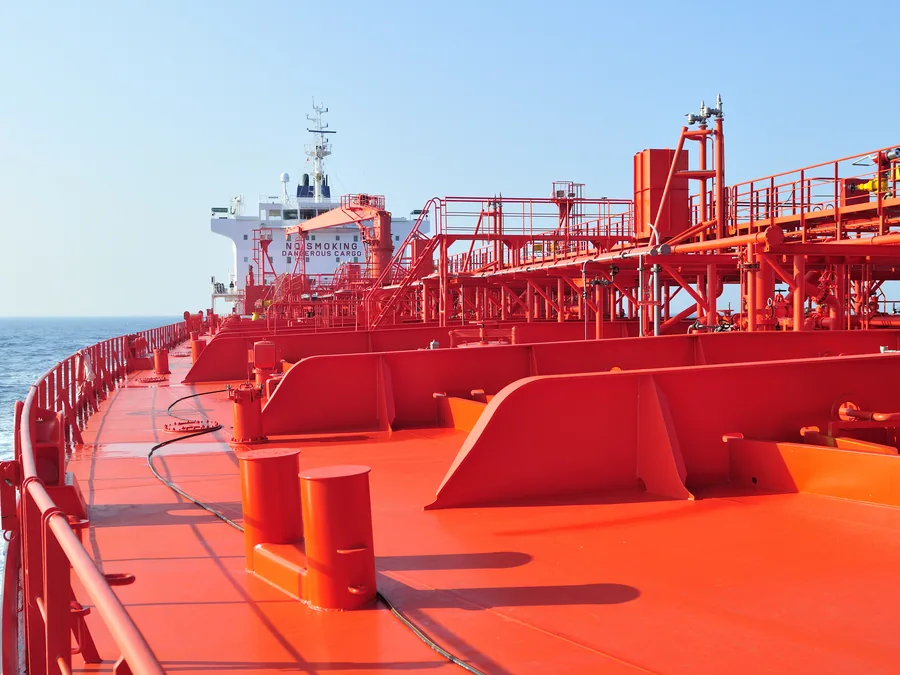
The owner and its appointed chartering brokers retain responsibility for vessel employment, market negotiations and fixture development. Trident Maritime provides the technical and operational input required to evaluate orders, prepare the vessel and execute the resulting voyage safely within the vessel's capabilities and regulatory limits.
We coordinate with owners, charterers, brokers, agents, terminals and other counterparties as required for vessel operation - without competing with the chartering broker's commercial role.
Management Options
Trident Maritime can structure the service around the owner's requirements and the responsibilities the owner wishes to delegate.
Full Ship Management
An integrated scope combining technical management, safety and environmental management, crew management, procurement, accounting, compliance and vessel-operation functions under an agreed management structure.
Technical Management
Management of the vessel's technical condition, maintenance, Class, statutory compliance, repairs, dry-docking, procurement, budgets and related operating matters.
Crew Management
A defined crewing scope covering recruitment, certification, employment administration, payroll, travel, training, welfare and crew planning.
Takeover and Management Transition
A structured mobilisation programme for a newly acquired vessel or a change of owner, manager, Flag or Class.
Project or Transitional Management
A time-limited management arrangement for vessel recovery, reactivation, repair, transition or another clearly defined operating requirement.
Vessel Types
Trident Maritime provides management services for:
- Tankers
- Gas carriers
- Bulk carriers
- Container vessels
Each proposal is developed around the vessel type, age, machinery, Flag, Class, trading pattern, crew requirements, present condition and intended management scope.
Why Owners Appoint Trident Maritime
Direct Technical Accountability
Owners receive clear responsibility, defined reporting and practical recommendations from people focused on the vessel's actual condition and operation.
Decisions Based on Evidence
Maintenance histories, inspections, machinery data, budgets and compliance records are used to establish priorities and support technical decisions.
Control Without Unnecessary Layers
Material matters are escalated clearly, with the available options, operational implications and cost exposure visible to the owner.
Continuity Across the Vessel Lifecycle
Trident Maritime can support acquisition review, takeover, technical operation, crewing, dry-docking, repair projects and management transitions within one coordinated structure.
A Management Scope That Is Clearly Defined
Authority, deliverables, limitations, costs and owner approvals are established before management begins.
Frequently Asked Questions
What is included in full ship management?
Full ship management can combine technical management, crew management, safety and environmental management, maintenance, procurement, accounting, regulatory compliance, dry-docking, emergency response and owner reporting. The final scope is defined in the management agreement.
Can Trident Maritime provide technical management without commercial management?
Yes. The owner can retain commercial control and continue working with its appointed chartering brokers. Trident Maritime manages the agreed technical and operational functions and provides the information required for safe fixture execution.
How does Trident Maritime control vessel operating expenditure?
Trident Maritime prepares an agreed OPEX budget, monitors actual and committed expenditure, reviews variances and reports forecast requirements. Material expenditure follows the approval levels established with the owner.
Does technical management include dry-docking?
Dry-docking planning and supervision can form part of the technical management scope. This may include specification preparation, yard comparison, budget control, Class coordination, attendance, additional-work management, trials and close-out.
Can Trident Maritime manage the vessel's crew?
Yes. Crew management can be included within full ship management or provided as a separately defined service, subject to the vessel's requirements and the agreed scope.
Does Trident Maritime manage EU ETS compliance?
Trident Maritime can coordinate EU ETS monitoring, reporting, verification and related administration where included in the agreed scope. The responsible entity and the arrangements for purchasing and surrendering allowances must be clearly agreed with the owner.
Does Trident Maritime manage FuelEU Maritime compliance?
Where applicable, Trident Maritime can coordinate FuelEU monitoring plans, data collection, annual reporting, verifier liaison, compliance-balance monitoring and evaluation of available compliance measures.
Can Trident Maritime take over a vessel from another manager?
Yes. Trident Maritime can plan and coordinate a management transition covering Class and Flag matters, certificates, PMS data, technical records, crew, spares, budgets, emissions responsibilities and delivery attendance.
Can Trident Maritime manage a newly acquired vessel?
Yes. Trident Maritime can begin with technical due diligence and pre-purchase assessment, continue through delivery and takeover, and then assume the agreed technical, crew or full management responsibilities.
How is the management proposal prepared?
The proposal is based on the vessel particulars, present condition, Class and Flag status, trading profile, crew requirements, current management arrangement and services requested. It defines the proposed scope, responsibilities, reporting structure, mobilisation requirements and management fees.
Put the Vessel Under Clear Technical Control
Send Trident Maritime the vessel particulars, present management status, Class, Flag, trading profile and required service scope. We will review the operating requirements and prepare a structured management proposal.