Marine Consultancy Services in 2026: An Owner's Guide
- What Are Marine Consultancy Services?
- How Do Regulatory Changes Drive Demand for Consultancy?
- Which Technical Projects Justify External Expertise?
- What Is the Role of Consultants in Vetting and Inspections?
- How Does Consultancy Support ISM, ISPS, and MLC Compliance?
- Choosing a Marine Consultancy Partner: Key Criteria
- Discuss Marine Consultancy Services with Trident Maritime
- Contact Trident Maritime
The IMO's Net-Zero Framework, agreed in April 2025, and mandatory SIRE 2.0 inspections have dramatically increased the compliance burden on in-house technical teams. This regulatory pressure is a key factor driving shipowners to engage external specialists for project-specific tasks where deep, current expertise is non-negotiable.
Marine consultancy services in 2026 provide shipowners with on-demand access to specialized expertise for ISM/ISPS audits, pre-purchase inspections, newbuilding supervision, and complex regulatory compliance. This allows operators of tankers, gas carriers, and bulkers to manage high-stakes projects without the fixed overhead of a full-time in-house specialist, ensuring assets remain compliant and commercially viable.
What Are Marine Consultancy Services?
Unlike full technical management, which involves the complete day-to-day operational oversight of a vessel, marine consultancy services are project-based. They provide targeted, independent expertise to address specific challenges in technical, operational, regulatory, or commercial domains. This can range from a two-day pre-purchase inspection to a two-year newbuilding supervision project.
Shipowners engage consultants to access a level of specialized knowledge that is often impractical or cost-prohibitive to maintain in-house. This is particularly true for small to medium-sized fleets. The global ship management market, which includes these advisory functions, is projected to reach USD 8.24 billion by 2035, reflecting a growing trend toward outsourcing specialist functions (Business Research Insights, 2025).
These services act as a strategic supplement to an owner's internal team, offering an objective, third-party perspective on critical decisions. Engagements often focus on high-value areas such as asset acquisition, major retrofits, incident investigation, or preparation for stringent charterer vetting. The core value lies in delivering concentrated expertise precisely when and where it is needed. Ultimately, marine consultancy services provide a flexible mechanism for shipowners to manage risk and enhance operational efficiency.
How Do Regulatory Changes Drive Demand for Consultancy?
The maritime regulatory landscape is in a constant state of flux, creating significant compliance challenges for shipowners. Recent frameworks from the International Maritime Organization (IMO), such as the 2023 GHG Strategy targeting a 30% emissions reduction by 2030, require complex technical and operational adjustments. Interpreting and implementing measures for EEXI, CII, and the upcoming Net-Zero Framework demands specialist knowledge that many in-house teams are still developing.
Port State Control (PSC) regimes have also intensified their focus on both environmental and safety compliance. The Paris MoU, for example, recorded a detention rate of 4.03% in 2024, an increase from previous years, indicating stricter enforcement. A consultant can conduct pre-arrival audits and crew training to mitigate the risk of costly detentions, which can severely impact a vessel's commercial schedule and reputation.
As Capt. Oleksiy Smolyar, Director of Trident Maritime, notes, "The sheer volume and technical depth of new regulations, from decarbonization to cybersecurity, mean that a generalist approach is no longer sufficient. Owners need access to specialists who live and breathe these specific rules." The complexity of international conventions like SOLAS, MARPOL, and the MLC, coupled with their continuous amendments, makes external advisory a critical tool for proactive compliance management. This ensures that a shipowner's assets not only meet statutory requirements but are also prepared for future regulatory shifts.
Which Technical Projects Justify External Expertise?
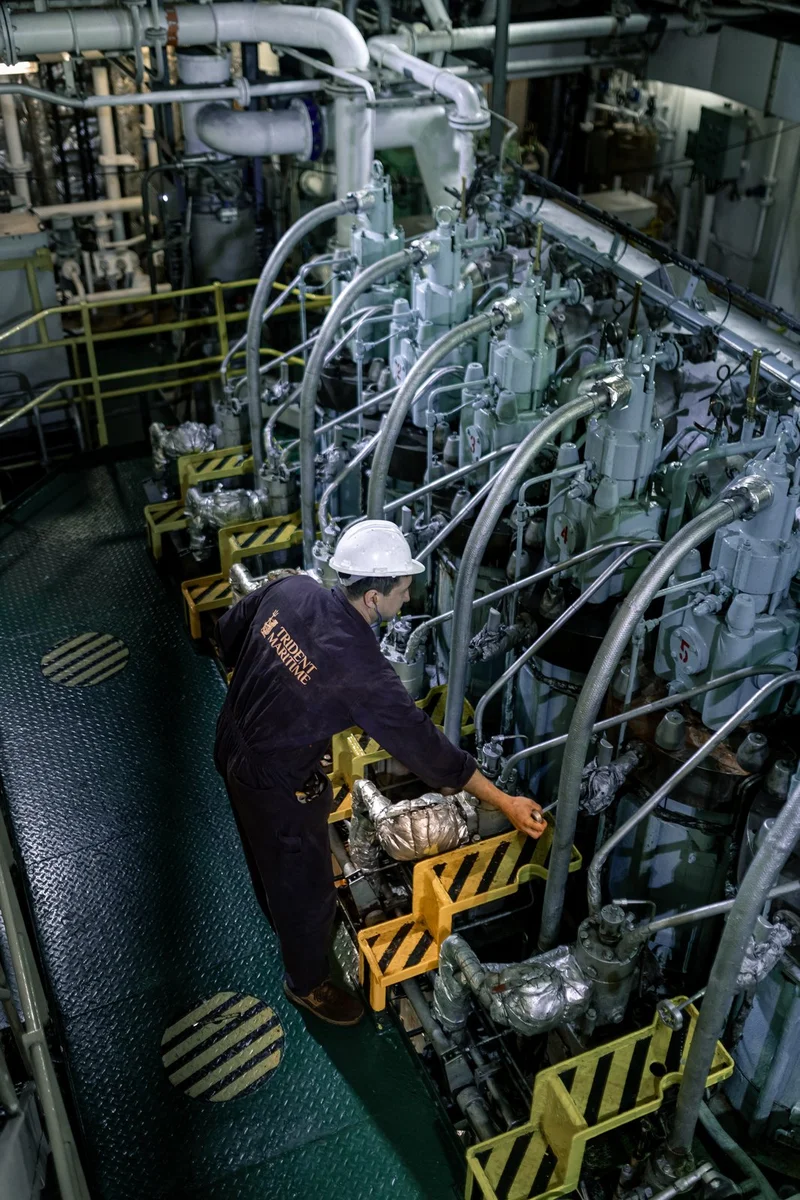
Certain high-stakes, non-routine technical projects present a clear case for engaging external consultants. Newbuilding supervision is a prime example. In our experience supervising newbuildings at Korean and Chinese yards, an independent team on-site is essential to verify construction quality, ensure adherence to specifications, and manage relationships with the shipyard and classification society, preventing costly deviations and future warranty claims.
Major retrofits and conversions, such as the installation of ballast water treatment systems (BWTS) or exhaust gas cleaning systems (scrubbers), also benefit from specialist oversight. A consultant can manage the entire project lifecycle, from system selection and engineering design integration to yard supervision and commissioning. This ensures the project is completed on time, within budget, and in full compliance with IACS and Flag State requirements.
Furthermore, pre-purchase inspections are a cornerstone of marine consultancy. A thorough inspection by an experienced Master Mariner or Chief Engineer provides the prospective buyer with a detailed, objective assessment of the vessel's condition, identifying potential defects and estimating future operational expenditures. This independent due diligence is fundamental to making a sound investment decision and negotiating favorable terms. Complex damage surveys and incident investigations also require an impartial, expert third party to determine root causes and liaise with P&I clubs and insurers.
What Is the Role of Consultants in Vetting and Inspections?
Maintaining eligibility for charter with major oil, gas, and dry bulk companies is paramount for a vessel's commercial success. The transition to OCIMF's SIRE 2.0, which became mandatory in 2024, has fundamentally changed the tanker vetting process. The new tablet-based, human-factor-focused inspections are more comprehensive and typically identify 20-30 findings, a significant increase from the 2-4 common under the legacy VIQ7 system.
Consultants play a critical role in preparing vessels and crews for these rigorous assessments. This involves conducting pre-vetting vessel inspections that mirror the SIRE 2.0 methodology, identifying potential observations, and training the crew on the new question templates and interview-style approach. The goal is to embed best practices into the vessel's daily operations so that the crew can confidently demonstrate compliance to the inspector.
For the dry bulk sector, RightShip's Inspection Ship Vetting (RISQ) framework serves a similar purpose. A consultant can help an owner navigate the RISQ requirements and prepare for inspections, ensuring the vessel maintains a high safety score and remains attractive to top-tier charterers. Proactive preparation through expert marine consultancy services transforms vetting from a potential operational hurdle into a demonstrable competitive advantage.
How Does Consultancy Support ISM, ISPS, and MLC Compliance?
A robust Safety Management System (SMS) is the foundation of a safe and compliant shipping operation, as mandated by the ISM Code. External consultants provide a critical, objective review of an owner's SMS, identifying gaps or areas of weakness before they are flagged as non-conformities during an official audit by a classification society or Flag State administration. This includes reviewing procedures, records, and emergency preparedness drills.
As certified ISM/ISPS/MLC Lead Auditors, our consultants can conduct internal audits that simulate the formal verification process. This prepares the ship and shore-based staff, builds confidence, and ensures the system is not just a set of documents but a living, effective management tool. This is vital, as the International Association of Classification Societies (IACS) members, who cover over 90% of global tonnage, take a stringent approach to SMS implementation.
Similarly, compliance with the Maritime Labour Convention (MLC, 2006), which applies to countries representing over 97% of world shipping tonnage, is essential for crew welfare and avoiding PSC detentions. A consultant can perform a pre-audit of MLC-related areas, such as seafarer employment agreements, accommodation standards, and onboard complaint procedures, ensuring the vessel is fully prepared for its formal MLC inspection. Independent audits by marine consultants are a proactive measure to ensure continuous compliance and operational integrity.
Choosing a Marine Consultancy Partner: Key Criteria
Selecting the right partner for marine consultancy services requires careful evaluation of their capabilities against the specific needs of the project. A key consideration is whether to engage a niche specialist firm or an integrated ship manager that offers consultancy as part of a broader service portfolio. While a niche firm may offer deep expertise in a single area, an integrated manager provides a holistic perspective grounded in day-to-day operational reality.
Certifications and memberships serve as important indicators of quality and professionalism. Look for partners with ISO 9001, 14001, and 45001 certifications, as these demonstrate a commitment to standardized processes in quality, environmental, and occupational health and safety management. Membership in industry bodies like BIMCO signals adherence to best practices and contractual standards.
The following table outlines key criteria for comparison:
| Criterion | Specialist Niche Firm | Integrated Ship Manager |
|---|---|---|
| Scope of Expertise | Deep focus on a single area (e.g., LNG cargo operations, dynamic positioning). | Broad expertise across technical, crewing, commercial, and regulatory domains. |
| Operational Context | Primarily project-focused and advisory. | Advice is grounded in direct, ongoing fleet management experience. |
| Resource Availability | May have a smaller team of individual experts. | Access to a global network of superintendents, auditors, and technical staff. |
| Certifications & Memberships | Varies by firm; may hold individual professional credentials. | Typically holds corporate certifications (ISO, DOC) and industry memberships (BIMCO). |
| Global Reach | Often concentrated in specific maritime hubs. | Established office networks in key regions (e.g., Europe, Middle East, Asia). |
Ultimately, the ideal consultancy partner is one whose technical capabilities, global presence, and operational philosophy align with the shipowner's assets and strategic objectives.
Related Reading

Discuss Marine Consultancy Services with Trident Maritime
Trident Maritime provides expert, independent marine consultancy services for owners of tankers, gas carriers, containerships, and bulk carriers. As a BIMCO member with ISO 9001, 14001, and 45001 certifications, our approach is grounded in international best practices and a deep understanding of the operational realities facing modern shipowners.
With a global presence including offices in Odesa, Hamburg, Dubai, and Hong Kong, our team of Master Mariners, Chief Engineers, and certified auditors is available to support your projects worldwide. We offer a 24/7 emergency response capability to ensure critical support is always available.
For a confidential discussion about your specific requirements, contact info@trident-maritime.com or visit our contacts page.
Frequently Asked Questions (FAQ)
What is the typical duration of a pre-purchase vessel inspection?
A standard pre-purchase inspection typically takes two to three days on board the vessel. This allows the consultant sufficient time to thoroughly inspect the hull and machinery, review all class and statutory certificates, examine maintenance records (PMS), and witness the operation of key equipment. The duration can be extended for more complex vessels like gas carriers or if specific trials, such as a sea trial or cargo pump testing, are required by the buyer.
How do consultants assist with Flag State and Class requirements?
Consultants act as a technical liaison between the shipowner, the Flag State administration, and the Classification Society. They assist by preparing the vessel for statutory and class surveys, managing the closure of any deficiencies or non-conformities, and providing expert interpretation of complex rules, such as IACS Unified Requirements. For a change of flag or class, a consultant manages the entire process, ensuring all documentation is correct and surveys are seamlessly coordinated to minimize vessel downtime.
Can marine consultancy services help reduce operational costs?
Yes, targeted consultancy can significantly reduce operational costs. For example, a dry-docking consultant can optimize the repair specification and negotiate with shipyards to prevent budget overruns. Similarly, a pre-vetting consultant helps avoid commercially damaging inspection failures and charter rejections. By providing expert oversight on high-expenditure projects and high-risk operations, consultancy directly protects the owner's financial interests and enhances asset performance.
What is involved in newbuilding supervision consultancy?
Newbuilding supervision is a comprehensive service covering the entire construction process. It starts with a plan approval phase, where consultants review all technical drawings against the contract specification. This is followed by on-site supervision at the shipyard, with a dedicated team monitoring construction quality, attending factory acceptance tests (FAT) for major equipment, and tracking project milestones. The service concludes with commissioning, sea trials, and final vessel delivery, ensuring the owner receives an asset built to the highest standards.
How do you ensure the confidentiality of a consultancy project?
Confidentiality is fundamental to all marine consultancy services. Professional consultancies operate under strict non-disclosure agreements (NDAs) with their clients to protect sensitive commercial and technical information. All reports, findings, and communications are treated as strictly confidential and shared only with the client's authorized representatives. This is especially critical in projects involving sales and purchases, commercial disputes, or incident investigations where discretion is paramount.
What is the difference between marine consultancy and full technical management?
The primary difference is scope and duration. Marine consultancy is project-based and advisory, providing specialized expertise for a defined task with a clear start and end, such as a single pre-purchase inspection or a dry-docking project. Full technical management is a continuous, long-term service that involves taking full responsibility for the vessel's day-to-day operations, including crewing, maintenance, procurement, and ensuring ongoing compliance with all regulations, as defined in a BIMCO SHIPMAN agreement.

Contact Trident Maritime
Need a consultation or proposal? Reach out through any of the channels below — we respond within one business day.
- Phone: +380487373735
- Email: info@trident-maritime.com