Crew change logistics in 2026: Compliance & Planning Guide
Crew change logistics is the end-to-end process of rotating seafarers on commercial vessels, encompassing travel coordination, visa acquisition, flag state endorsements, and on-board handovers. For tankers, gas carriers, and bulkers in 2026, operators manage these rotations to maintain compliance with MLC 2006 limits on continuous service. Core stages include port selection, documentation verification, transit execution, and safety familiarisation.
What defines crew change logistics in 2026?
Managing seafarer rotation requires exact coordination between maritime authorities, port agents, and travel providers. Trident Maritime provides seamless crew management services across global hubs.
Rotations across major maritime centres in Germany, the UAE, Hong Kong, and Singapore demand rigorous administrative oversight. Technical superintendents and crewing managers must align flight schedules with vessel berthing windows while securing necessary immigration clearances. Failure to execute these movements precisely leads to off-hire periods and Port State Control interventions.
Why is crew change a compliance issue, not just travel?
Seafarer rotation is fundamentally a regulatory mandate governed by international maritime law. The IMO and other governing bodies enforce strict guidelines to prevent fatigue and ensure vessel safety. MLC 2006 entered into force on 20 August 2013, establishing a comprehensive bill of rights for maritime workers globally.
"Crew deployment is subject to visa, flag endorsement, medical, certification and travel requirements."
- Oleksiy Smolyar, CEO / Director, Trident Maritime
Port State Control inspectors routinely scrutinise crew employment agreements and discharge books during boarding. Irregularities in rotation schedules or expired documentation immediately flag a vessel for deeper auditing. Consequently, robust rotation planning serves as a primary defence against commercial delays.
What are the MLC 2006 limits on time on board?
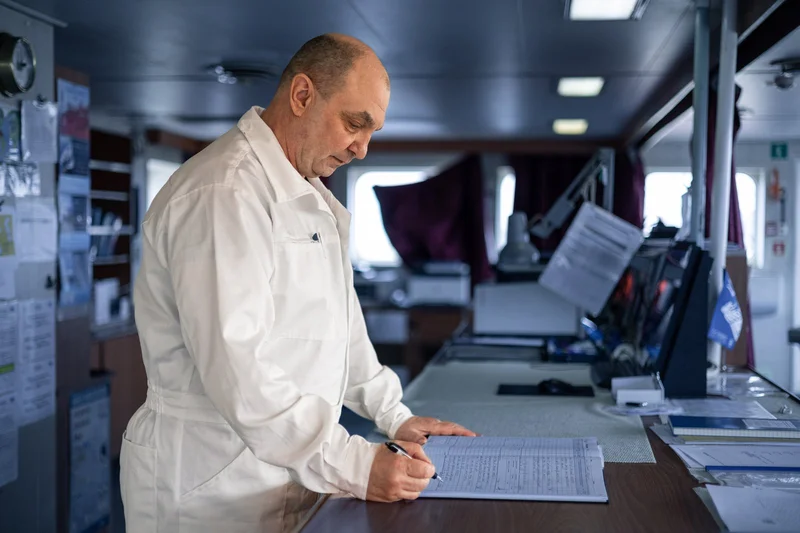
Fatigue management remains a central pillar of modern ship operations. Under MLC 2006 the maximum continuous period a seafarer should serve on board without leave is normally 11 months (derived from Standards A2.4 and A2.5.1). Ship managers must track deployment durations meticulously to ensure no crew member exceeds this threshold during a voyage.
Furthermore, MLC 2006 Regulation 2.5 gives seafarers the right to repatriation at no cost to themselves. Shipowners must arrange and pay for repatriation in the circumstances set out in Standard A2.5.1. The cost may be recovered from a seafarer only where the seafarer has been found, under national law or an applicable collective bargaining agreement, to be in serious default of employment obligations. Industry associations like BIMCO provide standard contractual frameworks to help operators manage these repatriation obligations effectively.
Detailed compliance strategies for these regulations are further outlined in our guide on MLC 2026 amendments. Maintaining accurate rotation forecasts prevents accidental breaches of these critical service limits.
How do you plan a crew change port by port?
Executing a successful rotation requires synchronising multiple logistical elements well before the vessel drops anchor. Operators must evaluate port infrastructure, local immigration policies, and flight connectivity. The standard procedural workflow involves several distinct phases:
- Port Selection. Identify optimal rotation hubs along the vessel's trading route, prioritising locations like the Netherlands or Spain.
- Agency Appointment. Engage a local port agent to handle immigration formalities, launch boat services, and ground transport.
- Flight Booking. Secure flexible marine-fare airline tickets that accommodate sudden changes in the vessel's estimated time of arrival.
- Document Verification. Confirm that all joining seafarers possess valid passports, medical certificates, and flag state endorsements.
- On-Board Coordination. Instruct the vessel's master to prepare discharge documents and handover protocols for departing personnel.

What visas and transit documents are required for seafarers?
Immigration compliance dictates the feasibility of any crew rotation plan. The ILO Seafarers' Identity Documents Convention (Revised), 2003 (No. 185) facilitates shore leave and transit, streamlining border procedures in ratified nations. However, operators must still navigate a complex web of national visa requirements for different nationalities.
Schengen visas, US C-1/D visas, and specific national transit permits require significant processing time. Crewing departments must initiate these applications months in advance of the planned rotation date. Missing a single transit document can force operators to cancel flights and reroute the seafarer, incurring substantial financial penalties.
Clear communication with local port authorities ensures that arriving crew members are not detained at the airport. Proactive document management remains the most effective method for avoiding transit disruptions.
What must be covered during an on-board handover?
The physical exchange of personnel on the vessel is a critical operational phase governed by the ISM Code. Joining officers and ratings must undergo immediate safety familiarisation before assuming their duties. This includes locating muster stations, understanding emergency alarms, and reviewing specific SMS procedures.
Departing senior officers must provide comprehensive handover notes to their reliefs. These documents detail current machinery status, pending maintenance tasks, cargo specifics, and upcoming port requirements. A structured handover prevents knowledge loss and ensures the vessel maintains its operational momentum safely.

What are the main cost drivers in crew travel?
Travel and rotation expenses represent a significant portion of a vessel's operating budget. While specific pricing is strictly by arrangement, operators must understand the primary variables that influence these costs. Strategic planning allows managers to mitigate financial exposure during crew movements.
| Cost Driver | Pre-planned Rotation | Last-minute Rotation |
|---|---|---|
| Airfare | Standard marine fares with flexibility | Premium spot-market pricing |
| Port Agency Fees | Standard tariff rates | Overtime and urgency surcharges |
| Accommodation | Negotiated corporate hotel rates | High-season rack rates |
| Launch Boat Services | Consolidated trips for multiple crew | Dedicated single-passenger trips |
By consolidating rotations and utilising comprehensive maritime services, owners can optimise their travel budgets. Effective cost management requires continuous market analysis and strong vendor relationships.
How to manage contingency planning for disruptions?
Maritime operations are inherently unpredictable, requiring robust contingency plans for seafarer travel. Weather delays, port congestion, and sudden changes in charterers' orders frequently alter berthing schedules. Crew managers must maintain active communication with travel agents to adjust flights and hotel bookings dynamically.
When a scheduled rotation port is bypassed, the crewing team must rapidly identify the next viable logistical hub. This involves assessing visa requirements for the new destination and verifying the availability of local medical facilities if required. Operators rely on 24/7 emergency response capabilities to handle these sudden logistical shifts.
A proactive approach to disruption minimises the risk of regulatory non-compliance. Ensuring seafarers are rotated safely and legally remains the ultimate priority for professional ship managers.

How to arrange crew change logistics with Trident Maritime?
Trident Maritime delivers comprehensive crew administration and travel coordination for commercial fleets worldwide. As a BIMCO member with ISO 9001, 14001, and 45001 certifications, we operate from hubs in Odesa, Hamburg, Dubai, and Hong Kong with 24/7 emergency response capabilities. Pricing is by arrangement and depends on vessel type, flag, trading area, and contract scope. For a confidential discussion, contact info@trident-maritime.com or visit our contacts page.
Frequently Asked Questions (FAQ)
How does MLC 2006 regulate maximum time on board?
Under MLC 2006 the maximum continuous period a seafarer should serve on board without leave is normally 11 months, a limit derived from Standards A2.4 and A2.5.1. Operators must track deployment durations rigorously for all commercial vessels, including tankers and bulkers. Exceeding this limit may be recorded as a Port State Control deficiency and, where the breach is serious or repeated, can lead to detention.
What documents are required for seafarer transit?
Seafarers require a valid passport, a national seafarer's book, and relevant flag state endorsements to transit through international transport hubs. Additionally, the ILO Seafarers' Identity Documents Convention (Revised), 2003 (No. 185) facilitates shore leave and transit across ratified jurisdictions. Proper documentation ensures seamless border crossings in locations like Germany, the UAE, and Singapore.
How much does crew change logistics cost in 2026?
Pricing for crew rotation and travel management is strictly by arrangement and depends on the vessel type, trading area, and contract scope. Variables include flight availability, visa processing fees, and local port agency tariffs. For a formal commercial proposal tailored to your fleet's specific rotation schedule, contact Trident Maritime directly.
Which ports are optimal for crew rotations?
Optimal rotation ports offer excellent international flight connectivity, streamlined visa procedures, and minimal deviation from major shipping lanes. Hubs in Singapore, the UAE, the Netherlands, and Spain frequently serve as primary rotation points for global tanker and bulker fleets. Seafarer transit through these jurisdictions is generally supported by established maritime infrastructure and clear immigration policies.
What handover procedures are mandatory on board?
Mandatory handover procedures dictate that joining crew members receive comprehensive familiarisation with the vessel's specific equipment, safety management system (SMS), and emergency protocols. This process complies with ISM Code requirements and ensures operational continuity. Departing officers must provide written handover notes detailing current machinery status, upcoming maintenance tasks, and voyage specifics.
Who bears the cost of seafarer repatriation?
Under MLC 2006 Regulation 2.5, seafarers have the right to be repatriated at no cost to themselves in the circumstances set out in Standard A2.5.1, including when the employment agreement expires while they are abroad, is terminated by the shipowner, or is terminated by the seafarer for justified reasons. The shipowner arranges and pays for repatriation. The cost may be recovered from the seafarer only in a case of serious default found under national law or an applicable collective bargaining agreement.
How can you contact Trident Maritime?
Need a consultation or proposal? Reach out through any of the channels below - we respond within one business day.
- Phone: +380487373735
- Email: info@trident-maritime.com
- Telegram: @tridentmaritime