Crew Manning Agency vs Third-Party Manager in 2026: A Guide
The IMO STCW Convention applies to approximately 1.2 million certificated seafarers on over 50,000 vessels worldwide (IMO, 2025). Managing this vast pool of global talent requires precise regulatory alignment and strategic operational planning.
Choosing between a crew manning agency and a full third-party ship manager depends on an owner's internal technical capacity and regulatory exposure. A manning agency focuses strictly on sourcing, STCW compliance, and payroll, while full managers handle ISM, technical maintenance, and vetting. This guide breaks down the operational differences in 2026.
- What distinguishes a crew manning agency from full third-party management?
- How does STCW compliance impact crewing operations in 2026?
- When should owners choose a dedicated crew manning agency?
- What are the vetting implications under SIRE 2.0 for crew management?
- How do MLC 2006 regulations shape crew deployment strategies?
- How do crewing providers handle performance appraisals?
- What are the financial structures of manning versus full management?
- Comparison: Crew manning agency vs third-party manager capabilities
- Discuss crew management with Trident Maritime
What distinguishes a crew manning agency from full third-party management?
A crew manning agency operates as a specialized human resources provider for the maritime sector. These entities focus exclusively on sourcing, screening, and deploying seafarers. They ensure that all deployed personnel hold valid certifications required by specific flag states.
Full third-party ship management encompasses a much broader scope of maritime operations. A full manager takes over the Document of Compliance (DOC) under the International Safety Management (ISM) Code. This means they are legally responsible for the vessel's safe operation and pollution prevention. You can read more about ISM requirements directly from the IMO.
The division of responsibilities is strict and defined by standardized contracts. While a manager handles dry docking, procurement, and technical troubleshooting, a manning provider strictly handles personnel logistics. Crew deployment is subject to visa, flag endorsement, medical, certification and travel requirements.
How does STCW compliance impact crewing operations in 2026?
Maintaining compliance with the Standards of Training, Certification and Watchkeeping (STCW) is the core function of any crewing provider. Recent STCW amendments require electronic certificates of competency effective from 2025 (IMO MSC.535(107)). This shift forces operators to upgrade their credential tracking systems immediately.
A dedicated crewing provider utilizes specialized software to monitor document expirations in real-time. They coordinate refresher training and flag state endorsements long before a seafarer joins a vessel. This proactive approach prevents port state control delays during critical cargo operations.
Failure to maintain STCW compliance directly impacts vessel tradability. Port state control inspectors routinely detain vessels for expired officer endorsements or missing medical certificates. Owners seeking to mitigate this risk often rely on professional crew management services to handle the administrative load.
When should owners choose a dedicated crew manning agency?
Shipowners with established in-house technical departments often prefer a standalone crew manning agency over full management. These owners already hold their own ISM Document of Compliance. They possess the technical superintendents needed to oversee maintenance and dry docking internally.
For these operators, outsourcing the entire vessel operation is unnecessary and counterproductive. Instead, they delegate the high-volume administrative tasks of seafarer recruitment, payroll processing, and travel logistics. This hybrid model allows the owner to retain absolute control over technical budgets and procurement choices.
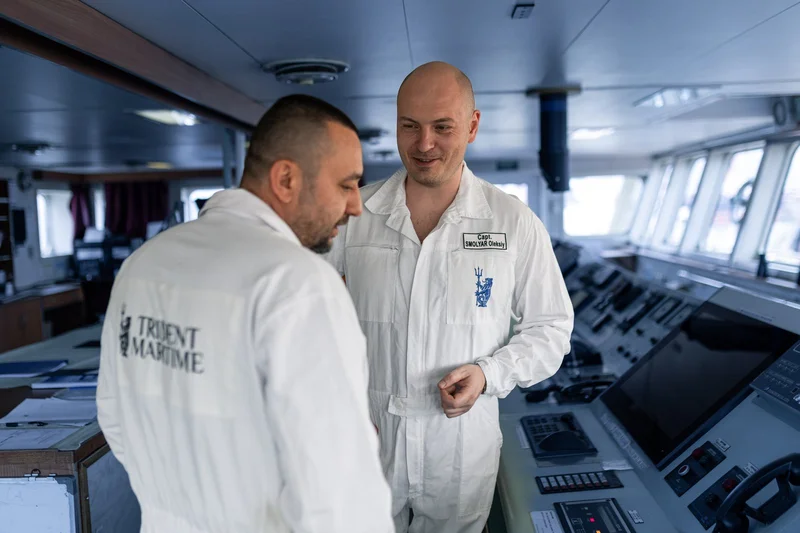
"Owners with robust in-house technical teams often find that delegating only the seafarer sourcing and payroll to a specialized agency provides the best balance of cost control and operational oversight."
- Capt. Oleksiy Smolyar, CEO / Director, Deep Sea Captain
What are the vetting implications under SIRE 2.0 for crew management?
The vetting landscape for tanker operators has shifted dramatically, placing intense scrutiny on the human element. SIRE 2.0 became the mandatory tanker vetting standard on 2 September 2024, replacing VIQ7 (OCIMF, 2024). This new regime evaluates not just equipment condition, but how well the crew understands and interacts with it.
SIRE 2.0 inspections typically identify 20-30 findings per vessel, versus the 2-4 typical under VIQ7 (industry analysis, 2024). Inspectors now conduct extended interviews with junior officers and ratings. A crewing provider must ensure that deployed seafarers possess strong communication skills and deep familiarity with safety management systems.
The focus on human factors means that pre-joining preparation is no longer optional. Agencies must brief officers on the specific SMS procedures of the hiring owner before deployment. For further details on vetting preparation, consult our guide on SIRE 2.0 inspection procedures.

How do MLC 2006 regulations shape crew deployment strategies?
The Maritime Labour Convention 2006 (MLC) establishes the baseline for seafarer welfare and employment conditions globally. The MLC is in force in countries representing over 97% of world gross shipping tonnage (ILO, 2026). Compliance requires meticulous record-keeping regarding work hours, rest periods, and timely wage allotments.
A professional crewing provider ensures that all employment contracts align perfectly with MLC mandates. They manage the complex logistics of timely repatriation and handle financial security certificates for abandonment. Standard industry contracts, such as those developed by BIMCO, are frequently utilized to define these obligations clearly.
Operators looking to source personnel from specific regions must ensure local compliance. For example, hiring officers from Eastern Europe requires adherence to both international and regional labor frameworks. Read our Ukrainian seafarers hiring guide for specific regional deployment strategies.
How do crewing providers handle performance appraisals?
Continuous performance monitoring is vital for maintaining a high-quality pool of seafarers. A reliable crewing provider implements structured appraisal systems at the end of every contract. The vessel master evaluates each crew member on technical competence, safety awareness, and teamwork.
These appraisals determine whether a seafarer will be offered a return contract. High retention rates are a primary KPI for any crewing provider, as returning crew members require less familiarization. Owners benefit significantly when the same officers return to their specific vessels year after year.
When performance issues arise, the agency is responsible for executing corrective action. This may involve mandatory refresher training ashore before the next deployment. By filtering out underperforming personnel, the agency protects the owner's operational efficiency and safety record.
What are the financial structures of manning versus full management?
The financial arrangement differs significantly depending on the scope of outsourced services. A standalone manning provider typically charges a fixed monthly lump sum per deployed seafarer or a percentage of the total payroll. This fee covers recruitment, administrative overhead, and the coordination of travel logistics.
In contrast, full third-party management involves a comprehensive technical management fee. This fee covers the maintenance of the ISM system, superintendent visits, and procurement oversight. The owner also funds a running cost account to cover spare parts, lube oils, and repair yard bills.
Pricing for both models is strictly by arrangement and depends on vessel type, flag, trading area, and contract scope. Owners of complex vessels like chemical tankers generally face higher crewing costs due to the specialized STCW endorsements required. Choosing the right model allows owners to optimize their operational expenditure without compromising on safety.
Comparison: Crew manning agency vs third-party manager capabilities
Understanding the exact division of labor is essential for structuring commercial agreements. The table below outlines the typical responsibilities handled by each type of provider in 2026.
| Operational Function | Crew Manning Agency | Full Third-Party Manager |
|---|---|---|
| STCW Certification Tracking | Primary responsibility | Primary responsibility |
| ISM Code Document of Compliance | Owner retains DOC | Manager holds DOC |
| Technical Maintenance & Dry Docking | Not included | Full responsibility |
| SIRE 2.0 Vetting Preparation | Provides familiarized crew | Manages entire vetting process |
| Payroll and MLC Compliance | Full responsibility | Full responsibility |
Operators requiring specialized advice on structuring these agreements frequently seek external expertise. Engaging in marine consultancy can help clarify the legal and operational boundaries before signing a contract.
Discuss crew management with Trident Maritime
Trident Maritime provides comprehensive crewing and technical solutions tailored to your fleet's specific operational profile. As a BIMCO member and ISO 9001/14001/45001 certified operator, we maintain rigorous standards across our offices in Odesa, Hamburg, Dubai, and Hong Kong. We operate a 24/7 emergency response system to support our deployed seafarers and managed vessels globally. For a confidential discussion, contact info@trident-maritime.com or visit our contacts page.
Frequently Asked Questions (FAQ)
What exactly does a crew manning agency provide in 2026?
A crew manning agency provides specialized human resources services for shipowners. This includes sourcing seafarers, verifying STCW certifications, arranging medical examinations, coordinating travel logistics, and managing ongoing payroll in compliance with MLC 2006 regulations.
How does a crew manning agency differ from a full ship manager?
A manning agency strictly handles personnel logistics and payroll. A full third-party ship manager takes legal responsibility for the vessel under the ISM Code, handling technical maintenance, dry docking, procurement, and safety management system implementation.
Who holds the ISM Document of Compliance in a manning-only setup?
In a manning-only agreement, the shipowner retains the ISM Document of Compliance (DOC). The owner remains legally responsible for the vessel's safety management system, while the agency simply supplies the qualified personnel to operate it.
Does a crew manning agency handle SIRE 2.0 vetting preparation?
The agency is responsible for providing personnel who are properly certified and familiarized with the owner's safety management system. However, the actual preparation of the vessel and the management of the SIRE 2.0 inspection process remains the responsibility of the technical manager or owner.
How are crew wages handled under a manning agreement?
The agency typically utilizes automated payroll systems to ensure timely wage allotments to seafarers' home accounts. This transparent process guarantees compliance with MLC 2006 financial security requirements and prevents port state control detentions related to unpaid wages.
Which flag states accept electronic certificates of competency in 2026?
Following recent STCW amendments (IMO MSC.535(107)), most major registries, including Panama, Liberia, and the Marshall Islands, accept electronic certificates of competency. A professional agency tracks these digital endorsements to ensure uninterrupted compliance during port state control inspections.
Contact Trident Maritime
Need a consultation or proposal? Reach out through any of the channels below - we respond within one business day.
- Phone: +380487373735
- Email: info@trident-maritime.com
- Telegram: @tridentmaritime