Handysize bulker management in 2026: The Geared 35K DWT Niche
- What are the core challenges of handysize bulker management in 2026?
- How do geared crane maintenance schedules impact dry cargo operations?
- What hold cleaning standards apply to multi-grade bulk carriers?
- How does RightShip RISQ vetting influence commercial fixtures?
- Which regulatory frameworks govern energy efficiency for 35K DWT bulkers?
- What role does the ISM Code play in dry cargo operations?
- How to optimise voyage planning for geared bulkers?
- Why is specialised crew training critical for geared bulk operations?
- Discuss handysize bulker management with Trident Maritime
- Contact Trident Maritime
The Paris MoU detention rate rose to 4.03% in 2024, up from 3.81% in 2023, placing intense pressure on dry bulk operators to maintain rigorous safety standards (Paris MoU Annual Report 2024). Geared bulk carriers, operating in remote or underdeveloped ports, face unique operational stresses compared to gearless tonnage. Effective technical oversight is no longer optional for owners seeking premium charter rates.
Handysize bulker management in 2026 demands rigorous maintenance of deck cranes, strict hold cleaning protocols, and proactive Port State Control preparation. Operators must balance cost-efficiency with compliance under the latest IMO and RightShip frameworks. Discover the technical and crewing strategies driving performance for geared 35,000 DWT vessels.
What are the core challenges of handysize bulker management in 2026?
Operating 28,000 to 40,000 DWT geared vessels requires balancing high-frequency port calls with stringent maintenance schedules. Unlike larger gearless Capesize vessels, handysize bulkers frequently call at minor ports lacking shore-side loading infrastructure. This reliance on shipboard cranes accelerates wear on wires, blocks, and hydraulic systems.
Effective handysize bulker management therefore prioritises preventive maintenance for cargo gear alongside standard hull and machinery oversight. Furthermore, the IACS comprises 12 member classification societies covering more than 90% of the world's cargo-carrying tonnage, and their unified requirements for cargo gear certification are increasingly strict (IACS Annual Review 2025). Owners must ensure all lifting appliances comply with ILO Convention 152 and local port regulations.
Consistent crane reliability directly correlates with fewer off-hire claims and stronger commercial performance.
How do geared crane maintenance schedules impact dry cargo operations?
Deck cranes and grabs are the commercial lifeline of a geared bulk carrier. A single hydraulic failure during discharge can halt operations, triggering severe demurrage penalties and potential charter party disputes. Routine wire rope renewals, hydraulic oil analysis, and brake testing must be integrated into the vessel's planned maintenance system (PMS).
Technical superintendents typically observe that proactive replacement of hoisting wires at 80% of their certified lifespan prevents catastrophic failures during heavy grabs. We integrate these maintenance routines into our comprehensive services portfolio to ensure uninterrupted cargo operations. Regular load testing, witnessed by class surveyors, remains mandatory for maintaining the cargo gear register.
Proactive crane maintenance is the primary defense against operational downtime in underdeveloped ports.

What hold cleaning standards apply to multi-grade bulk carriers?
Handysize vessels frequently switch between dirty cargoes like coal and clean cargoes like grain or fertiliser. Transitioning between these grades requires meticulous hold washing, chemical application, and barrier coating to pass independent surveyor inspections. Failure to meet the required cleanliness standard results in cargo rejection and immediate off-hire status.
The preparation process involves high-pressure washing, mucking out bilges, and verifying the integrity of hatch cover seals to prevent water ingress. For detailed insights into survey preparations, owners can consult our guide on vessel inspection scope and types. Ultrasonic testing of hatch covers is standard practice to ensure weather-tightness before loading moisture-sensitive cargoes.
Mastering hold cleaning transitions enables operators to capture premium freight rates across diverse commodity markets.
| Cargo Type | Cleaning Standard | Key Requirements |
|---|---|---|
| Grain / Foodstuffs | Hospital Clean | 100% rust-free, odourless, chemically washed, NPPO certified. |
| Fertilisers | Grain Clean | No residues from previous cargo, dry, barrier coating applied. |
| Coal / Petcoke | Normal Clean | Swept, washed with fresh water, bilges clear of debris. |
| Bauxite / Iron Ore | Shovel Clean | Roughly swept, mechanical damage checked, structurally sound. |
How does RightShip RISQ vetting influence commercial fixtures?
RightShip's Inspection Ship Vetting (RISQ) framework is the dominant dry-cargo counterpart to OCIMF's SIRE 2.0 for tanker vetting; both are required for chartering with major energy and bulk shippers (RightShip, 2024). A poor RightShip GHG rating or a history of Port State Control deficiencies will effectively lock a vessel out of lucrative charter markets. Vetting preparation is now a continuous process rather than a pre-fixture event.
Operators must maintain flawless documentation, from the ISM safety management system to the ballast water record book. Our commercial management teams work closely with technical departments to ensure vetting approvals are secured well in advance of fixture negotiations. Furthermore, Paris MoU port state control inspects approximately 17,500 individual ships per year, making continuous compliance essential (Paris MoU Annual Report, 2024).
Maintaining a top-tier RightShip rating is a non-negotiable requirement for trading with major global charterers.

Which regulatory frameworks govern energy efficiency for 35K DWT bulkers?
The IMO 2023 GHG Strategy targets at least a 20% reduction (striving for 30%) in shipping emissions by 2030 versus 2008 levels (IMO MEPC 80). For existing handysize bulkers, compliance heavily relies on the Energy Efficiency Existing Ship Index (EEXI) and the Carbon Intensity Indicator (CII). Many 35K DWT vessels require engine power limitation (EPL) installations to meet EEXI baselines.
Maintaining a favorable CII rating (A, B, or C) requires precise voyage execution, hull fouling management, and optimal weather routing. Detailed guidelines on these international standards are available through the International Maritime Organization. Vessels falling into category D for three consecutive years, or category E for one year, must implement an approved corrective action plan.
Proactive carbon intensity management directly protects the asset value and tradability of aging bulk carrier tonnage.
What role does the ISM Code play in dry cargo operations?
The International Safety Management (ISM) Code provides the mandatory framework for safe ship operation and pollution prevention. For geared bulk carriers, the Safety Management System (SMS) must address specific risks such as cargo liquefaction, crane wire failure, and enclosed space entry. Regular internal audits ensure the crew adheres strictly to these documented procedures.
The Paris MoU detention rate rose to 4.03% in 2024, with ISM-related deficiencies remaining a primary cause for vessel detentions (Paris MoU Annual Report 2024). Technical managers must conduct rigorous pre-arrival checks to verify that all safety equipment is functional and certification is valid. We coordinate these compliance efforts through our About Trident Maritime operational framework.
A robust safety management system is the foundation of uninterrupted commercial trading.
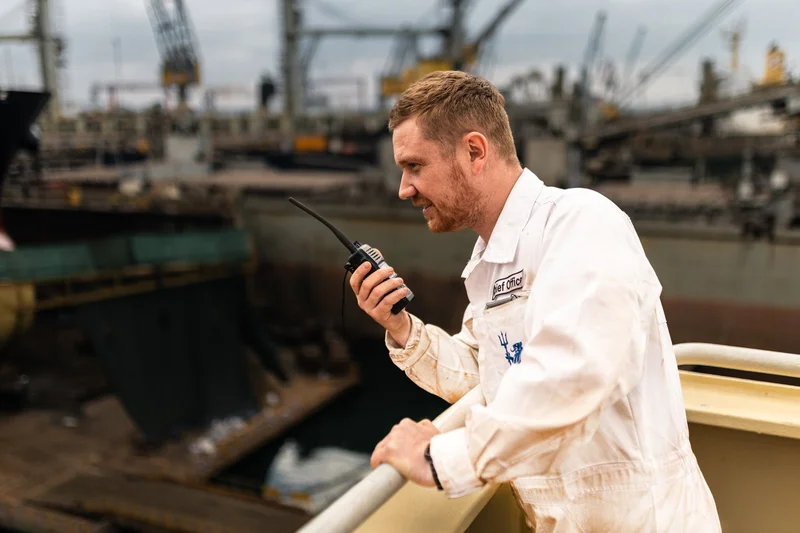
How to optimise voyage planning for geared bulkers?
Effective voyage execution requires balancing fuel consumption, weather routing, and precise arrival timing to minimise port congestion delays. Geared bulkers often navigate complex coastal routes to reach secondary ports.
- Analyse weather data. Utilise advanced meteorological software to avoid heavy weather that could damage deck cranes or hatch covers.
- Calculate optimal speed. Adjust engine RPM to maintain the required Carbon Intensity Indicator (CII) rating while meeting the charterer's laycan.
- Manage ballast water. Plan ballast exchanges in compliance with the D-2 standard to ensure optimal trim and propeller immersion.
- Coordinate port agents. Communicate early with local agents to confirm crane availability, stevedore readiness, and draft restrictions.
- Monitor fuel quality. Test bunker samples promptly to prevent engine damage during critical maneuvering phases.
Strategic voyage planning directly reduces fuel expenditure and enhances the vessel's commercial yield.
Why is specialised crew training critical for geared bulk operations?
Operating four 30-ton electro-hydraulic cranes simultaneously while managing complex ballast sequences requires specific seafarer competence. The IMO STCW Convention applies to approximately 1.2 million certificated seafarers on over 50,000 vessels worldwide, but basic certification does not cover advanced crane operation (IMO, 2025). Crew familiarisation with the specific maker's lifting appliances is paramount to prevent accidents and structural damage.
We ensure all deployed personnel undergo rigorous pre-joining training tailored to geared dry cargo operations. As noted by our leadership team:
"Effective technical management relies on seamless coordination between shipboard personnel and shore-based superintendents. We prioritise robust safety management systems to ensure operational continuity and regulatory compliance across all managed fleets."
- Capt. Oleksiy Smolyar, Master Mariner / CEO Trident Maritime
Through our dedicated crew management division, we supply officers and ratings experienced in the unique demands of the handysize sector. Specialised training translates directly to faster turnaround times and reduced stevedore damage claims.
Discuss handysize bulker management with Trident Maritime
Trident Maritime provides comprehensive ship management and marine services for geared dry bulk carriers. Our technical teams ensure your 35,000 DWT vessels maintain peak operational readiness, regulatory compliance, and commercial viability. Pricing is by arrangement and depends on vessel type, flag, trading area, and contract scope. For a confidential discussion, contact info@trident-maritime.com or visit our contacts page.
Contact Trident Maritime
Need a consultation or proposal? Reach out through any of the channels below - we respond within one business day.
- Phone: +380487373735
- Email: info@trident-maritime.com
- Telegram: @tridentmaritime