LNG carrier management in 2026: Technical Guide
- What are the core components of LNG carrier management in 2026?
- How do SIRE 2.0 inspections impact gas carrier operations?
- Boil-off gas handling: What are the technical priorities?
- How does STCW compliance affect crewing for LNG vessels?
- Class and Flag State coordination: How do vetting frameworks align?
- How to execute a vessel takeover and restore compliance?
- Discuss LNG carrier management with Trident Maritime
- Contact Trident Maritime
SIRE 2.0 inspections typically identify 20-30 findings per vessel, versus the 2-4 typical under VIQ7, making rigorous preparation a core operational competence rather than a documentation exercise (industry analysis, 2024). Operating cryogenic vessels requires continuous alignment with flag-state regulations, class requirements, and port-state control mandates. Technical superintendents must ensure that complex propulsion systems and reliquefaction plants maintain absolute reliability.
LNG carrier management in 2026 integrates STCW-compliant crewing, SIRE 2.0 vetting preparation, and specialized boil-off gas handling for cryogenic cargoes. Fleet operators must navigate strict class society requirements while maintaining zero-defect port state control records. Discover the technical and operational frameworks driving gas carrier efficiency today.
What are the core components of LNG carrier management in 2026?
Modern gas carrier operations require an integrated approach to technical maintenance, regulatory compliance, and commercial availability. The IMO 2023 GHG Strategy targets at least a 20% reduction in shipping emissions by 2030 versus 2008 levels, forcing operators to optimize dual-fuel propulsion systems (IMO MEPC 80). Technical superintendents must constantly monitor engine performance and cargo containment integrity.
A comprehensive commercial management strategy ensures that the vessel meets all charter party requirements without operational delays. This includes precise voyage planning, bunkering coordination, and port agency appointments across major hubs like Singapore, Rotterdam, and Dubai. Every operational decision must prioritize safety and fuel efficiency.

To maintain peak performance, third-party ship managers deploy specialized planned maintenance systems (PMS). These systems track running hours for critical cryogenic equipment and schedule overhauls before failure occurs. Effective LNG carrier management guarantees that vessels remain vetting-ready and commercially viable at all times.
How do SIRE 2.0 inspections impact gas carrier operations?
SIRE 2.0 became the mandatory tanker vetting standard on 2 September 2024, replacing VIQ7 (OCIMF, 2024). This transition fundamentally shifted the inspection focus from pure hardware compliance to human factors and behavioral safety. Inspectors now evaluate how the crew interacts with the safety management system (SMS) during routine and emergency scenarios.
Preparing for these rigorous assessments requires continuous onboard training and detailed pre-vetting audits. You can explore the specific changes in our SIRE 2.0 Inspection in 2026 guide. Superintendents must verify that all photographic evidence and certification data uploaded to the OCIMF portal accurately reflect the vessel's current condition.
Failure to secure a positive vetting outcome immediately restricts a gas carrier's chartering opportunities with major energy majors. Therefore, proactive defect reporting and rapid close-out of observations are non-negotiable standards. Maintaining a faultless vetting record secures premium charter rates and operational continuity.

Boil-off gas handling: What are the technical priorities?
Handling boil-off gas (BOG) is the most critical technical challenge for cryogenic vessels transporting liquefied natural gas at -163°C. Natural heat ingress causes a fraction of the cargo to vaporize, increasing tank pressure if not properly managed. Operators utilize sub-cooling reliquefaction plants to return this vapor back to the cargo tanks in liquid form.
Alternatively, modern vessels utilize BOG as fuel for dual-fuel engines (such as ME-GI or X-DF) or process it through a Gas Combustion Unit (GCU) when propulsion demand is low. 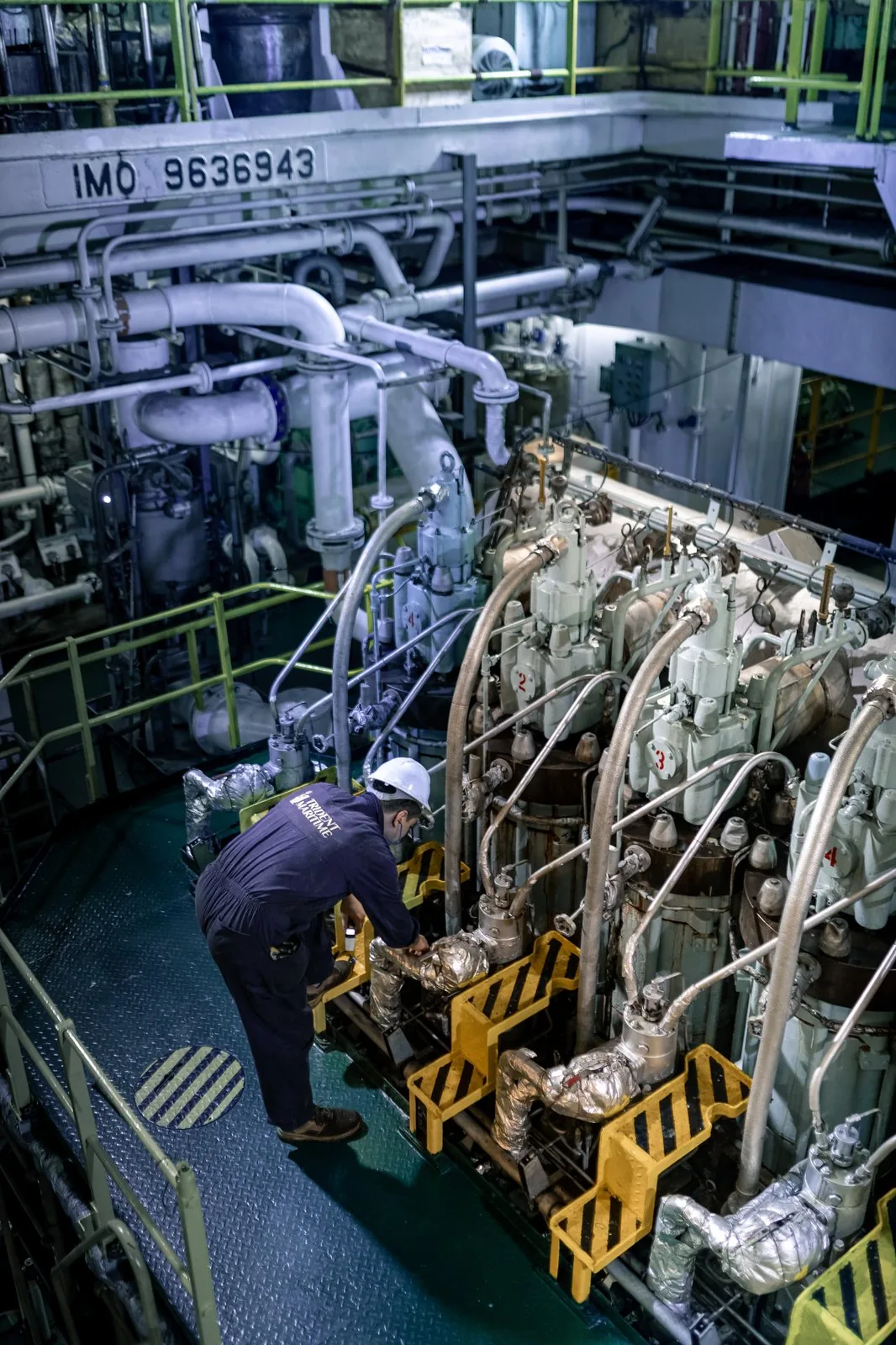
Proper BOG management directly impacts the vessel's commercial performance by minimizing cargo loss and reducing reliance on conventional bunker fuels. Technical teams must calibrate compressor seals and monitor cryogenic valves continuously to prevent hazardous gas leaks. Precision in BOG handling ensures both environmental compliance and maximum cargo delivery for charterers.
How does STCW compliance affect crewing for LNG vessels?
The IMO STCW Convention applies to approximately 1.2 million certificated seafarers on over 50,000 vessels worldwide (IMO, 2025). For gas carriers, the IGF Code mandates highly specialized training for officers and ratings responsible for cargo operations. Seafarers must hold advanced endorsements for liquefied gas tanker cargo operations to serve onboard.
Effective crew management requires rigorous verification of these credentials, alongside medical fitness certificates and flag state endorsements. Crewing agencies coordinate continuous training matrices to ensure that simulator training for cryogenic emergencies remains up to date. Recent STCW amendments also require electronic certificates of competency effective from 2025 (IMO MSC.535(107)).

High retention rates are critical for gas fleet stability, as experienced officers are scarce in the global maritime market. Managers implement MLC-compliant welfare programs to support seafarer mental health and ensure long-term loyalty. A highly trained, STCW-compliant crew is the foundation of safe gas carrier operations.
Class and Flag State coordination: How do vetting frameworks align?
All vessel inspections, audits and surveys are subject to flag-state, class and port-state requirements. The IACS comprises 12 member classification societies covering more than 90% of the world's cargo-carrying tonnage (IACS Annual Review 2025). Coordinating these regulatory bodies ensures that the vessel holds valid statutory and trading certificates.
Port State Control (PSC) regimes enforce these standards rigorously at commercial terminals. Paris MoU port state control inspects approximately 17,500 individual ships per year, with a detention rate around 3% (Paris MoU Annual Report, 2024). A single PSC detention can trigger immediate charter party cancellations and severe vetting penalties.
| Regulatory Body | Primary Focus | Key Frameworks |
|---|---|---|
| Flag State | Statutory compliance and national maritime law | SOLAS, MARPOL, Safe Manning |
| Classification Society | Structural integrity and machinery reliability | IACS Unified Requirements, Hull Surveys |
| Port State Control (PSC) | Enforcement of international regulations at port | Paris MoU, Tokyo MoU inspections |
| Industry Vetting (OCIMF) | Commercial risk and operational safety | SIRE 2.0, TMSA-3 |
Technical managers act as the central liaison between the shipowner, the IMO frameworks, and the classification society. They schedule dry docking and special surveys to minimize off-hire time while satisfying class rules. Seamless regulatory coordination prevents operational downtime and shields the owner from compliance liabilities.
How to execute a vessel takeover and restore compliance?
Bringing a newly acquired gas carrier into a fleet requires a structured technical takeover process. Over 90% of tanker operators use OCIMF TMSA-3 to assess their safety management systems (OCIMF, 2024). Before the vessel changes hands, the incoming management team conducts a comprehensive gap analysis of the existing SMS and onboard equipment.
Operators rely on marine consultancy experts to navigate the complex administrative handover. The standard takeover procedure involves several mandatory steps to ensure uninterrupted trading:
- Document Review. Verification of all class certificates, manuals, and existing vetting records.
- Pre-purchase Inspection. Physical assessment of cargo containment, reliquefaction plants, and hull integrity.
- Flag State Coordination. Processing the change of registry and issuing new Continuous Synopsis Records (CSR).
- Crew Handover. Deployment of the new STCW-certified crew and familiarization with the vessel's specific cryogenic systems.
- SMS Implementation. Activating the new Document of Compliance (DOC) and conducting initial ISM/ISPS audits.
Once these steps are completed, the vessel is ready to resume commercial operations under the new management structure. A meticulously planned takeover minimizes financial risk and ensures immediate compliance with international maritime standards.
Discuss LNG carrier management with Trident Maritime
Trident Maritime delivers comprehensive technical and crew management solutions for gas carriers, tankers, and bulkers globally. As a BIMCO member with ISO 9001, 14001, and 45001 certifications, we operate with offices in Odesa, Hamburg, Dubai, and Hong Kong. Our technical superintendents provide 24/7 emergency response and proactive SIRE 2.0 preparation to keep your fleet commercially viable.
For a confidential discussion, contact info@trident-maritime.com or visit our contacts page.
Frequently Asked Questions (FAQ)
What does LNG carrier management include in 2026?
LNG carrier management encompasses technical maintenance, STCW-compliant crewing, and commercial operations for cryogenic vessels. Operators ensure compliance with IMO regulations, manage boil-off gas systems, and coordinate class surveys to maintain vetting readiness.
How do operators prepare gas carriers for SIRE 2.0?
Operators prepare for SIRE 2.0 by conducting rigorous internal audits focused on human factors and safety management system familiarity. The standard, mandatory since 2 September 2024, requires crews to demonstrate behavioral safety during routine operations.
Which classification societies certify LNG vessels?
LNG vessels are typically certified by major IACS members such as DNV, Bureau Veritas, Lloyd's Register, ABS, and ClassNK. These societies enforce unified requirements for structural integrity, cryogenic containment systems, and dual-fuel machinery reliability.
How is boil-off gas managed during commercial voyages?
Boil-off gas is managed by utilizing it as fuel for dual-fuel engines, processing it through a Gas Combustion Unit, or reliquefying it back into the cargo tanks. Proper management prevents hazardous pressure buildup and minimizes commercial cargo loss.
What are the STCW requirements for LNG crew members?
The STCW Convention and IGF Code require specialized training and endorsements for officers and ratings serving on gas carriers. Seafarers must complete advanced simulator training for cryogenic cargo operations and hold valid medical fitness certificates.
How long does a technical takeover of a gas carrier take?
A technical takeover typically requires several weeks of preparation, including document review, gap analysis, and pre-purchase inspections. The physical handover involves flag state coordination, ISM implementation, and immediate deployment of an STCW-certified crew.
Contact Trident Maritime
Need a consultation or proposal? Reach out through any of the channels below - we respond within one business day.
- Phone: +380487373735
- Email: info@trident-maritime.com
- Telegram: @tridentmaritime