Ship management fees and OPEX in 2026: Budgeting Guide
ship management fees and OPEX represent two distinct financial categories under standard agreements. The management fee is the fixed lump-sum remuneration paid to the manager, while OPEX covers actual vessel running costs like crew wages, repairs, stores, and insurance. BIMCO SHIPMAN 2009 formalises this separation, requiring managers to prepare an annual budget for owner approval.
- What separates ship management fees and OPEX in 2026?
- How does BIMCO SHIPMAN 2009 structure the management fee?
- What are the main OPEX lines for commercial cargo vessels?
- How is budget approval and variance reporting handled?
- What hidden costs should owners ask third-party managers about?
- How can operators benchmark a manager's annual budget?
- Discuss vessel budgets with Trident Maritime
What separates ship management fees and OPEX in 2026?
Understanding the distinction between ship management fees and OPEX is fundamental for owners transitioning to third-party management. The management fee is the manager's revenue, designed to cover their shore-based overheads, office staff, and profit margin. Conversely, OPEX (Operating Expenses) represents the actual costs incurred to keep the vessel operational, compliant, and manned.
When owners outsource operations, they effectively deposit working capital into a dedicated account from which the manager pays OPEX on their behalf. The manager then charges a separate, agreed-upon fee for executing this service. This structural separation ensures financial transparency and prevents conflicts of interest regarding vessel maintenance.
| Criterion | Management Fee | Vessel OPEX |
|---|---|---|
| Definition | Manager's fixed remuneration | Actual vessel running costs |
| Structure | Fixed lump-sum (usually monthly) | Variable based on actual expenditure |
| Coverage | Shore-based overhead, profit margin | Crew wages, spares, repairs, insurance |
| Risk allocation | Borne by the manager | Borne by the shipowner |
For comprehensive financial oversight, owners often integrate technical budgeting with commercial management strategies to optimise overall voyage returns.
How does BIMCO SHIPMAN 2009 structure the management fee?
The global standard for third-party operations is established by the Baltic and International Maritime Council. BIMCO SHIPMAN 2009 is the standard ship management agreement, with the management fee separate from vessel operating costs. This contract mandates that the manager acts as an agent for and on behalf of the owner, meaning all OPEX liabilities remain with the owner.
Under this framework, the management fee is typically calculated as an annual lump sum, payable in equal monthly instalments. This fee remains static regardless of how much work a specific vessel requires in a given month, protecting the owner from unpredictable administrative costs. Operators can review the standard contract templates directly via the BIMCO official resources.
It is important to note that Trident Maritime quotes management fees by arrangement only. Pricing depends heavily on the vessel type, flag state requirements, trading area, and the exact scope of services delegated under the SHIPMAN agreement.

What are the main OPEX lines for commercial cargo vessels?
Vessel operating expenses are categorised into several core lines that dictate the required working capital. Crew costs are typically the largest single line of vessel operating expenses, encompassing wages, travel, training, and victualling. The BIMCO/ICS Seafarer Workforce Report 2026 estimates the supply of STCW-certified seafarers at about 2.57 million (about 1.05 million officers and 1.52 million ratings) for a world merchant fleet of 85,148 ships, highlighting the scale of the crewing market.
Beyond crewing, technical superintendents monitor several other critical OPEX categories. These require rigorous procurement strategies to prevent budget overruns during active trading.
- Technical maintenance and repairs: Routine servicing, spare parts, and consumable stores required by the planned maintenance system.
- Insurance premiums: Hull and Machinery (H&M), Protection and Indemnity (P&I), and War Risk cover.
- Lubricating oils: Main engine and auxiliary lubricants, which fluctuate with global energy markets.
- Statutory and class fees: Costs associated with maintaining the vessel's certification and compliance.
Effective crew management is essential to controlling the largest portion of these expenses without compromising safety or vessel performance.
How is budget approval and variance reporting handled?
Financial predictability requires a structured approach to forecasting and reporting. Under SHIPMAN 2009 the manager prepares an annual budget for the owner's approval, usually submitted several months before the new financial year begins. This document provides a detailed, line-by-line projection of expected OPEX based on the vessel's age, condition, and trading profile.
Once the owner approves the budget, the manager is authorised to request monthly working capital advances. The manager must then provide regular financial reports, typically on a monthly or quarterly basis, detailing actual expenditure against the approved budget. This variance reporting highlights areas where costs are deviating from expectations.
If unexpected repairs or regulatory changes cause significant deviations, the manager must seek immediate owner approval before exceeding the budgeted amounts. This ensures owners retain absolute control over their cash flow and ship management fees and OPEX exposure.

What hidden costs should owners ask third-party managers about?
While the standard SHIPMAN agreement is robust, owners must clarify the boundary between the management fee and OPEX to avoid unexpected invoices. Some managers charge additional fees for services that owners might assume are covered by the base management fee. Common grey areas include superintendent travel expenses, communication markups, and dedicated IT software licenses.
Another area requiring scrutiny is the handling of major statutory inspections. The IACS comprises 12 member classification societies covering more than 90% of the world's cargo-carrying tonnage (IACS Annual Review 2025). While the actual fees paid to these societies via IACS are strictly OPEX, owners should verify if the manager charges extra for the superintendent's time spent attending these surveys.
Furthermore, owners must confirm whether dry-docking supervision is included in the standard fee or billed as a separate project cost. Clarifying these terms during contract negotiations prevents friction and ensures accurate financial planning.
How can operators benchmark a manager's annual budget?
Evaluating the competitiveness of a proposed budget requires comparing the manager's figures against industry standards and historical fleet data. Owners should assess whether the proposed crew wages align with current ITF agreements and flag state requirements. The Maritime Labour Convention 2006 (MLC) has been ratified by 113 ILO member States representing 96.6% of world gross shipping tonnage (ILO, 2026), setting a baseline for seafarer welfare costs globally.
Operators also benchmark technical OPEX by analysing the manager's procurement network. A capable manager leverages economies of scale to secure discounts on paints, lubricants, and spare parts. Owners can verify these claims by requesting historical purchasing data or conducting independent audits of the manager's supply chain.
For independent verification of budget viability, owners frequently engage marine consultancy services to audit proposed OPEX lines. Furthermore, understanding the regulatory landscape set by the International Maritime Organization (IMO) helps owners anticipate future compliance costs that must be factored into long-term budgets.
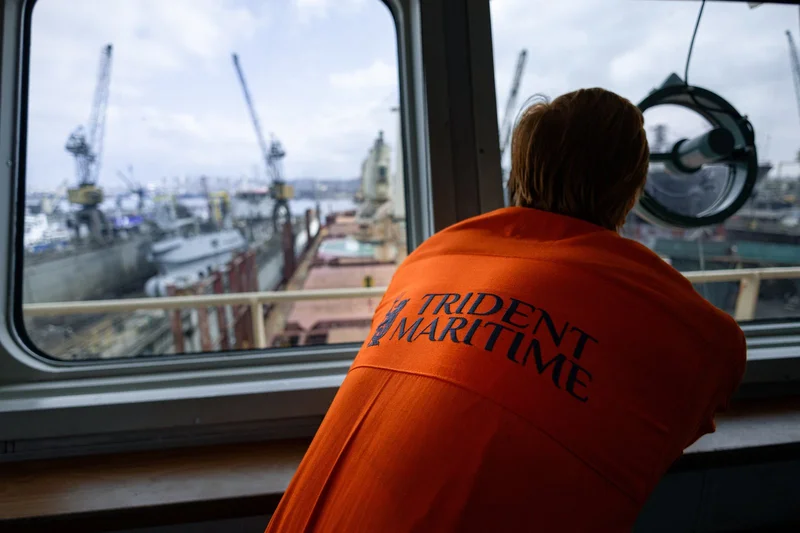
Discuss vessel budgets with Trident Maritime
Trident Maritime provides transparent, structured budgeting and operational oversight for tankers, gas carriers, containerships, and bulkers. As a BIMCO member with ISO 9001, 14001, and 45001 certifications, we operate with strict financial discipline across our offices in Odesa, Hamburg, Dubai, and Hong Kong. Our technical superintendents ensure that every OPEX dollar is deployed efficiently while maintaining the highest standards of vessel safety and compliance. For a confidential discussion regarding your fleet requirements, contact info@trident-maritime.com or visit our contacts page.
Frequently Asked Questions (FAQ)
How are ship management fees calculated in 2026?
Management fees are typically calculated as a fixed annual lump sum, payable in equal monthly instalments. This structure, defined under BIMCO SHIPMAN 2009, ensures the manager receives consistent remuneration for shore-based administrative overheads, regardless of the vessel's operational intensity in a given month.
What is included in vessel OPEX?
Vessel OPEX encompasses all actual costs required to run the ship. This includes crew wages, victualling, technical maintenance, spare parts, lubricating oils, statutory certification fees, and insurance premiums (H&M and P&I). OPEX is funded entirely by the shipowner through working capital advances.
Does the management fee cover dry-docking supervision?
Standard management fees generally do not cover the extensive superintendent time required for dry-docking supervision. Many management agreements treat dry-docking supervision as additional work, charged separately from the monthly management fee as agreed in the contract.
How often do ship managers report on OPEX variance?
Ship managers typically provide detailed financial variance reports on a monthly or quarterly basis. These reports compare the actual OPEX expenditure against the owner-approved annual budget, highlighting any discrepancies caused by emergency repairs, fluctuating spare part costs, or crew travel expenses.
Are crew recruitment costs part of the management fee or OPEX?
Crew recruitment costs, including medical examinations, visa processing, and travel to the vessel, are strictly categorised as OPEX. The management fee only covers the administrative service of sourcing and selecting the crew, not the direct expenses incurred to place them on board.
Can owners audit the ship manager's OPEX accounts?
Yes, standard ship management agreements grant owners the right to audit the manager's accounting records. Owners or their appointed marine consultants can review invoices, procurement receipts, and payroll records to ensure that all OPEX funds have been deployed transparently and in accordance with the approved budget.

Contact Trident Maritime
Need a consultation or proposal? Reach out through any of the channels below - we respond within one business day.
- Phone: +380487373735
- Email: info@trident-maritime.com
- Telegram: @tridentmaritime