Ship management Odesa in 2026: Hub Operations
Effective ship management Odesa operations in 2026 integrate technical supervision, STCW-certified crewing, and strict compliance monitoring for global fleets. Operators delegate sourcing, training, and retention to specialist managers to ensure seamless vessel deployment. Discover the key frameworks shaping the maritime industry today.
Tanker operators face roughly 20-30 SIRE 2.0 findings per inspection - up from 2-4 under the legacy VIQ7 regime - making rigorous pre-vetting preparation a core operational requirement rather than a documentation exercise (OCIMF, 2024). Navigating these stringent standards demands a highly coordinated approach between onboard teams and shore-based superintendents.
Contents:
- Why choose ship management Odesa for global fleet operations?
- How does STCW compliance shape crewing strategies in 2026?
- What are the technical management priorities for tankers and bulkers?
- How to prepare for SIRE 2.0 vetting inspections?
- Comparing vetting regimes: SIRE 2.0 vs legacy VIQ7?
- How do international regulations impact vessel compliance?
- Discuss ship management Odesa with Trident Maritime
Why choose ship management Odesa for global fleet operations?
Coordinating international fleets requires a centralized hub capable of managing complex logistics, regulatory compliance, and crew mobilization. Our headquarters serves as a strategic Black Sea command centre, supporting vessels trading across Germany, UAE, Hong Kong, Singapore, the UK, Greece, and Cyprus. The top six ship-management companies generate approximately 80% of industry revenues in their served markets (Drewry / Lloyd's List, 2025).
Maintaining high operational standards requires robust quality management systems and continuous oversight. We operate under strict ISO 9001:2015, ISO 14001:2015, and ISO 45001:2019 certifications, ensuring consistent service delivery for complex vessel types. Learn more about our corporate structure and certifications on our About Trident Maritime page.
Fleet operators benefit from a unified approach to technical and commercial operations. By centralizing superintendent oversight, owners reduce operational friction and optimize voyage execution.
How does STCW compliance shape crewing strategies in 2026?
The IMO STCW Convention applies to approximately 1.2 million certificated seafarers on over 50,000 vessels worldwide (IMO, 2025). Ensuring that every crew member holds valid, authenticated credentials is the foundation of safe vessel operations. Recent STCW amendments require electronic certificates of competency effective from 2025, significantly altering how crew managers verify documents.
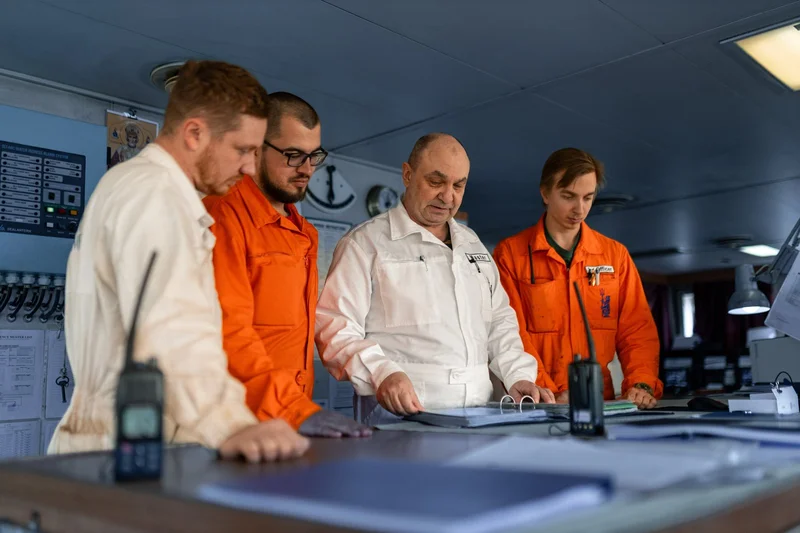
Managing a modern fleet requires dynamic crew scheduling, continuous training, and strict adherence to the Maritime Labour Convention (MLC). Our dedicated teams handle end-to-end recruitment, payroll, and welfare management for specialized vessel types. Detailed insights into our deployment processes are available in our crew management services overview.
"All vessel inspections, audits and surveys are subject to flag-state, class and port-state requirements."
- Capt. Oleksiy Smolyar, Master Mariner / CEO Trident Maritime
What are the technical management priorities for tankers and bulkers?
Technical management focuses heavily on predictive maintenance, dry-docking supervision, and strict class compliance. The IACS comprises 12 member classification societies covering more than 90% of the world's cargo-carrying tonnage (IACS Annual Review 2025). Shore-based superintendents must coordinate closely with these societies to maintain vessel certification and operational readiness.
Implementing a robust Planned Maintenance System (PMS) is critical for minimizing downtime and preventing catastrophic machinery failures. Superintendents monitor engine performance, hull integrity, and critical safety systems in real-time. Explore our comprehensive technical solutions on our core services page.
Final scope, cost, and timeline for any technical intervention depend on vessel condition, class requirements, trading area, and yard availability. Proactive management mitigates the risk of off-hire periods and unexpected repair costs.
How to prepare for SIRE 2.0 vetting inspections?
Over 90% of tanker operators use OCIMF TMSA-3 to assess their safety management systems (OCIMF, 2024). Preparing for the dynamic SIRE 2.0 regime requires a shift from passive documentation to active human-factor assessment. Superintendents and crew must collaborate to ensure seamless execution.
- Review CVIQ requirements. Ensure all onboard personnel understand the dynamic Compiled Vessel Inspection Questionnaire.
- Assess human factors. Evaluate crew familiarity with critical safety equipment and emergency response procedures.
- Upload photographic evidence. Submit required documentation and baseline photographs to the OCIMF portal in advance.
- Conduct internal audits. Perform a comprehensive gap analysis using established TMSA-3 guidelines.
- Coordinate with shore staff. Ensure technical superintendents are available to support the master during the vetting process.
Thorough preparation directly impacts a vessel's commercial viability and chartering potential. For further guidance, consult our technical briefing on SIRE 2.0 Inspection in 2026.
Comparing vetting regimes: SIRE 2.0 vs legacy VIQ7?
SIRE 2.0 became the mandatory tanker vetting standard on 2 September 2024, replacing VIQ7 (OCIMF, 2024). This transition fundamentally changed how oil majors evaluate vessel risk, placing unprecedented emphasis on human performance and digital evidence.
| Criterion | SIRE 2.0 (2026) | Legacy VIQ7 |
|---|---|---|
| Primary Focus | Human factors, processes, and hardware | Primarily hardware condition |
| Questionnaire Type | Dynamic CVIQ (vessel-specific) | Static VIQ (standardized) |
| Evidence Collection | Pre-uploaded photos and digital certs | Onboard physical document review |
| Execution Method | Intrinsically safe tablets (offline app) | Paper-based checklists |
Understanding these differences is essential for maintaining a high vetting acceptance rate. Operators must adapt their safety management systems to address the expanded scope of digital and behavioural assessments.
How do international regulations impact vessel compliance?
Port State Control (PSC) regimes enforce strict adherence to international maritime conventions, directly impacting a vessel's trading ability. Paris MoU port state control inspects approximately 17,500 individual ships per year, with a detention rate around 3% (Paris MoU Annual Report, 2024). Deficiencies in fire safety, life-saving appliances, or ISM Code implementation frequently lead to costly detentions.
Navigating these regulatory frameworks requires continuous onboard audits and rigorous shore-based support. Any technical assessment is based on available documents, vessel condition at the time of inspection, and access granted onboard. Read more about compliance verification in our guide on Vessel Inspection Scope and Types in 2026.
Maintaining a zero-detention record enhances a vessel's commercial profile and reduces insurance premiums. Proactive compliance is a core metric of effective technical management.
Frequently Asked Questions (FAQ)
What does SIRE 2.0 inspection cover for tankers?
A SIRE 2.0 inspection covers hardware condition, operational processes, and human factors. Inspectors use a dynamic Compiled Vessel Inspection Questionnaire (CVIQ) on intrinsically safe tablets. This replaces the static VIQ7, requiring operators to pre-upload photographic evidence and certificates to the OCIMF portal in advance.
How does ship management Odesa coordinate global crew deployment?
Our headquarters coordinates global crew deployment by matching STCW-certified seafarers with vessel-specific requirements. We manage payroll, MLC-compliant contracts, and travel logistics for fleets trading in Germany, UAE, Singapore, and beyond. This centralized approach ensures continuous operational readiness and regulatory compliance.
Which flag states accept electronic Certificates of Competency in 2026?
Following the recent STCW amendments, major registries including Liberia, Marshall Islands, and Panama fully accept electronic Certificates of Competency (e-CoCs). These digital credentials streamline crew mobilization and reduce administrative delays during port state control inspections. Verification is securely conducted via official online portals.
How long does a pre-purchase vessel inspection take?
A standard pre-purchase vessel inspection typically takes two to three days, depending on vessel size and condition. The process includes a thorough review of class records, hull integrity, machinery status, and safety equipment. Final scope and timeline depend on vessel condition and access granted onboard.
What is the detention rate for Paris MoU port state control?
The Paris MoU port state control detention rate rose to 4.03% in 2024, up from 3.81% in 2023. Inspectors focus heavily on ISM Code implementation, fire safety, and life-saving appliances. Maintaining strict planned maintenance systems is essential to avoid costly delays and port detentions.
How do you ensure MLC compliance during crew management?
We ensure Maritime Labour Convention (MLC) compliance through rigorous internal audits and certified crew management protocols. This includes verifying standardized employment agreements, managing rest hour records, and ensuring timely wage payments. Our ISO 9001-certified processes guarantee that all seafarer welfare standards meet international regulations.
Discuss ship management Odesa with Trident Maritime
Our headquarters operates a 24/7 emergency response centre, fully certified under ISO 9001, ISO 14001, and ISO 45001. As a BIMCO member, we deliver transparent, compliance-driven solutions for global fleet owners navigating complex regulatory environments. For a confidential discussion regarding your fleet, contact info@trident-maritime.com, visit our contacts page, or reach out to @tridentmaritime on our official channels.