VLCC management in 2026: Operating 300,000-DWT Tankers
SIRE 2.0 became the mandatory tanker vetting standard on 2 September 2024, replacing VIQ7 (OCIMF, 2024). Tanker operators face roughly 20-30 SIRE 2.0 findings per inspection, up from 2-4 under the legacy VIQ7 regime, making pre-vetting preparation a core operational competence.
VLCC management in 2026 demands strict adherence to SIRE 2.0 vetting, proactive technical maintenance, and specialised crew management for 300,000-DWT vessels. Operators must navigate complex regulatory frameworks, including IMO emissions targets and OCIMF TMSA-3 guidelines. Effective third-party oversight ensures optimal vessel performance and charter readiness.
VLCC management involves the technical, crewing, and commercial operation of 300,000-DWT crude oil tankers to ensure SIRE 2.0 compliance and uninterrupted global trading.
Contents
- What does VLCC management encompass in 2026?
- How does SIRE 2.0 impact 300,000-DWT tanker operations?
- What are the technical maintenance priorities for VLCCs?
- How do crew management requirements differ for large tankers?
- Which regulatory frameworks govern VLCC operations vs smaller tankers?
- How to prepare a VLCC for vetting inspections?
- Discuss VLCC management with Trident Maritime
What does VLCC management encompass in 2026?
Operating Very Large Crude Carriers (VLCCs) up to 300,000 DWT requires specialised technical and operational infrastructure. VLCC management integrates planned maintenance systems, rigorous vetting compliance, and continuous performance monitoring. A standard 300,000-DWT VLCC features a length overall (LOA) exceeding 330 metres and requires highly specialised port infrastructure for cargo operations.
The IMO Net-Zero Framework, agreed in April 2025, targets net-zero emissions from international shipping by approximately 2050 (IMO MEPC 83). This regulatory pressure forces managers to implement advanced energy efficiency measures on large tankers. Vessel routing, speed optimisation, and real-time telemetry are now standard components of commercial management agreements.
Successful VLCC management relies on strict adherence to the International Safety Management (ISM) Code. Technical superintendents must continuously audit onboard safety management systems to prevent structural failures or environmental incidents. Comprehensive oversight protects the asset value and ensures uninterrupted trading capability.
How does SIRE 2.0 impact 300,000-DWT tanker operations?
The transition to the Ship Inspection Report Programme (SIRE 2.0) fundamentally changed how oil majors evaluate tanker risk. SIRE 2.0 inspections typically identify 20-30 findings per vessel, versus the 2-4 typical under VIQ7 (industry analysis, 2024). This shift requires crews to demonstrate deep understanding of their equipment rather than merely presenting certificates.
Inspectors now utilise tablet-based tools to assess human factors alongside hardware conditions. Pre-vetting preparations for a VLCC must address these behavioural and operational metrics comprehensively. Managers coordinate closely with onboard leadership to ensure absolute readiness for these rigorous assessments.
Detailed guidance on navigating these changes is crucial for maintaining charter approvals. Operators can review the specific inspection criteria in our dedicated SIRE 2.0 inspection guide. Consistent compliance secures commercial viability in the highly competitive crude oil transport sector.
What are the technical maintenance priorities for VLCCs?
Maintaining a 300,000-DWT vessel demands a proactive, data-driven approach to technical management. Over 90% of tanker operators use OCIMF TMSA-3 to assess their safety management systems (OCIMF, 2024). Routine maintenance schedules must align with these stringent industry standards to minimise off-hire periods.

Main engine overhauls, cargo pump maintenance, and inert gas system calibrations form the core of the technical workload. Superintendents monitor cylinder lubrication rates and bearing temperatures to predict component wear before failure occurs. Dry docking a VLCC requires securing massive graving docks, often booked years in advance at specialised yards.
"Capt. Smolyar Oleksiy is a maritime executive, Master Mariner, and CEO / Director of Trident Maritime, with hands-on experience in technical ship management, crew management, ISM compliance, class and flag state coordination, and operational recovery of vessels under challenging conditions."
- Capt. Oleksiy Smolyar, Master Mariner / CEO Trident Maritime
Effective technical oversight directly impacts the vessel's Energy Efficiency Existing Ship Index (EEXI) and Carbon Intensity Indicator (CII) ratings.
How do crew management requirements differ for large tankers?
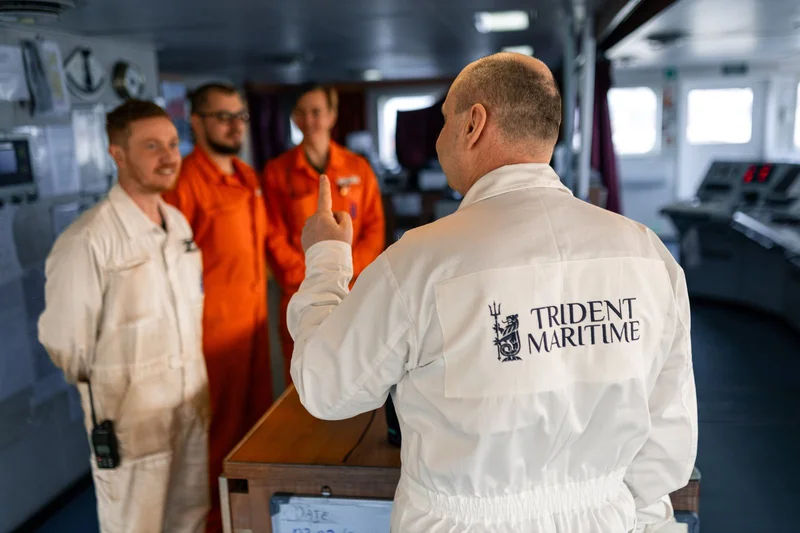
Sourcing and retaining qualified seafarers for VLCCs involves stricter criteria than standard bulk carrier operations. The IMO STCW Convention applies to approximately 1.2 million certificated seafarers on over 50,000 vessels worldwide (IMO, 2025). Officers commanding 300,000-DWT vessels must possess advanced oil tanker endorsements and extensive simulator training.
Specialised crew management protocols ensure that all personnel meet the matrix requirements set by oil majors. Recent STCW amendments require electronic certificates of competency effective from 2025 (IMO MSC.535(107)). Managers handle the complex logistics of crew changes, payroll, and continuous professional development.
The Maritime Labour Convention 2006 (MLC) is in force in countries representing over 97% of world gross shipping tonnage (ILO, 2026). Compliance with MLC welfare standards is non-negotiable for maintaining morale and operational safety on long-haul crude voyages. High retention rates among senior officers correlate directly with fewer vetting deficiencies.
Which regulatory frameworks govern VLCC operations vs smaller tankers?
The regulatory environment for crude carriers scales in complexity with the size of the vessel. The IACS comprises 12 member classification societies covering more than 90% of the world's cargo-carrying tonnage (IACS Annual Review 2025). VLCCs face enhanced structural surveys, particularly concerning the Enhanced Survey Programme (ESP) for oil tankers.
| Regulatory Area | VLCC (300,000 DWT) Application | Smaller Tanker (Handysize) Application |
|---|---|---|
| Structural Surveys | Extensive Condition Assessment Scheme (CAS) requirements. | Standard ESP guidelines with smaller survey scopes. |
| Mooring Equipment | MEG4 compliance with massive SWL requirements. | MEG4 compliance with standard SWL ratings. |
| Vetting Scrutiny | Highest risk profile under SIRE 2.0. | High risk, but generally shorter inspection durations. |
| Emissions Monitoring | Strict CII management due to massive fuel consumption. | Standard CII monitoring and reporting. |
Classification societies like IACS members dictate the unified requirements for hull integrity and machinery reliability. Navigating these frameworks requires dedicated marine consultancy to ensure no regulatory deadlines are missed. Strict compliance prevents port state control detentions and maintains insurance validity.
How to prepare a VLCC for vetting inspections?
Preparing a 300,000-DWT vessel for vetting requires systematic coordination between the shipboard team and shore management. Paris MoU port state control inspects approximately 17,500 individual ships per year, with a detention rate around 3% (Paris MoU Annual Report, 2024). Avoiding detention and securing vetting approvals demands a rigorous pre-inspection protocol.
- Review SIRE 2.0 CVI. Analyse the Consolidated Vessel Inspection report to identify vessel-specific focus areas and past deficiencies.
- Conduct internal audits. Superintendents must perform physical hardware checks and review the planned maintenance system for overdue items.
- Verify human factors. Ensure the crew can confidently demonstrate equipment operation, emergency procedures, and safety culture.
- Check documentation. Validate all statutory certificates, class records, oil record books, and electronic STCW endorsements.
- Perform a pre-vetting inspection. Execute a full mock inspection covering all 13 elements of TMSA-3 to identify critical gaps.
- Optimise mooring arrangements. Confirm that all mooring lines and winch brakes comply strictly with MEG4 guidelines.
Thorough preparation mitigates the risk of commercial delays. Operators can explore our comprehensive vessel inspection scope for further details. A well-prepared VLCC consistently secures the necessary approvals for global crude oil trading.
Discuss VLCC management with Trident Maritime
Trident Maritime provides comprehensive ship management services for tankers, gas carriers, containerships, and bulkers. Our technical superintendents and marine specialists hold extensive experience in managing complex 300,000-DWT vessels. We operate under strict ISO 9001, 14001, and 45001 certifications to guarantee operational excellence.
We maintain a 24/7 emergency response capability to support our managed fleet across all trading routes. As a BIMCO member, we align our procedures with the highest international maritime standards. Our dedicated teams in Odesa, Hamburg, Dubai, and Hong Kong ensure seamless global support.
For a confidential discussion regarding your fleet requirements, contact info@trident-maritime.com or visit our contacts page. Pricing is by arrangement and depends on vessel type, flag, trading area, and contract scope.
Frequently Asked Questions (FAQ)
What are the primary challenges in VLCC management?
The primary challenges include maintaining compliance with SIRE 2.0 vetting standards, managing the massive scale of technical maintenance, and optimising fuel efficiency to meet IMO GHG Strategy targets. Operating a 300,000-DWT vessel requires precise coordination between technical superintendents and highly trained crew members.
How does SIRE 2.0 affect VLCC vetting procedures?
SIRE 2.0 shifts the vetting focus from purely hardware-based checks to a comprehensive assessment of human factors and operational procedures. Tanker operators face roughly 20-30 SIRE 2.0 findings per inspection, demanding deeper crew familiarisation and continuous audit readiness compared to the legacy VIQ7 regime.
Which classification societies oversee VLCC operations?
VLCC operations are overseen by major classification societies that are members of the International Association of Classification Societies (IACS). The IACS comprises 12 member societies, including Lloyd's Register, DNV, and ABS, which enforce unified requirements for structural integrity and safety management.
What is the standard crew complement for a 300,000-DWT VLCC?
A standard VLCC crew complement typically ranges from 22 to 28 seafarers, depending on the flag state's minimum safe manning document and the operator's specific requirements. Sourcing these professionals requires strict adherence to STCW matrix requirements and specialised crude oil washing (COW) endorsements.
How do managers handle dry docking for VLCCs?
Dry docking a VLCC involves securing massive graving docks at specialised shipyards, often located in regions like Asia or the Middle East. Technical managers must plan these events years in advance, coordinating extensive steel renewals, hull coating applications, and main engine overhauls to minimise off-hire time.
What role does TMSA-3 play in tanker management?
The Tanker Management and Self Assessment (TMSA-3) framework provides a standard for operators to measure and improve their safety management systems. Over 90% of tanker operators use OCIMF TMSA-3, which contains 13 elements, to ensure continuous improvement and secure charter approvals from major oil companies.
Contact Trident Maritime
Need a consultation or proposal? Reach out through any of the channels below - we respond within one business day.
- Phone: +380487373735
- Email: info@trident-maritime.com
- Telegram: @tridentmaritime