Bulk Carrier Management in 2026: A Technical Guide
Bulk carrier management in 2026 integrates ISM Code compliance, structural integrity under IACS rules, and stringent RightShip vetting. Effective management focuses on mitigating cargo-specific risks like liquefaction under the IMSBC Code and maintaining operational efficiency amid evolving GHG regulations from the IMO.
According to the Paris MoU's 2024 annual report, bulk carriers continue to be a high-focus category during port state control inspections, with structural and equipment-related deficiencies frequently cited. This underscores the need for proactive, technically proficient management to ensure vessel safety, compliance, and commercial availability.
What Defines Modern Bulk Carrier Management in 2026?
Modern bulk carrier management extends beyond basic operational oversight to encompass a highly specialised framework of risk assessment, structural maintenance, and commercial vetting. The sector, represented by bodies like INTERCARGO, faces unique pressures due to the nature of its cargoes and the physical stresses on vessel structures. Effective management requires deep expertise in the International Maritime Solid Bulk Cargoes (IMSBC) Code, which governs the safe carriage of over 5,000 unique commodities.
The operational landscape is defined by compliance with non-negotiable standards, including the IACS Common Structural Rules for Bulk Carriers and Oil Tankers (CSR BC & OT), which dictate standards for hull strength and fatigue life. Furthermore, commercial success is inextricably linked to performance in third-party vetting schemes, primarily RightShip's RISQ platform. A vessel with a poor RightShip rating is effectively excluded from charters with major mining companies and grain houses.
Therefore, a contemporary approach to managing bulk carriers integrates technical, crewing, and commercial functions to maintain the asset's physical condition, ensure regulatory compliance, and maximise its earning potential. Proactive technical management is the foundation upon which safety and commercial viability are built. Effective management ensures the vessel remains a low-risk, high-performing asset in a demanding market.
How Does ISM Code Compliance Shape Bulker Operations?
For bulk carriers, the International Safety Management (ISM) Code is not a documentation exercise but the core operational system for managing high-stakes risks. The vessel's Safety Management System (SMS) must contain specific procedures for bulk cargo operations, directly addressing hazards identified in the IMSBC Code. These include risks of cargo shifting, liquefaction of mineral ores, and oxygen depletion or toxic gas emission from organic cargoes.
The Designated Person Ashore (DPA) plays a critical role, acting as the link between the vessel and the highest level of management to monitor safety and pollution prevention aspects. Our experience shows that a robust SMS, which is actively used and understood by the crew, is the primary defence against incidents. It must include detailed checklists for hold preparation, watertight integrity of hatch covers, and ballast exchange sequences to manage hull stresses during loading and discharge.
As Capt. Oleksiy Smolyar, Director of Trident Maritime, notes, "An effective SMS for a bulk carrier is a living system. It must be stress-tested with realistic drills for cargo liquefaction or structural failure, not just filed away to pass an audit." This proactive stance on safety is essential for preventing catastrophic failures, which remain a persistent risk in the dry bulk sector. ISM compliance is the verifiable proof of a ship manager's commitment to operational integrity.
What Are the Key Technical Challenges for Bulk Carriers?
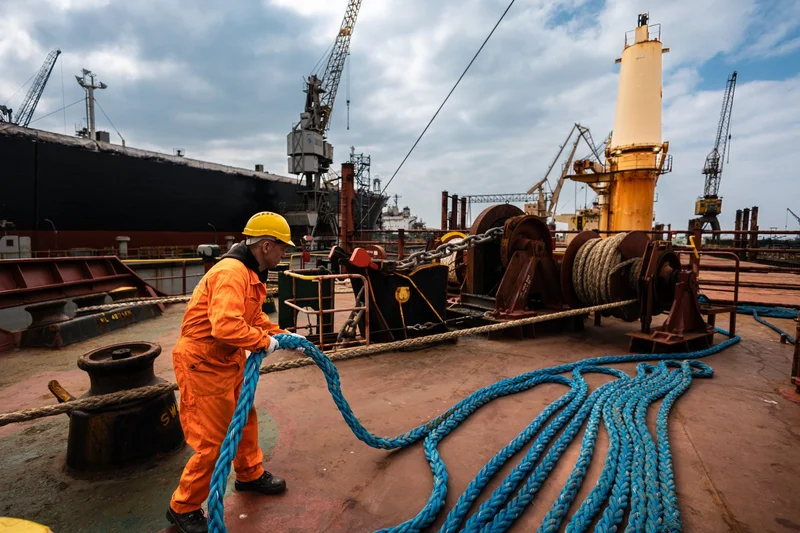
The primary technical challenge in bulk carrier management is maintaining structural integrity against immense physical stresses. High-tensile steel construction, while weight-efficient, is susceptible to fatigue and corrosion, particularly in cargo holds and side shell frames. Regular close-up inspections, thickness measurements, and diligent application of coatings during dry-docking are critical preventive measures mandated by classification societies and outlined in the vessel's Planned Maintenance System (PMS).
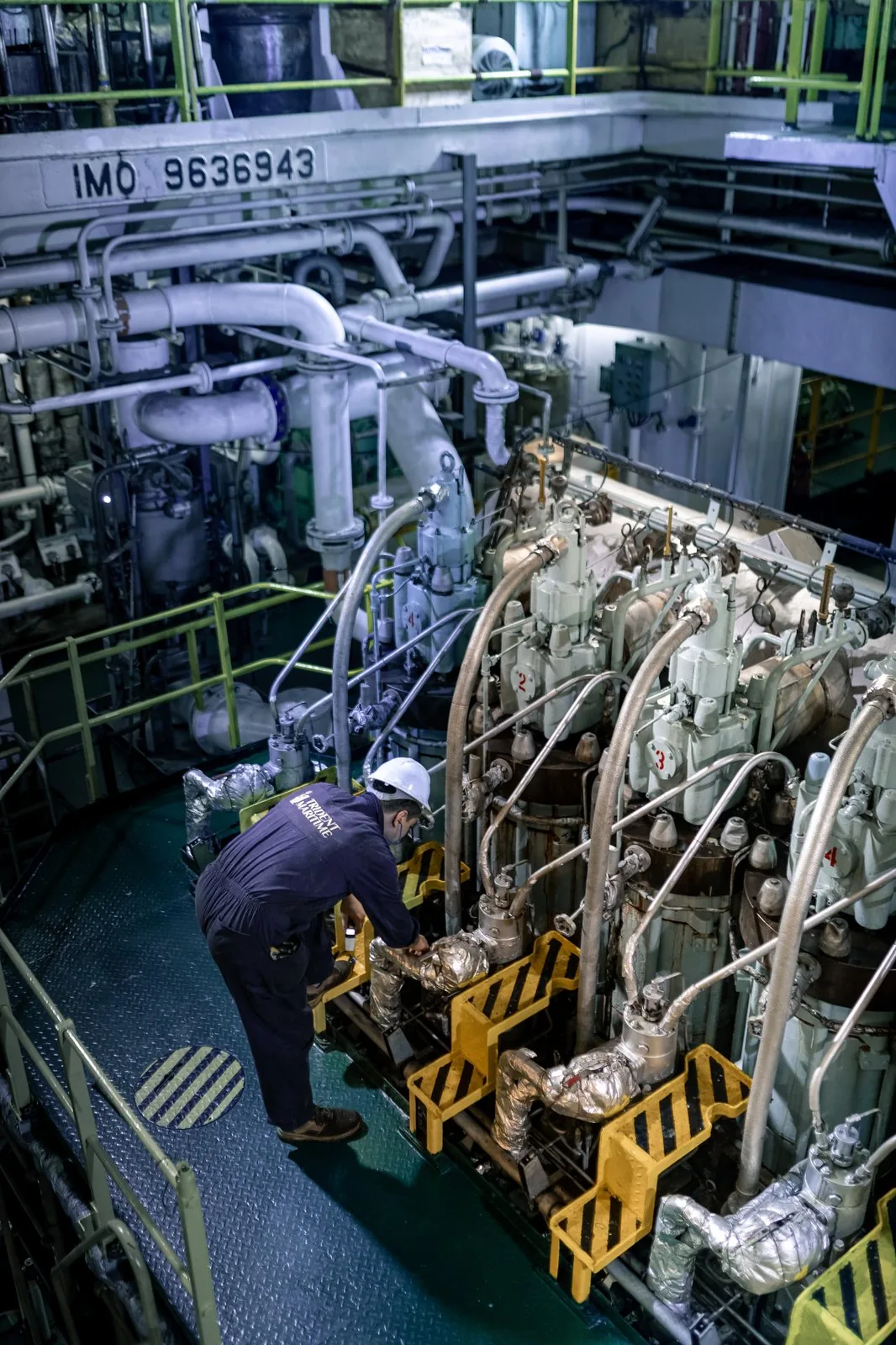
Hatch covers are another focal point. Their weathertight integrity is paramount for cargo protection and vessel safety, as water ingress can lead to cargo saturation and compromised stability. Ultrasonic testing of hatch cover seals has become a standard procedure during our pre-loading vessel inspections to prevent costly cargo claims and ensure compliance with SOLAS regulations.
Finally, the implementation of the IMO's Ballast Water Management (BWM) Convention presents an ongoing technical and operational challenge. Retrofitting BWM treatment systems on older vessels is a complex engineering project, and crews require specialised training for their correct operation and maintenance. Failure to meet discharge standards can result in significant fines and vessel delays, making BWM system reliability a key performance indicator for technical superintendents.
How Does RightShip Vetting Impact Commercial Viability?
In the dry bulk sector, RightShip's vetting platform is the de facto standard for commercial risk assessment, equivalent to OCIMF's SIRE programme for tankers. A vessel's RightShip rating, derived from its GHG Rating, Safety Score, and the RISQ (RightShip Inspection Ship Questionnaire), directly determines its charter eligibility. Major charterers like BHP, Rio Tinto, and Cargill will not employ vessels that fail to meet their RightShip criteria.
The RISQ framework is a comprehensive inspection protocol that scrutinises all aspects of a vessel's management, including ISM implementation, structural condition, crew welfare, and maintenance records. Unlike a simple PSC inspection, a RISQ inspection is an in-depth audit of the operator's safety culture. Preparing a vessel for a RISQ inspection involves a thorough internal audit and rectification of any potential deficiencies, often guided by experienced marine consultancy partners.
Achieving and maintaining a high RightShip rating is a core objective of effective bulk carrier management. It requires sustained investment in maintenance, a strong safety culture onboard, and transparent documentation. A positive vetting outcome is not just a certificate; it is a prerequisite for accessing premium cargo fixtures and maximising the vessel's lifetime earnings. A low rating can render a multi-million dollar asset commercially sterile.

What is the Role of Crew Management in Bulker Safety?
Effective crew management is a cornerstone of safety and efficiency on bulk carriers. Seafarers must possess not only the standard STCW certifications but also specific training on the unique hazards of solid bulk cargoes. This includes understanding the IMSBC Code, procedures for safe enclosed space entry into cargo holds or chain lockers, and the operation of specialised equipment like deck cranes and ballast water treatment systems.

The Maritime Labour Convention 2006 (MLC), in force for countries representing over 97% of world gross tonnage, sets the standard for crew welfare. For bulk carrier crews, who often face long voyages and demanding port calls, strict adherence to MLC work/rest hour regulations is crucial for preventing fatigue-related incidents. Trident Maritime ensures all managed vessels are fully MLC compliant, with systems in place to monitor and document work hours accurately.
Furthermore, crew continuity is a significant factor in maintaining high operational standards. A stable team of officers and ratings who are familiar with a specific vessel's systems and trading patterns can anticipate and manage risks more effectively. Our crewing strategy focuses on retention through fair contracts, timely wage payments, and clear career progression paths, fostering a professional and safety-conscious environment onboard.
How are GHG Emissions Regulations Affecting the Bulk Fleet?
The IMO's greenhouse gas (GHG) reduction strategy is profoundly impacting bulk carrier operations and asset management. The introduction of the Energy Efficiency Existing Ship Index (EEXI) and the Carbon Intensity Indicator (CII) has shifted the focus towards operational efficiency as a key compliance metric. Bulk carriers, due to their size and operational profile, are under intense scrutiny to improve their environmental performance.
A vessel's annual CII rating (A to E) is now a critical commercial factor, with many charterers, guided by initiatives like the Sea Cargo Charter, refusing to charter E-rated or even D-rated vessels. To maintain a favourable rating, managers must implement a comprehensive Ship Energy Efficiency Management Plan (SEEMP Part III). This involves a suite of measures including voyage optimisation, weather routing, hull and propeller cleaning, and potentially the installation of Energy Saving Devices (ESDs).
For older tonnage, meeting EEXI requirements often necessitates Engine Power Limitation (EPL), which can impact the vessel's trading flexibility. As stated in the IMO's Net-Zero Framework agreed in 2025, the industry is targeting net-zero emissions by approximately 2050, which will require a transition to alternative fuels. Forward-thinking owners and managers are already evaluating the long-term viability of their assets and considering designs for newbuildings compatible with fuels like ammonia or methanol.
What Distinguishes Handysize, Panamax, and Capesize Management?
While all bulk carriers operate under the same core regulatory frameworks, their size dictates distinct management strategies. The primary differences lie in cargo versatility, trading patterns, port accessibility, and the scale of maintenance. Each segment requires a tailored approach to technical and commercial oversight.
Handysize and Supramax vessels (up to 60,000 DWT) are typically geared, allowing them to call at a wider range of ports with limited shore infrastructure. Their management involves more complex voyage planning and a focus on maintaining deck cranes. In contrast, gearless Panamax (60-85,000 DWT) and Capesize (100,000+ DWT) vessels are restricted to major terminals and trade on high-volume iron ore and coal routes, demanding meticulous scheduling and robust hull structures to handle high loading rates.
The table below highlights the key operational distinctions:
| Criterion | Handysize / Supramax | Panamax | Capesize / VLOC |
|---|---|---|---|
| Typical DWT | 25,000 - 60,000 | 60,000 - 85,000 | 100,000 - 400,000+ |
| Cargo Gear | Typically geared (has own cranes) | Typically gearless | Gearless |
| Port Accessibility | High; can access smaller ports | Moderate; limited by beam (Panama Canal) | Low; restricted to deep-water terminals |
| Key Cargoes | Minor bulks, grains, steel, cement | Grains, coal, some minerals | Iron ore, coal |
| Technical Focus | Crane maintenance, hold cleanliness | Ballast capacity, transit draft limits | Structural stress, high loading rates |
| Commercial Strategy | Tramp trading, high flexibility | Major grain/coal routes, index-linked | Dedicated long-haul routes (e.g. Brazil-China) |
Related Reading
- Third-Party Ship Management in 2026: A Shipowner's Guide
- Crew Management Services in 2026: STCW & MLC Compliance
Discuss Bulk Carrier Management with Trident Maritime
Trident Maritime provides comprehensive ship management services for a diverse fleet of bulk carriers, from Handysize to Capesize. As a BIMCO member with ISO 9001, 14001, and 45001 certifications, we deliver compliant, efficient, and commercially focused management solutions. Our global presence with offices in Odesa, Hamburg, Dubai, and Hong Kong ensures 24/7 support for your assets worldwide.
Our approach is founded on technical excellence, a proactive safety culture, and deep expertise in the specific operational demands of the dry bulk sector. We ensure your vessels meet the stringent requirements of charterers, Port State Control, and classification societies.
For a confidential discussion, contact info@trident-maritime.com or visit our contacts page.
Contact Trident Maritime
Need a consultation or proposal? Reach out through any of the channels below — we respond within one business day.
- Phone: +380487373735
- Email: info@trident-maritime.com