Maritime commercial management in 2026: Decarbonisation Guide
Maritime commercial management in 2026 focuses on maximizing vessel earnings while ensuring compliance with the IMO Net-Zero Framework. Operators delegate chartering, voyage optimization, bunker procurement, and post-fixture operations to specialized managers. The integration of emissions tracking into charter parties now dictates voyage profitability and asset utilization rates.
Effective maritime commercial management directly links daily charter rates with carbon intensity indicators to secure profitable employment for commercial cargo vessels. The global ship management market is estimated at USD 3.41 billion in 2025, projected to reach USD 8.24 billion by 2035 (Business Research Insights, 2025). Navigating this landscape requires precise coordination between revenue generation and regulatory compliance.
What does maritime commercial management cover in 2026?
Modern commercial operations involve securing profitable employment for vessels through chartering, voyage optimization, and rigorous post-fixture execution. The top six ship-management companies generate approximately 80% of industry revenues in their served markets (Drewry / Lloyd's List, 2025). Owners increasingly delegate these complex functions to specialized teams to ensure continuous asset utilization in volatile freight markets.
Trident Maritime handles commercial operations for tankers, gas carriers, containerships, and bulkers ranging from handysize to 300,000-DWT VLCC class. Services include market analysis, freight management, bunker procurement, laytime calculations, and port agency coordination. When owners look to upgrade their fleets, commercial performance data directly informs sales and purchase decisions and asset valuations.
A robust commercial strategy requires seamless integration with technical and crew management to prevent costly off-hire periods. Effective commercial operations dictate the long-term financial viability of any commercial cargo fleet.
How do IMO emissions targets affect chartering strategies?
The regulatory landscape directly dictates charter party clauses and voyage profitability. The IMO 2023 GHG Strategy targets at least a 20% reduction (striving for 30%) in shipping emissions by 2030 versus 2008 levels (IMO MEPC 80). Furthermore, the IMO Net-Zero Framework, agreed in April 2025, targets net-zero emissions from international shipping by approximately 2050 (IMO MEPC 83).
Charterers now heavily scrutinize Carbon Intensity Indicator (CII) ratings before fixing vessels for long-term employment. Owners and charterers rely on standardized frameworks provided by organizations like BIMCO to draft emissions-linked charter clauses. These clauses allocate responsibility for fuel efficiency and carbon allowance costs between the shipowner and the charterer.
Vessels with poor CII ratings face significant commercial disadvantages and limited employment options in premium trades. Integrating environmental compliance into daily operations is now a mandatory component of fleet commercial strategy.
Which metrics define post-fixture operations profitability?
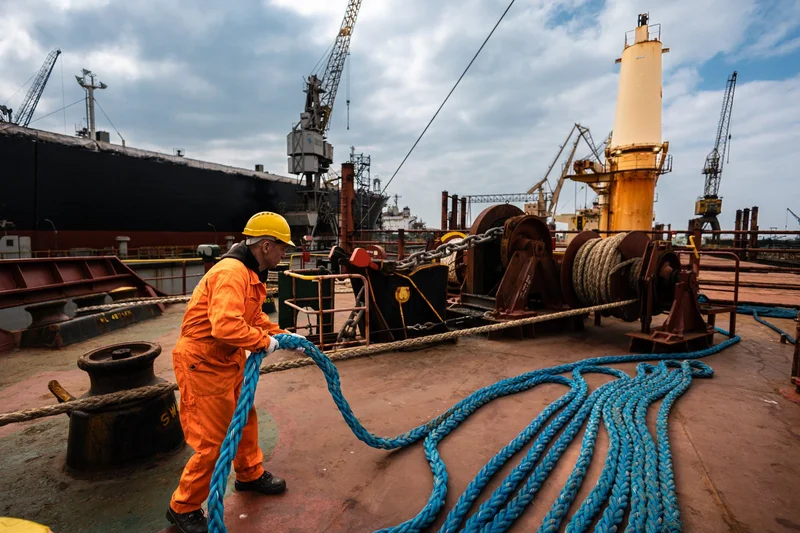
Once a charter party is signed, post-fixture operations determine the actual realized profit of the voyage. Key metrics include demurrage claims recovery, dispatch calculations, and precise bunker consumption tracking. Delays caused by port state control deficiencies can severely impact earnings and trigger off-hire clauses.
Paris MoU port state control inspects approximately 17,500 individual ships per year, with a detention rate rising to 4.03% in 2024 (Paris MoU Annual Report 2024). Beyond European waters, Tokyo MoU recorded 1,189 detentions and 77,526 deficiencies across Asia-Pacific port state inspections in 2024 (Tokyo MoU Annual Report 2024). Avoiding such delays requires strict adherence to IMO conventions like SOLAS and MARPOL.
Shipowners frequently utilize marine consultancy services to conduct pre-hire surveys and protect their interests during bunker disputes. Rigorous post-fixture execution ensures that projected voyage estimates convert into actual financial returns.
How to select a third-party commercial manager?
The third-party ship management segment is projected to grow at approximately 9% CAGR through 2035 (Business Research Insights, 2025). Selecting the right partner requires evaluating their market access, operational transparency, and regulatory expertise. Operators should follow a structured approach when delegating commercial control.
- Assess fleet compatibility. Verify the manager has proven experience with your specific vessel types, such as chemical tankers or VLCCs.
- Evaluate market intelligence. Analyze their capacity for freight market forecasting and dynamic voyage optimization.
- Review post-fixture protocols. Ensure they have dedicated teams for demurrage claims, bunker procurement, and port agency coordination.
- Check regulatory alignment. Confirm their procedures integrate seamlessly with current IMO GHG and CII reporting requirements.
- Verify compliance frameworks. Examine their ISO certifications and BIMCO membership status to ensure professional standards.
A structured selection process minimizes commercial risk and aligns asset deployment with owner objectives.
How do traditional and emissions-linked charter agreements differ?
The transition toward decarbonisation has fundamentally altered how charter parties are structured. Traditional agreements focused primarily on speed and consumption warranties without accounting for carbon output. Modern contracts must balance operational performance with statutory emissions limits.
| Contract Element | Traditional Time Charter | Emissions-Linked Time Charter (2026) |
|---|---|---|
| Performance Warranty | Based strictly on vessel speed and daily bunker consumption. | Includes continuous Carbon Intensity Indicator (CII) maintenance. |
| Routing Decisions | Charterer dictates route based solely on commercial expediency. | Owner retains rights to adjust routing to maintain required emissions ratings. |
| Fuel Procurement | Charterer procures standard compliant conventional fuels. | Includes provisions for alternative fuels and carbon pricing mechanisms. |
| Carbon Allowances (EU ETS) | Not applicable in legacy frameworks. | Charterer is explicitly liable for providing emission allowances for the voyage. |
Choosing the appropriate charter structure requires expert commercial management to protect asset value and ensure regulatory compliance.
How does technical coordination impact commercial availability?
Commercial employment is entirely dependent on a vessel's technical readiness and vetting status. For tanker operators, SIRE 2.0 became the mandatory tanker vetting standard on 2 September 2024, replacing VIQ7 (OCIMF, 2024). RightShip's Inspection Ship Vetting (RISQ) framework is the dominant dry-cargo counterpart to OCIMF's SIRE 2.0 for tanker vetting; both are required for chartering with major energy and bulk shippers (RightShip, 2024).
"Any technical assessment is based on available documents, vessel condition at the time of inspection and access granted onboard."
- Capt. Oleksiy Smolyar, CEO Trident Maritime
Seamless technical management ensures that routine maintenance aligns with commercial schedules. Owners frequently commission independent vessel inspections before major vetting windows to proactively identify deficiencies.
When technical deficiencies occur, compliance restoration cases do not guarantee PSC, class or flag outcome, but are managed through structured corrective action and documented follow-up. Final scope, cost and timeline depend on vessel condition, class/flag requirements, trading area and yard/service-provider availability.
Related reading
Explore our latest technical insights on fleet operations and regulatory compliance:
- Shipping management in 2026: A Technical Guide
- Maritime business intelligence in 2026: A Guide
- SIRE 2.0 Inspection in 2026: A Guide for Tanker Operators
Frequently asked questions
What does maritime commercial management cost?
Pricing is by arrangement and depends on vessel type, flag, trading area, and contract scope. Contact info@trident-maritime.com for a formal proposal. Commercial management fees typically structure around a percentage of gross freight or a fixed daily rate, aligning the manager's incentives with the owner's revenue goals.
How does the EU ETS impact commercial chartering?
The European Union Emissions Trading System requires shipping companies to surrender allowances for carbon emissions generated during voyages touching EU ports. Modern charter parties include specific BIMCO clauses allocating these costs to the charterer. Commercial managers track emissions daily to ensure accurate allowance calculations and regulatory compliance.
What is the difference between technical and commercial management?
Technical management handles physical vessel maintenance, dry docking, crewing, and safety compliance under ISM/ISPS codes. Maritime commercial management focuses exclusively on revenue generation, including chartering, voyage optimization, and post-fixture operations. Both functions must coordinate closely to minimize off-hire time and maximize fleet profitability.
How do commercial managers handle demurrage claims?
Managers calculate laytime based on the statement of facts provided by the port agent during cargo operations. If loading or discharging exceeds the allowed time specified in the charter party, the commercial team issues a demurrage claim to the charterer. Prompt and accurate documentation is critical for successful claim recovery and revenue protection.
Which vessel types require specialized commercial management?
Trident Maritime manages commercial operations for tankers, gas carriers, containerships, and bulkers from handysize through 300,000-DWT VLCC class. Each vessel type operates in distinct freight markets with specific charter party templates and vetting requirements. Specialized managers leverage industry relationships to secure optimal fixtures for these specific assets.
How does a vessel's CII rating affect charter rates?
Vessels with A or B Carbon Intensity Indicator ratings command premium charter rates and broader employment options from environmentally conscious charterers. Ships rated D or E face significant commercial disadvantages and may be excluded from major energy company supply chains. Commercial managers actively route vessels and optimize speeds to maintain high annual CII performance.
How to partner with Trident Maritime for commercial management?
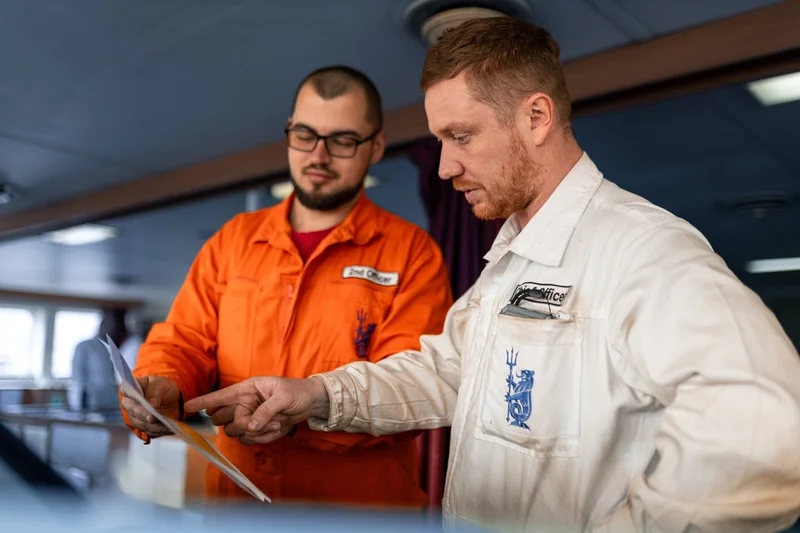
Trident Maritime provides comprehensive commercial operations for commercial cargo vessels worldwide. As a BIMCO member certified to ISO 9001, 14001, and 45001 standards, we integrate market intelligence with rigorous post-fixture execution. Our teams operate from offices in Odesa, Hamburg, Dubai, and Hong Kong, delivering 24/7 support for your fleet.
For a confidential discussion, contact info@trident-maritime.com or visit our contacts page.
How to contact Trident Maritime?
Need a consultation or proposal? Reach out through any of the channels below - we respond within one business day.
- Phone: +380487373735
- Email: info@trident-maritime.com
- Telegram: @tridentmaritime