What Is a Maritime Company? A 2026 Operations Guide
A maritime company provides comprehensive ship management and marine services, covering technical operations, crew management, and commercial chartering for vessel owners. As the third-party ship management segment continues to expand, these firms ensure safety, efficiency, and regulatory adherence under IMO and IACS rules. Partner with Trident Maritime to optimize your fleet's operations.
- What Defines a Maritime Company in 2026?
- How Does Technical Management Form the Operational Core?
- What Are the Key Functions of Crew Management?
- How is Commercial Viability Secured Through Management?
- What is the Role of a Maritime Company in Vessel Transactions?
- How Do Ship Managers and Owners Structure Their Relationship?
- Related Reading
- Discuss Your Fleet's Needs with Trident Maritime
- Contact Trident Maritime
What Defines a Maritime Company in 2026?
A maritime company, in the context of international trade, is an entity responsible for the operational management of sea-going vessels on behalf of their owners. This encompasses a broad spectrum of services, from full technical and crew management to specialized functions like commercial chartering, newbuilding supervision, and pre-purchase inspections. The core value proposition is leveraging specialized expertise to ensure a vessel is safe, compliant, and commercially viable.
These firms operate within a stringent international regulatory framework established by the International Maritime Organization (IMO). Compliance is non-negotiable and is enforced by Flag States, Port State Control (PSC) under regional MoUs like the Paris and Tokyo MoUs, and classification societies. The member societies of the International Association of Classification Societies (IACS) collectively class the vast majority of the world's cargo-carrying tonnage, setting the technical standards for vessel construction and maintenance.
Trident Maritime's scope covers the primary commercial vessel types: tankers (from product carriers to VLCCs), gas carriers (LPG/LNG), containerships, and bulk carriers. A professional maritime company acts as the holder of the Document of Compliance (DOC) under the ISM Code, making it the legally responsible entity for the vessel's safe operation. This responsibility is the foundation upon which all other management services are built.
A modern maritime company integrates technology and human expertise to manage assets globally, ensuring operational continuity and regulatory compliance across diverse trading areas.
How Does Technical Management Form the Operational Core?
Technical management is the bedrock of safe and reliable vessel operations, focused on maintaining the physical asset in line with regulatory and commercial requirements. This function is governed by the International Safety Management (ISM) Code, which mandates a robust Safety Management System (SMS). The SMS details procedures for all critical shipboard and shore-based operations, from navigation to engine room maintenance.
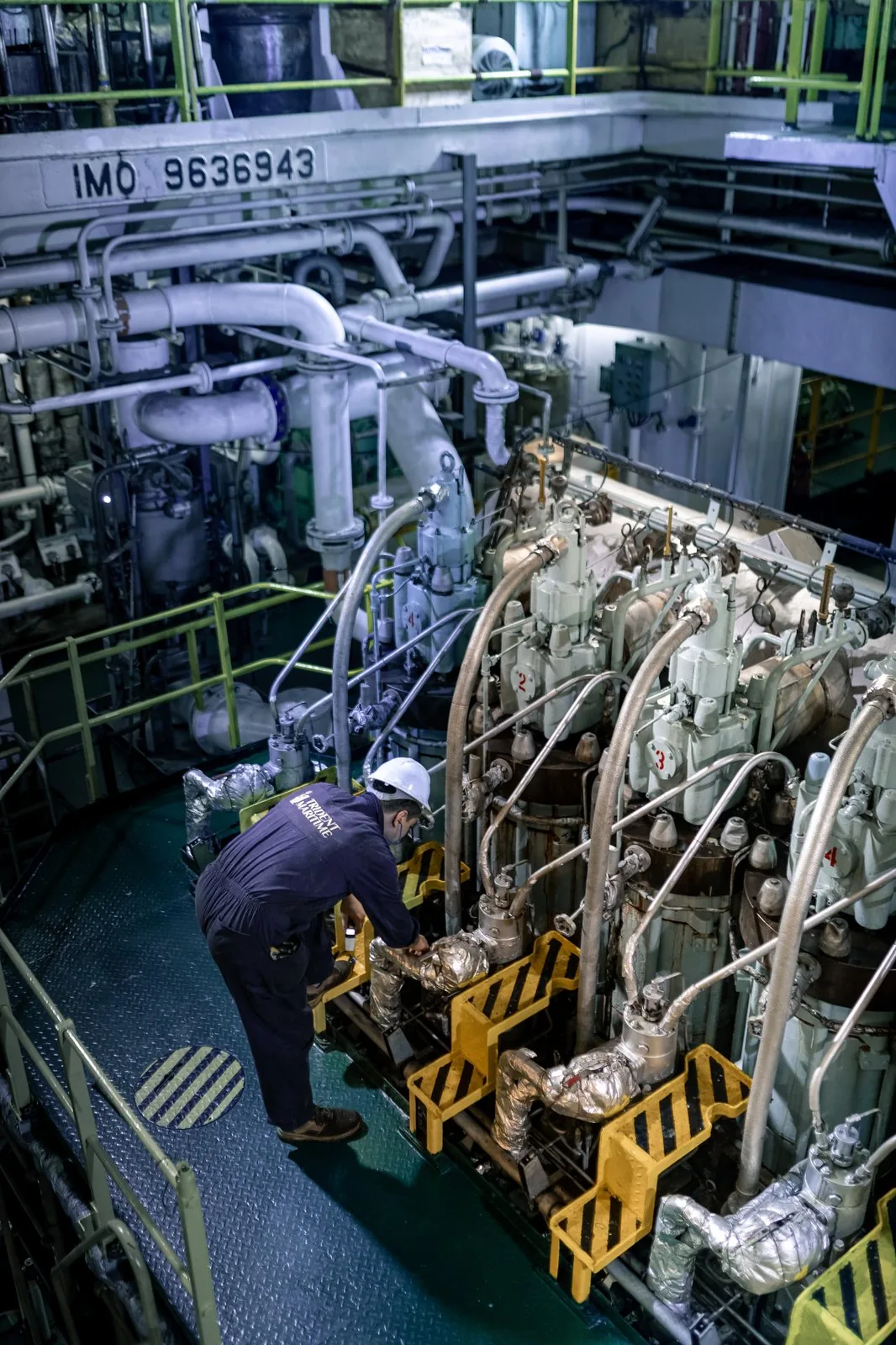
Key activities within technical management include the implementation of a Planned Maintenance System (PMS), procurement of spares and consumables, and coordination of repairs. It also involves meticulous planning and supervision of scheduled dry-dockings and major surveys required by the vessel's classification society. Our technical superintendents, with extensive sea-going experience as Chief Engineers and Masters, oversee these processes to control costs and minimize vessel downtime.
Compliance with international environmental regulations, such as MARPOL, is another critical aspect. This includes managing ballast water treatment systems (BWTS), exhaust gas cleaning systems (scrubbers), and ensuring correct implementation of the Ship Energy Efficiency Management Plan (SEEMP). As the IMO's Net-Zero Framework targets net-zero emissions by approximately 2050, proactive technical management is essential for future-proofing assets.
Ultimately, effective technical management directly impacts a vessel's operational availability, safety record, and long-term asset value for the owner.
What Are the Key Functions of Crew Management?
Crew management ensures that a vessel is manned by qualified, certified, and medically fit seafarers in accordance with international regulations and the owner's standards. The two primary regulatory pillars are the IMO's STCW Convention and the ILO's Maritime Labour Convention (MLC, 2006). The STCW Convention applies to approximately 1.2 million certificated seafarers globally, setting standards for training, certification, and watchkeeping.

A comprehensive crew management service covers the entire employment lifecycle. This includes sourcing and recruitment from a global pool of seafarers, pre-employment verification of certificates, arranging medical examinations (PEME), and managing visa and travel logistics. It also encompasses payroll administration, career development planning, and performance appraisals to foster high retention rates.
The MLC, 2006, often called the seafarers' bill of rights, is now in force in countries representing over 97% of world gross shipping tonnage. It establishes minimum standards for working and living conditions onboard, including accommodation, food, and medical care. A ship manager is responsible for ensuring the vessel's Declaration of Maritime Labour Compliance (DMLC) is maintained and that conditions onboard pass regular inspections by Flag and Port State authorities.
A well-executed crew management strategy is a competitive advantage, directly influencing the safety culture, operational performance, and maintenance standards of a vessel.
How is Commercial Viability Secured Through Management?
While technical and crew management ensure a vessel is operationally sound, commercial management ensures it is profitable. This function focuses on marketing the vessel for employment, negotiating charter parties, and managing its performance throughout the voyage. The goal is to maximize the vessel's time-charter equivalent (TCE) earnings while managing commercial risks.
The process begins with securing employment through chartering brokers or direct negotiations with charterers. A commercial manager handles the negotiation of the charter party agreement, using industry-standard forms from bodies like BIMCO as a foundation. This contract dictates the terms of the voyage, including freight rates, laycan (loading dates), demurrage, and performance warranties.
Once a vessel is fixed, post-fixture operations commence. This involves issuing voyage instructions to the Master, appointing and managing port agents, procuring bunkers of the correct quality and quantity, and coordinating with all stakeholders. The commercial team is also responsible for freight invoicing, laytime calculations, and resolving any commercial disputes that may arise during or after the voyage.
Effective commercial management requires deep market knowledge, strong relationships with charterers and brokers, and a proactive approach to voyage optimization and cost control.
What is the Role of a Maritime Company in Vessel Transactions?
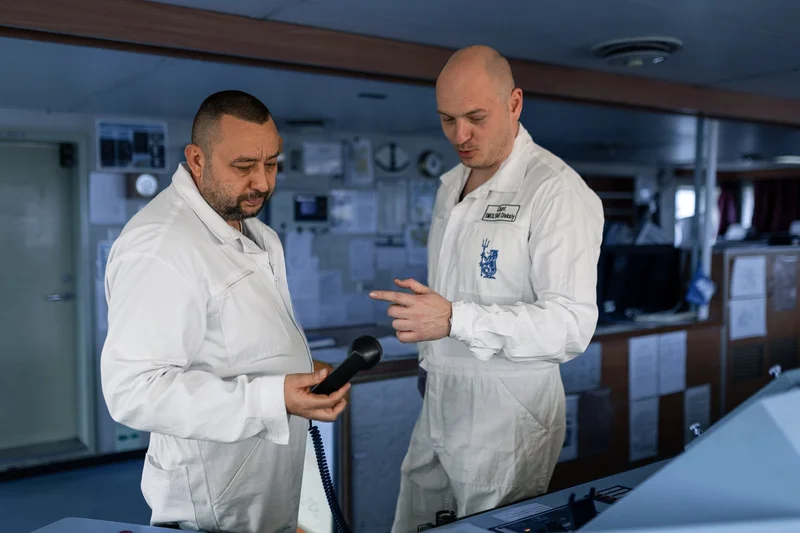
Beyond day-to-day operations, a maritime company provides critical support during key asset lifecycle events, particularly sales and purchases. The Sales and Purchase (S&P) process for a multi-million dollar vessel is complex, requiring thorough due diligence to mitigate risk for both buyer and seller. An experienced manager provides the technical and operational expertise needed to assess an asset's true condition.

During a potential acquisition, the buyer's manager will conduct a pre-purchase inspection. This is a detailed physical examination of the vessel's hull, machinery, and cargo systems, alongside a comprehensive review of its maintenance records, class status, and statutory certificates. Our team of Master Mariners and Chief Engineers conducts these vessel inspections to identify potential defects, upcoming capital expenditures, and any compliance gaps.
For owners selling a vessel, a manager assists in preparing the ship for inspection, ensuring all documentation is in order and presenting the asset in the best possible light. In both cases, the manager's report is a cornerstone of the negotiation process. This expertise extends to marine consultancy for newbuilding projects, where our superintendents provide on-site supervision at shipyards to ensure construction meets contractual specifications and quality standards.
A ship manager's role in vessel transactions is to provide objective, expert assessment, enabling clients to make informed investment decisions.
How Do Ship Managers and Owners Structure Their Relationship?
The relationship between a shipowner and a third-party maritime company is formalized through a Ship Management Agreement. The industry-standard contract is BIMCO's SHIPMAN, with the latest version being SHIPMAN 2024. This agreement clearly defines the scope of services, the manager's authority, liabilities, and the management fee structure.
The agreement specifies the type of management provided, which can range from a full package covering all aspects of the vessel's operation to more limited scopes. For instance, an owner may retain commercial management in-house while outsourcing the more resource-intensive technical and crew management functions. The contract also outlines the process for budget approval, financial reporting, and the handling of the vessel's operational funds.
The table below compares the typical structures offered by a ship management provider.
| Feature | Full Technical Management | Crew Management Only | Marine Consultancy |
|---|---|---|---|
| Core Scope | ISM/ISPS, maintenance, dry-docking, crewing, procurement | STCW/MLC compliance, sourcing, training, payroll, travel | Audits, inspections, S&P support, newbuilding supervision |
| Contract Type | Long-term (e.g., BIMCO SHIPMAN) | Long-term (e.g., BIMCO CREWMAN) | Project-based, fixed fee or day rate |
| Key Regulations | SOLAS, MARPOL, ISM, STCW, MLC | STCW, MLC | Varies by project (e.g., OCIMF SIRE 2.0, RightShip RISQ) |
| Responsibility | Full operational control (as agent for owner) | Crew-related matters only | Advisory and inspection-based |
| Typical KPI | OPEX vs. budget, vessel uptime, PSC/vetting results | Crew retention rate, PEME pass rate | Report delivery timeline, inspection findings |
"The clarity of the management agreement is paramount," states Capt. Oleksiy Smolyar, Director of Trident Maritime. "It establishes a transparent partnership based on defined responsibilities and performance metrics, which is the only sustainable model for long-term third-party ship management in 2026."
A well-defined contractual framework ensures alignment of interests and provides a clear basis for performance evaluation and accountability.
Related Reading
- Third-Party Ship Management in 2026: A Shipowner's Guide
- Crew Management Services in 2026: STCW & MLC Compliance
Discuss Your Fleet's Needs with Trident Maritime
Trident Maritime is an ISO 9001, 14001, and 45001 certified ship management and marine services provider and a member of BIMCO. With operational hubs in Odesa, Hamburg, Dubai, and Hong Kong, our teams provide 24/7 support to a diverse fleet of tankers, gas carriers, containerships, and bulkers.
Our expertise is grounded in decades of hands-on experience, both at sea and ashore. We partner with shipowners to deliver safe, compliant, and efficient vessel operations tailored to their specific commercial objectives.
For a confidential discussion, contact info@trident-maritime.com or visit our contacts page.
Contact Trident Maritime
Need a consultation or proposal? Reach out through any of the channels below — we respond within one business day.
- Phone: +380487373735
- Email: info@trident-maritime.com