Maritime compliance in 2026: A Technical Guide
Effective maritime compliance in 2026 integrates EU ETS monitoring, SIRE 2.0 vetting, and ISM/MLC standards directly into daily vessel operations. Technical managers handle monitoring, reporting, and statutory documentation for tankers, gas carriers, and bulkers. Operators delegate these functions to specialist providers to mitigate commercial risk and avoid port state detentions.
Regulatory adherence dictates voyage economics, chartering viability, and asset longevity in the modern shipping sector.
- What does maritime compliance entail in 2026?
- How does the regulatory framework impact operations?
- How to ensure vessel compliance step-by-step?
- How do legacy and 2026 inspection regimes compare?
- What are common regulatory pitfalls and expert tips?
- What related maritime topics should you explore?
- How to discuss maritime compliance with Trident Maritime?
- What are the frequently asked questions about maritime compliance?
What does maritime compliance entail in 2026?
Carbon emissions, crew welfare, and digital vetting frameworks now dominate the operational economics of commercial shipping. Operating a vessel requires continuous alignment with flag state mandates, classification society rules, and regional port state control directives. Owners can no longer treat regulatory adherence as a year-end reporting exercise.
For tanker operators, vetting standards have fundamentally shifted. SIRE 2.0 became the mandatory tanker vetting standard on 2 September 2024, replacing VIQ7 (OCIMF, 2024). This transition moved the industry from a static, paper-based checklist to a dynamic, risk-based assessment that incorporates human factors and historical vessel data.
Dry bulk and container segments face similarly stringent frameworks through RightShip's RISQ and the expanding scope of the EU Emissions Trading System (EU ETS). Integrating these requirements directly into commercial management workflows ensures that carbon allowance costs and fuel intensity targets are calculated before voyage fixtures are finalized.
How does the regulatory framework impact operations?
The operational landscape is heavily influenced by the International Maritime Organization (IMO) and its phased decarbonization targets. The IMO Net-Zero Framework, agreed in April 2025, targets net-zero emissions from international shipping by approximately 2050 (IMO MEPC 83). This necessitates rigorous monitoring of the Carbon Intensity Indicator (CII) and Energy Efficiency Existing Ship Index (EEXI).
Beyond environmental mandates, crew welfare and certification remain central to operational legality. The Maritime Labour Convention 2006 (MLC) is in force in countries representing over 97% of world gross shipping tonnage (ILO, 2026). Port state control authorities actively detain vessels for MLC deficiencies, particularly concerning wage disputes, repatriation delays, and rest hour violations.
Furthermore, the digitalization of statutory documents has accelerated. Recent STCW amendments require electronic certificates of competency effective from 2025 (IMO MSC.535(107)). Fleet managers must maintain secure, class-approved digital infrastructure to store and present these credentials during inspections, eliminating the delays historically associated with paper certificates.

How to ensure vessel compliance step-by-step?
Maintaining a compliant fleet requires a structured, continuous approach rather than reactive preparation. Technical superintendents implement standardized procedures across all managed tonnage to ensure audit readiness at any given port call.
- Conduct baseline gap analysis. Superintendents compare the vessel's current Safety Management System (SMS) against the latest IMO and local port state regulations to identify procedural shortfalls.
- Implement digital monitoring infrastructure. Install class-approved software to track emissions in real-time, feeding data directly into EU ETS and UK ETS reporting portals to manage carbon allowance exposure.
- Execute comprehensive crew training. Ensure all seafarers are briefed on updated STCW requirements and SIRE 2.0 human factor expectations before deployment. Comprehensive crew management protocols dictate that training matrices are reviewed quarterly.
- Schedule classification society surveys. The IACS comprises 12 member classification societies covering more than 90% of the world's cargo-carrying tonnage (IACS Annual Review 2025). Coordinate annual, intermediate, and special surveys meticulously to avoid statutory certificate expiration.
- Perform pre-arrival internal audits. Deploy designated persons ashore (DPA) or independent marine consultants to conduct mock port state control inspections prior to entering high-risk jurisdictions like the Paris or Tokyo MoU regions.
How do legacy and 2026 inspection regimes compare?
The transition from legacy inspection frameworks to modern regimes emphasizes continuous data collection and behavioral assessments. The most prominent example is the shift in tanker vetting initiated by the Oil Companies International Marine Forum (OCIMF).
| Inspection Criterion | Legacy Regimes (e.g., VIQ7) | 2026 Regimes (e.g., SIRE 2.0) |
|---|---|---|
| Questionnaire Format | Static, identical for all vessels of a type. | Dynamic, customized based on vessel history and specific outfitting. |
| Focus Areas | Hardware condition and paper documentation. | Hardware, documentation, and human factors (crew familiarity). |
| Finding Frequency | 2-4 findings typically recorded per inspection. | 20-30 findings typically recorded per inspection. |
| Pre-inspection Data | Minimal pre-population of data. | Extensive pre-population from PIQ (Pre-Inspection Questionnaire) and photos. |
SIRE 2.0 inspections typically identify 20-30 findings per vessel, versus the 2-4 typical under VIQ7 (industry analysis, 2024). This dramatic increase requires shipowners to treat vetting as a core operational competence, integrating daily behavioral safety protocols rather than relying on last-minute cosmetic preparations.

What are common regulatory pitfalls and expert tips?
Port State Control (PSC) detentions severely impact a vessel's commercial viability, often resulting in canceled charters and increased insurance premiums. The Paris MoU detention rate rose to 4.03% in 2024, up from 3.81% in 2023 (Paris MoU Annual Report 2024). Many of these detentions stem from preventable administrative oversights rather than catastrophic mechanical failures.
A frequent pitfall involves inaccurate emissions reporting, particularly concerning methane slip on dual-fuel vessels. Where actual methane slip cannot be verified through certified measurement, authorities apply default slip factors that artificially inflate the vessel's calculated emissions. Operators must invest in verified measurement technologies to optimize their carbon surrender obligations under the EU ETS.
Another common issue is the mismanagement of rest hour records under the MLC. Inspectors frequently cross-reference engine room logs with individual rest hour sheets; discrepancies here are immediate grounds for detention. Robust technical ship management strategies utilize automated, tamper-proof logging software to ensure absolute alignment across all vessel departments.
What related maritime topics should you explore?
- Vessel Management in 2026: A Technical Guide for Shipowners
- Bureau Veritas certified ship management: 2026 Guide
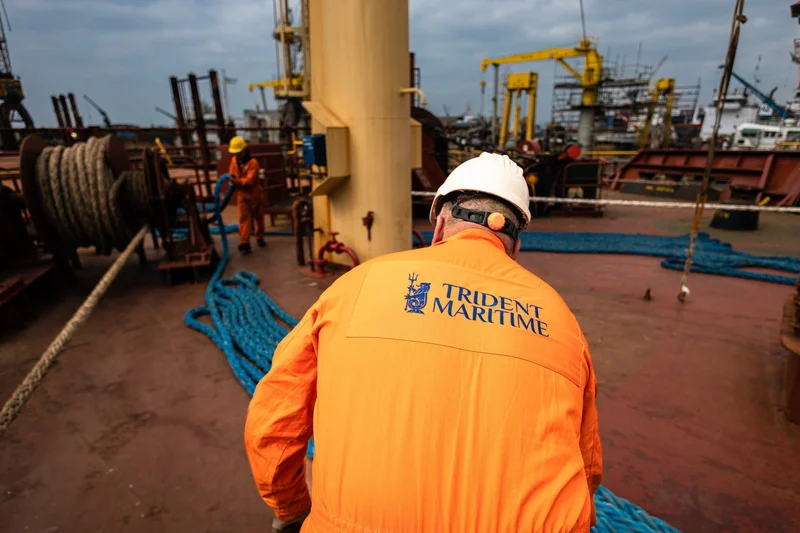
How to discuss maritime compliance with Trident Maritime?
Trident Maritime provides comprehensive statutory and regulatory oversight for commercial fleets operating globally. As a BIMCO-member and ISO 9001/14001/45001 certified ship manager, we maintain dedicated technical teams in Odesa, Hamburg, Dubai, and Hong Kong. Our 24/7 emergency response and proactive auditing frameworks ensure your vessels remain fully aligned with class, flag, and port state requirements. For a confidential discussion, contact info@trident-maritime.com or visit our contacts page.
What are the frequently asked questions about maritime compliance?
What does a maritime compliance audit cover?
A comprehensive audit covers statutory documentation, Safety Management System (SMS) implementation, MLC rest hour records, and environmental reporting logs (EU ETS, CII). Auditors verify that the vessel meets all flag state mandates, IACS classification rules, and regional port state control directives before commercial deployment.
How does EU ETS affect vessel chartering?
The EU ETS requires operators to surrender carbon allowances for voyages involving EU ports. This carbon cost must be factored into voyage estimates and charter party agreements. Owners and charterers use specific BIMCO clauses to define who bears the financial responsibility for purchasing and surrendering these emissions allowances.
Which flag states accept electronic CoCs?
Following recent STCW amendments requiring electronic certificates of competency effective from 2025 (IMO MSC.535(107)), major flag states including Liberia, Marshall Islands, Panama, and the Bahamas fully accept digital CoCs. Operators must ensure their onboard IT infrastructure can securely display and verify these documents during PSC inspections.
How long does a pre-purchase compliance inspection take?
A standard pre-purchase inspection takes between two to three days, depending on vessel size and type. Surveyors assess the hull condition, machinery maintenance records, class status, and statutory certificates to identify any outstanding conditions of class or regulatory deficiencies that could impact the asset's valuation.
What are the main differences between SIRE 2.0 and VIQ7?
SIRE 2.0 is a dynamic, risk-based assessment that incorporates human factors, whereas VIQ7 was a static, hardware-focused checklist. SIRE 2.0 inspections typically identify 20-30 findings per vessel, versus the 2-4 typical under VIQ7 (industry analysis, 2024), requiring a much deeper integration of safety culture into daily operations.
How do operators prepare for Port State Control inspections?
Operators prepare by conducting rigorous pre-arrival checklists, ensuring all fire-fighting and life-saving appliances are operational, and verifying that MLC records are perfectly aligned with engine logs. Technical managers often deploy designated persons ashore to conduct mock audits, significantly reducing the risk of detention in strict jurisdictions like the Paris MoU.

How can you contact Trident Maritime?
Need a consultation or proposal? Reach out through any of the channels below - we respond within one business day.
- Phone: +380487373735
- Email: info@trident-maritime.com