Newbuilding supervision services in 2026: Owner's Guide
- What do newbuilding supervision services cover in 2026?
- How does class and flag state coordination impact shipyard timelines?
- Why is continuous yard presence critical for gas carriers and VLCCs?
- IACS standards vs shipyard standard specifications: What is the difference?
- How do newbuilding supervision services integrate with future technical management?
- What are the key stages of project execution from steel cutting to delivery?
- Related reading
- Frequently asked questions about newbuilding supervision
- Discuss newbuilding supervision services with Trident Maritime
- Contact Trident Maritime
Newbuilding supervision services in 2026 ensure that vessels meet exact contractual, IACS, and flag state specifications from steel cutting to delivery. The IACS comprises 12 member classification societies covering more than 90% of the world's cargo-carrying tonnage (IACS Annual Review 2025). Shipowners rely on dedicated site teams to monitor construction quality, verify materials, and enforce safety standards for tankers, gas carriers, and bulkers.
The IMO Net-Zero Framework, agreed in April 2025, targets net-zero emissions from international shipping by approximately 2050 (IMO MEPC 83). This regulatory shift makes rigorous oversight during the construction phase non-negotiable for modern cargo fleets.
What do newbuilding supervision services cover in 2026?
Newbuilding supervision services provide comprehensive technical oversight during the construction of commercial cargo vessels. Shipowners deploy dedicated site teams to shipyards to monitor plan approval, block assembly, outfitting, and final sea trials. This independent verification ensures the yard adheres to the agreed contractual specifications rather than defaulting to cheaper baseline materials.
The global ship management market is estimated at USD 3.41 billion in 2025, projected to reach USD 8.24 billion by 2035 (Business Research Insights, 2025). As this market grows, the demand for rigorous asset protection during the construction phase increases proportionally. Integrating these services early sets a solid foundation for future commercial management and technical operations.
Modern vessels require complex environmental compliance systems, including dual-fuel engines and advanced ballast water treatment plants. A dedicated supervision team verifies that these critical components are installed and commissioned exactly to the manufacturer's tolerances. Proper oversight prevents localized structural failures and operational downtime during the vessel's maiden voyages.
How does class and flag state coordination impact shipyard timelines?
Navigating regulatory frameworks is a core component of successful vessel construction and delivery. Bureau Veritas, DNV, ABS, Lloyd's Register, ClassNK, RINA, KR, CCS, IRS, PRS, CRS and RS are the 12 IACS member societies (IACS, 2025). A competent supervision team acts as the primary liaison between the shipyard, the chosen classification society, and the flag state registry.
This coordination prevents costly delays caused by misinterpreted rules or rejected drawings during the critical plan approval stage. By maintaining proactive communication with bodies like the International Maritime Organization (IMO) and relevant flag states, the site team ensures all statutory certificates are issued without delay. Effective regulatory management is a hallmark of professional execution.
Site managers also facilitate mandatory surveys for Energy Efficiency Design Index (EEDI) compliance and initial vessel inspections. When class surveyors and yard managers disagree on technical interpretations, the owner's representative provides the decisive engineering authority to resolve the dispute.
Why is continuous yard presence critical for gas carriers and VLCCs?
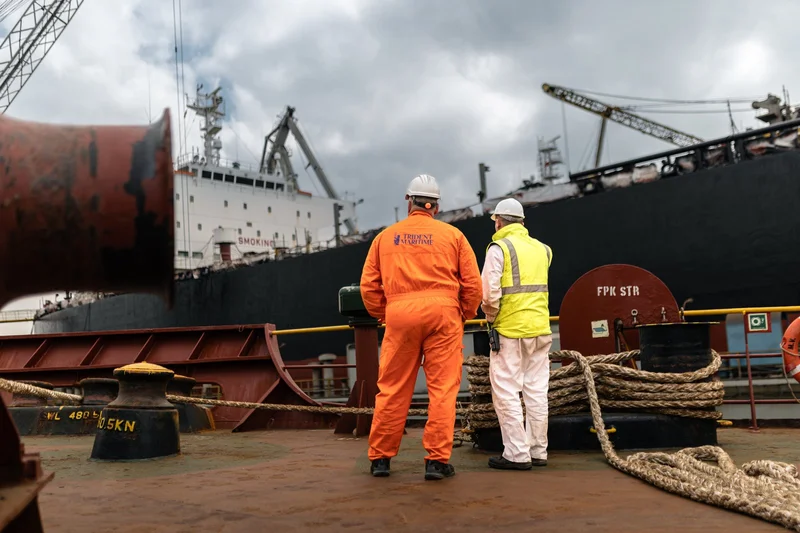
Complex vessels like gas carriers and Very Large Crude Carriers (VLCCs) require microscopic attention to detail during steel fabrication and welding. In our experience supervising newbuildings at major international yards, dedicated site managers consistently identify and rectify piping and welding deviations before they are permanently enclosed. Relying solely on the shipyard's internal quality assurance often leads to compromises that only manifest years later during dry docking.
"Shipyards optimize for speed, while owners must optimize for a 25-year lifecycle. Without a dedicated site manager challenging the yard's daily quality control reports, minor fabrication defects become major structural liabilities by the first special survey."
- Capt. Oleksiy Smolyar, Master Mariner / CEO Trident Maritime
Continuous physical presence allows the owner's representatives to conduct independent non-destructive testing (NDT) and verify coating applications in real time. Catching a single critical structural defect early easily justifies the cost of the entire site team. This proactive approach minimizes operational downtime and protects the asset's long-term value in a competitive charter market.
IACS standards vs shipyard standard specifications: What is the difference?
Shipyards typically propose standard specifications designed to minimize their construction costs and accelerate delivery timelines. Conversely, shipowners require enhanced specifications that guarantee operational efficiency, crew safety, and asset longevity. The IACS comprises 12 member classification societies covering more than 90% of the world's cargo-carrying tonnage (IACS Annual Review 2025).
While shipyard standards meet the bare minimum of these class rules, owner specifications often exceed them in critical areas like coating thickness and equipment redundancy. A robust supervision team ensures that the yard does not substitute specified tier-one equipment with cheaper, unapproved alternatives.
| Criteria | Shipyard Standard Specification | Owner Enhanced Specification |
|---|---|---|
| Coating thickness | Minimum required by baseline class rules | Enhanced micron thickness for 25-year lifespan |
| Equipment origin | Local yard-affiliated manufacturers | Tier-1 international maritime manufacturers |
| Testing protocol | Basic factory acceptance testing (FAT) | Rigorous integrated sea trials and stress tests |
| Steel quality | Standard tensile strength for general use | High-tensile steel in high-stress structural areas |
Understanding this difference is exactly why experienced owners invest heavily in independent oversight. Detailed specification reviews ensure the final product aligns with long-term commercial goals and minimizes maintenance overheads.
How do newbuilding supervision services integrate with future technical management?
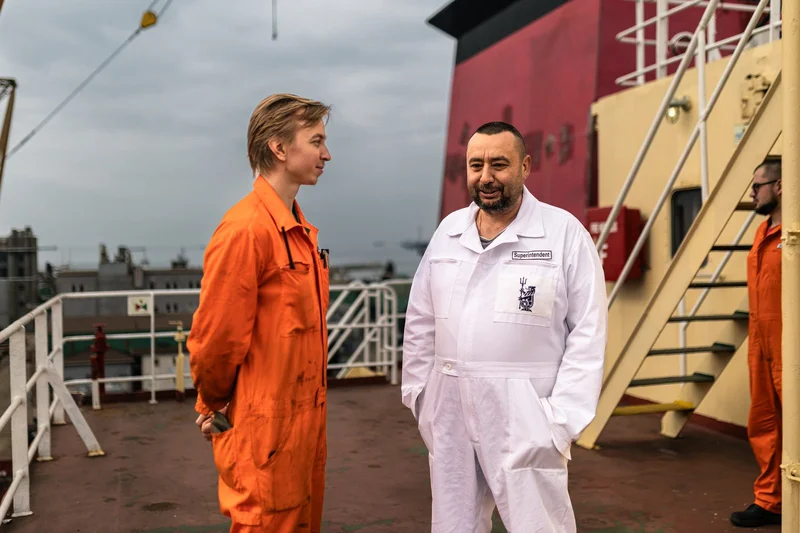
The transition from shipyard construction to active commercial trading is a high-risk period for any vessel owner. A dedicated site team ensures that all technical manuals, spare parts, and planned maintenance system (PMS) databases are accurately populated before delivery. This seamless handover directly impacts the efficiency of subsequent crew management operations and familiarization protocols.
The IMO STCW Convention applies to approximately 1.2 million certificated seafarers on over 50,000 vessels worldwide (IMO, 2025). Ensuring these seafarers step onto a vessel built exactly to spec reduces early operational failures and enhances overall maritime safety. A well-documented handover is the cornerstone of profitable vessel operations.
Furthermore, early integration of technical management teams during the sea trial phase allows superintendents to understand the vessel's unique operational characteristics. This continuity eliminates the knowledge gap that often plagues newly delivered vessels during their first months at sea.
What are the key stages of project execution from steel cutting to delivery?
Executing a newbuilding project requires a phased approach to quality control and milestone verification. Shipowners must track progress diligently to authorize stage payments and maintain project momentum.
- Plan Approval. Reviewing yard drawings against owner specifications and IACS unified requirements.
- Steel Cutting. Verifying steel quality and monitoring the initial fabrication of hull blocks.
- Keel Laying. Inspecting block assembly, welding quality, and dimensional tolerances in the dry dock.
- Outfitting. Overseeing the installation of piping, electrical systems, and main machinery.
- Commissioning. Testing auxiliary machinery, navigation equipment, and cargo handling systems at the pier.
- Sea Trials. Conducting rigorous underway testing of all propulsion, navigation, and safety systems.

At each stage, our technical teams ensure that the construction aligns with the highest international standards. We leverage our expertise across maritime hubs in Germany, UAE, Hong Kong, and Singapore to deliver uncompromising quality control.
Related reading
For further insights into vessel acquisition, compliance, and asset lifecycle management, explore our technical resources:
- Technical Ship Management in 2026: A Guide for Owners
- Vessel Inspection Scope and Types in 2026: Owner's Guide
- SIRE 2.0 Inspection in 2026: A Guide for Tanker Operators
Frequently asked questions about newbuilding supervision
How long does a typical newbuilding supervision project last?
A standard newbuilding project spans 12 to 24 months, depending heavily on the vessel type and shipyard capacity. Handysize bulkers typically complete faster, while complex LNG carriers or VLCCs require extended fabrication and commissioning phases. The supervision team remains on-site from the initial steel cutting ceremony through to the final delivery protocol.
What is the cost of newbuilding supervision services?
Pricing is by arrangement and depends on vessel type, flag, trading area, and contract scope. The size of the required site team, the duration of the build, and the specific geographic location of the shipyard all influence the final commercial proposal. Contact info@trident-maritime.com for a formal proposal tailored to your upcoming project.
When should shipowners engage a newbuilding supervision team?
Shipowners should engage the supervision team before signing the final shipbuilding contract. Early involvement allows technical experts to review and negotiate the shipyard's standard specifications, ensuring critical upgrades are included in the baseline price. Waiting until steel cutting often results in expensive change orders for necessary modifications.
Do supervision teams handle factory acceptance testing (FAT)?
Yes, site managers routinely attend factory acceptance testing for major machinery, including main engines, generators, and cargo pumps. This ensures that tier-one equipment meets performance parameters before it is shipped to the yard for installation. Identifying a defect during FAT prevents severe logistical delays during the outfitting phase.
How does supervision impact SIRE 2.0 readiness for tankers?
SIRE 2.0 became the mandatory tanker vetting standard on 2 September 2024, replacing VIQ7 (OCIMF, 2024). Proper newbuilding supervision ensures that all hardware, mooring arrangements, and safety access points are constructed in strict compliance with these vetting requirements. Fixing structural non-conformities after delivery is exponentially more difficult and impacts immediate chartering opportunities.
Which flag states do you coordinate with during construction?
We coordinate with all major international flag registries, ensuring the vessel meets specific national requirements alongside global IMO conventions. This includes verifying compliance with the IMO Net-Zero Framework targets and securing all necessary statutory certificates prior to the maiden voyage. Proper flag state liaison prevents delivery delays caused by missing documentation.
Discuss newbuilding supervision services with Trident Maritime
Trident Maritime provides uncompromising oversight for your most valuable maritime investments. As a BIMCO member certified to ISO 9001, 14001, and 45001 standards, our team of master mariners and naval architects protects your interests at the shipyard. We maintain strategic offices in Odesa, Hamburg, Dubai, and Hong Kong to support global fleet operations and sales and purchase transactions.
For a confidential discussion regarding your upcoming project, contact info@trident-maritime.com or visit our contacts page.
Contact Trident Maritime
Need a consultation or proposal? Reach out through any of the channels below - we respond within one business day.
- Phone: +380487373735
- Email: info@trident-maritime.com
- Telegram: @tridentmaritime