Bulk carrier ship management companies in 2026
The global ship management market is estimated at USD 3.41 billion in 2025, projected to reach USD 8.24 billion by 2035 (Business Research Insights, 2025). Dry cargo operators face stringent vetting standards and decarbonisation mandates that require advanced technical oversight. Partnering with professional third-party managers ensures regulatory compliance and continuous operational readiness.
Leading bulk carrier ship management companies in 2026 oversee technical maintenance, STCW-compliant crewing, and commercial chartering for dry cargo vessels ranging from handysize to capesize. Operators delegate these functions to specialized managers to ensure RightShip compliance, optimize OPEX, and maintain continuous on-hire status across global trading routes.
Outsourcing fleet operations to specialized managers ensures regulatory compliance and reduces operational downtime for dry cargo vessels.
- What do bulk carrier ship management companies do in 2026?
- How does RightShip RISQ compliance affect dry bulk operations?
- What is the step-by-step process for a vessel takeover?
- Bulk carrier technical management vs commercial management: Which is required?
- How do operators optimize dry docking and maintenance schedules?
- How do IMO emission regulations impact dry bulk fleets?
- Which flag states accept electronic certificates for seafarers?
- What are the common deficiencies found by Port State Control?
- Related reading
- Discuss dry bulk fleet operations with Trident Maritime
What do bulk carrier ship management companies do in 2026?
Modern dry bulk ship management firms provide end-to-end operational support for dry cargo fleets. These services typically encompass technical maintenance, crew placement, and commercial chartering. The top six ship-management companies generate approximately 80% of industry revenues in their served markets (Drewry / Lloyd's List, 2025).
Technical oversight involves daily monitoring of vessel performance, planned maintenance execution, and procurement of spare parts. Managers ensure that vessels comply with flag state requirements and classification society rules. Our fleet operations cover various vessel types, including bulk carriers, containerships, and tankers, maintaining strict adherence to international standards.
Crewing involves sourcing, training, and deploying qualified seafarers under the Maritime Labour Convention. Operators rely on crew management specialists to handle payroll, insurance, and continuous professional development. Delegating these tasks allows shipowners to focus on strategic asset investments.
How does RightShip RISQ compliance affect dry bulk operations?
RightShip's Inspection Ship Vetting (RISQ) framework is the dominant dry-cargo counterpart to OCIMF's SIRE 2.0 for tanker vetting; both are required for chartering with major energy and bulk shippers (RightShip, 2024). This framework evaluates the safety, environmental, and operational performance of dry bulk vessels. Failing to meet these standards restricts a vessel's ability to secure profitable charters.
Technical superintendents must implement rigorous internal audits to prepare for these external vetting inspections. Preparation involves verifying documentation, testing critical equipment, and ensuring crew familiarity with emergency procedures. Authorities like the IMO set the baseline regulations, but vetting frameworks demand higher operational excellence.
In our experience, proactive maintenance and continuous crew training are critical for passing RISQ inspections without observations. Proper preparation minimizes commercial risks and enhances the vessel's marketability.

What is the step-by-step process for a vessel takeover?
Transitioning a vessel to a new management company requires systematic planning and execution. The IACS comprises 12 member classification societies covering more than 90% of the world's cargo-carrying tonnage (IACS Annual Review 2025). Coordinating with these societies is a fundamental part of the takeover process.
- Pre-purchase or pre-takeover inspection. Superintendents assess the vessel's physical condition and review maintenance records.
- Document verification. Managers verify statutory certificates, class status, and flag state documentation.
- Safety Management System (SMS) implementation. The new manager integrates the vessel into their ISM-compliant safety framework.
- Crew familiarization. Onboard personnel receive training on the new company policies and reporting procedures.
- Supply chain integration. Procurement teams establish accounts for bunkers, lubricants, and spare parts delivery.
Executing this process efficiently ensures zero off-hire time during the management transition. A structured takeover protects the owner's asset and maintains continuous commercial viability.
Bulk carrier technical management vs commercial management: Which is required?
Shipowners must decide whether to outsource technical operations, commercial activities, or both. Technical management focuses on the physical condition and regulatory compliance of the asset. Commercial management handles chartering, voyage execution, and freight collection.
The third-party ship management segment is projected to grow at approximately 9% CAGR through 2035 (Business Research Insights, 2025). This growth reflects the increasing complexity of maritime operations and the need for specialized expertise. The table below outlines the distinct responsibilities of each service tier.
| Responsibility Area | Technical Management | Commercial Management |
|---|---|---|
| Asset Maintenance | Planned maintenance, dry docking, repairs | None |
| Crewing | Sourcing, training, payroll (MLC compliance) | None |
| Chartering | None | Fixture negotiation, voyage estimating |
| Post-Fixture Operations | None | Bunker procurement, port agency appointment |
| Regulatory Compliance | Class, Flag State, ISM, ISPS | Commercial contract execution |
Many bulk carrier ship management companies offer integrated solutions that combine both functions. For a deeper understanding of technical scopes, review our guide on technical ship management.
How do operators optimize dry docking and maintenance schedules?
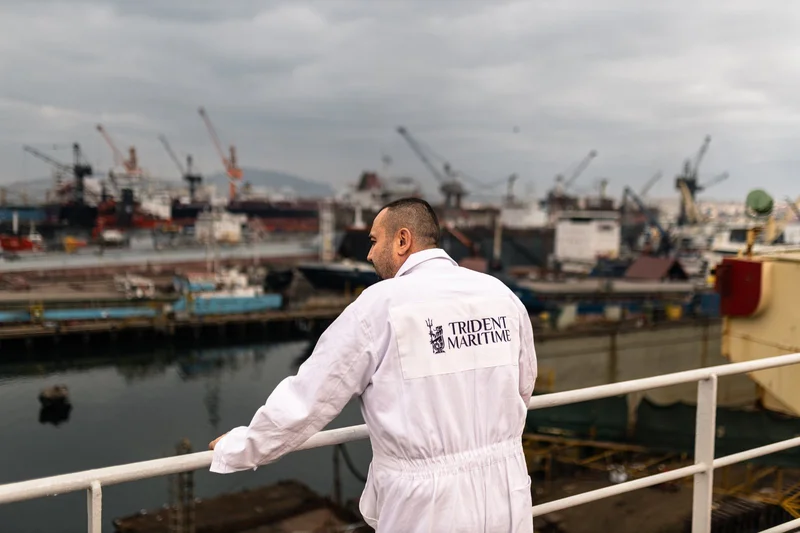
Dry docking is the most capital-intensive maintenance event in a vessel's lifecycle. Proper optimization requires planning 12 to 18 months in advance to secure optimal shipyard slots and long-lead spares. This foresight prevents budget overruns and minimizes off-hire duration.
The Paris MoU detention rate rose to 4.03% in 2024, up from 3.81% in 2023 (Paris MoU Annual Report 2024). Diligent planned maintenance systems (PMS) help prevent the technical failures that lead to such detentions. Superintendents utilize data analytics to predict component wear and schedule replacements proactively.
In our experience supervising dry dockings across global yards, strict project management is essential. Coordinating with BIMCO standard contracts and class surveyors ensures all statutory requirements are met efficiently.
How do IMO emission regulations impact dry bulk fleets?
The IMO Net-Zero Framework, agreed in April 2025, targets net-zero emissions from international shipping by approximately 2050 (IMO MEPC 83). This regulatory shift forces operators to adopt energy-saving devices and optimize voyage planning. Compliance directly affects a vessel's Carbon Intensity Indicator (CII) rating and market competitiveness.
Technical managers implement hull performance monitoring and engine power limitation (EPL) systems to reduce fuel consumption. The IMO 2023 GHG Strategy targets at least a 20% reduction in shipping emissions by 2030 versus 2008 levels (IMO MEPC 80). Upgrading older handysize and panamax bulkers is essential to avoid trading restrictions.
Proactive environmental management ensures that assets remain attractive to premium charterers. Shipowners rely on specialized technical teams to navigate these complex retrofitting projects during scheduled dry dockings.
Which flag states accept electronic certificates for seafarers?
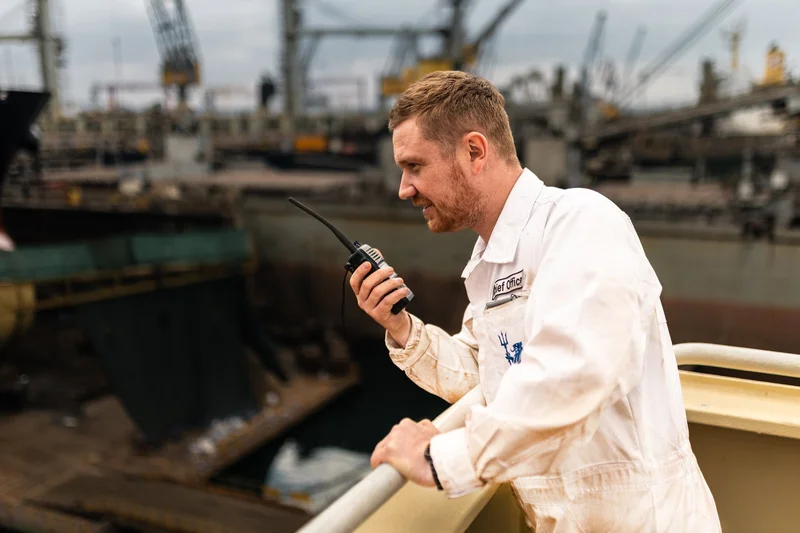
Recent STCW amendments require electronic certificates of competency effective from 2025 (IMO MSC.535(107)). Most major flag states, including Liberia, Marshall Islands, and Panama, have fully integrated digital verification systems. This transition streamlines the crew management process and eliminates delays caused by lost physical documents.
The IMO STCW Convention applies to approximately 1.2 million certificated seafarers on over 50,000 vessels worldwide (IMO, 2025). Managing digital credentials requires robust maritime software and secure data protection protocols. Technical managers ensure that all onboard personnel hold valid, verifiable electronic certificates before deployment.
In our experience, adopting digital crewing platforms significantly reduces port state control observations related to documentation. Continuous compliance with the Maritime Labour Convention 2006 (MLC), which covers over 97% of world gross shipping tonnage (ILO, 2026), remains a top priority.
What are the common deficiencies found by Port State Control?
Port State Control (PSC) inspections rigorously enforce international maritime conventions. Tokyo MoU recorded 1,189 detentions and 77,526 deficiencies across Asia-Pacific port state inspections in 2024 (Tokyo MoU Annual Report 2024). Understanding common failure points helps crews prepare effectively.
Frequent deficiencies on dry cargo vessels involve fire safety equipment, life-saving appliances, and navigational documentation. Structural issues, such as corroded hatch covers or defective watertight doors, also attract intense scrutiny from inspectors. Maintaining a rigorous vessel condition survey checklist mitigates these risks.
Continuous onboard training ensures that crews can confidently demonstrate equipment operation to PSC officers. A strong safety culture directly correlates with zero-deficiency inspection outcomes.
Related reading
- Technical Ship Management in 2026: A Guide for Owners
- Vessel Condition Survey Checklist in 2026: A Guide
- About Trident Maritime
Discuss dry bulk fleet operations with Trident Maritime
Trident Maritime is a BIMCO-member ship management and marine services provider headquartered in Odesa, with offices in Hamburg, Dubai, and Hong Kong. Our ISO 9001, 14001, and 45001 certified teams deliver technical and commercial management for bulkers, tankers, and containerships. We operate 24/7 emergency response and ensure full compliance with international vetting standards.
Pricing is by arrangement and depends on vessel type, flag, trading area, and contract scope. For a confidential discussion, contact info@trident-maritime.com or visit our contacts page. None.
Contact Trident Maritime
Need a consultation or proposal? Reach out through any of the channels below - we respond within one business day.
- Phone: +380487373735
- Email: info@trident-maritime.com