Marine Engineering Consultancy & Services for 2026
- What Are Marine Engineering Consultancy & Services?
- How Does Trident Maritime Execute an Engineering Project?
- What is the Scope of Our Consultancy?
- How to compare in-house and outsourced engineering support?
- What key regulatory frameworks impact engineering in 2026?
- What common pitfalls exist in new construction and modernization projects?
- How to discuss your engineering project with Trident Maritime?
- How to contact Trident Maritime?
Marine engineering consultancy & services provide shipowners with specialized technical expertise for complex projects like newbuilding supervision, major retrofits, and navigating new regulations such as the IMO's 2026 Net-Zero Framework. These services cover conceptual design, yard selection, project management, and final sea trials. The primary benefit is accessing senior engineering talent without the fixed cost of a large in-house team.
Specialist marine engineering consultancy provides critical oversight for high-stakes projects, from newbuilding supervision to complex retrofits. According to the International Association of Classification Societies (IACS), its 12 members cover over 90% of the world's cargo tonnage, and compliance with their unified requirements is non-negotiable for any major engineering work. Outsourced consultants ensure these exacting standards are met from blueprint to delivery.
What Are Marine Engineering Consultancy & Services?
Marine engineering consultancy & services are specialized, project-based technical services engaged by shipowners, charterers, and financiers to manage complex maritime assets. This scope extends beyond routine technical management, focusing on discrete, high-value projects where deep expertise is required for a finite period. Core activities include newbuilding supervision, planning and oversight of major retrofits, and feasibility studies for alternative fuels and emissions-reduction technologies.
Unlike permanent in-house technical departments, consultancies offer a flexible resource model. Shipowners can access naval architects, senior marine engineers, and project managers with specific experience—for instance, in supervising the construction of dual-fuel VLCCs or managing the installation of ballast water treatment systems (BWTS) across a fleet. This approach converts a fixed overhead into a variable, project-specific cost, aligning expenditure directly with capital investment cycles.
The value proposition rests on risk mitigation and quality assurance. A consultancy team acts as the owner's representative at the shipyard or during complex repairs, ensuring that construction specifications are met, IACS and flag state rules are followed, and delivery timelines are maintained. This oversight is critical, as deviations from the shipbuilding contract or poor installation quality can lead to significant operational issues and financial losses post-delivery. Effective consultancy bridges the gap between the owner's commercial objectives and the shipyard's technical execution.
"Our role as consultants is to be the owner's most critical partner. We're on-site at the yard in Hamburg, Dubai, or Hong Kong not just to watch, but to challenge, verify, and document every stage of construction or repair. A well-managed project prevents years of costly operational headaches."
— Capt. Oleksiy Smolyar, CEO / Director, Trident Maritime
Ultimately, these services provide independent, expert validation that a multi-million-dollar asset is being built or modified to the highest industry standards, safeguarding its long-term operational viability and value.
How Does Trident Maritime Execute an Engineering Project?
A structured, phased approach is essential for managing the complexities of maritime engineering projects. Our process is built on clear communication, rigorous documentation, and proactive risk management, ensuring alignment with the client's objectives at every stage. The methodology is adapted for newbuildings, retrofits, or specialized advisory mandates.
The project lifecycle typically follows these key phases:
- Feasibility and Specification: This initial phase involves defining the project's commercial and technical requirements. We work with the owner to develop a detailed technical specification, conduct initial design reviews, and evaluate potential shipyards or equipment manufacturers based on their track record, quality, and financial stability.
- Yard Selection and Contract Negotiation: Leveraging our market intelligence, we assist in shortlisting suitable shipyards and manage the technical tender process. Our team provides detailed analysis of yard proposals and supports the negotiation of the shipbuilding contract's technical clauses to protect the owner's interests.
- Plan Approval and Design Verification: Once a contract is signed, our naval architects and engineers conduct a thorough review of all shipyard drawings and plans. This crucial step ensures that the design complies with the contract specifications, classification society rules, and all relevant IMO conventions like SOLAS and MARPOL.
- On-Site Supervision and Project Management: A dedicated site team is established at the shipyard. This team, led by an experienced project manager, monitors construction quality, witnesses factory acceptance tests (FATs) for major equipment, attends inspections with class surveyors, and provides the owner with regular, detailed progress reports.
- Commissioning, Sea Trials, and Delivery: In the final stage, our team supervises the commissioning of all machinery and systems. We design and oversee the sea trial schedule to rigorously test the vessel's performance against contractual requirements, and we manage the final documentation and formal delivery process.
This systematic process ensures that every engineering project is executed to the highest standards, delivering a reliable and compliant asset to the owner.
What is the Scope of Our Consultancy?
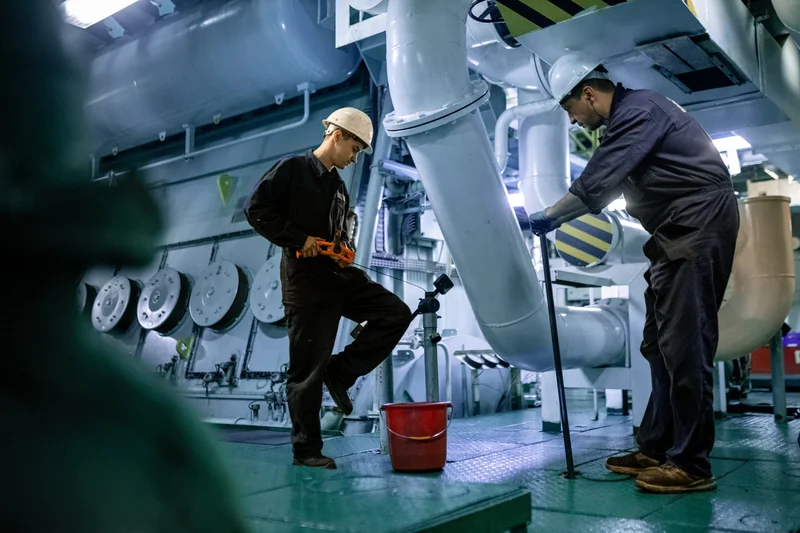
Trident Maritime offers a comprehensive suite of marine engineering consultancy services tailored to the lifecycle of tankers, gas carriers, containerships, and bulk carriers. Our expertise ensures that capital-intensive projects are managed efficiently, mitigating technical and financial risks. Our services are categorized into three main areas.
Newbuilding Supervision:
- Development of technical specifications and general arrangement plans.
- Shipyard evaluation, selection, and audit.
- Technical negotiation of shipbuilding contracts.
- Comprehensive plan approval and design review.
- On-site supervision by a dedicated team of engineers and inspectors.
- Equipment selection and factory acceptance test (FAT) attendance.
- Oversight of commissioning, sea trials, and final delivery protocols.
Retrofit and Conversion Projects:
- Feasibility studies for energy efficiency modifications (EEXI, CII).
- Project management for the installation of Ballast Water Treatment Systems (BWTS) and scrubbers.
- Engineering support for major conversions and vessel life extension programs.
- Dry-docking specification preparation and supervision.
- Coordination with classification societies and flag states for regulatory approval.
Specialized Technical Advisory:
- Pre-purchase vessel inspections and condition assessments.
- Technical support for insurance claims and accident investigations.
- Development and implementation of preventative maintenance systems.
- Advisory on alternative fuels and decarbonization pathways in line with the IMO's Net-Zero Framework.
- ISM, ISPS, and MLC compliance audits and system development.
Our core competency lies in applying deep operational experience to complex engineering challenges, ensuring assets are built and maintained for optimal performance and regulatory compliance throughout their service life.
How to compare in-house and outsourced engineering support?
Shipowners must decide whether to manage complex engineering projects with an in-house team or engage a third-party consultancy. The optimal choice depends on the owner's scale, the frequency of projects, and the specific expertise required. The following table compares the two models across key decision criteria.
| Criterion | In-House Technical Team | Outsourced Marine Engineering Consultancy |
|---|---|---|
| Cost Structure | Fixed overhead (salaries, benefits, office space), regardless of project activity. High cost during periods of no newbuildings or major retrofits. | Variable cost, project-based fees. Costs are directly tied to active projects, eliminating idle overhead. |
| Expertise & Specialization | Expertise is limited to the permanent team's experience. May lack specialized knowledge for new technologies (e.g., ammonia fuel systems). | Access to a broad pool of specialists (naval architects, electrical engineers, coating specialists) on demand. Deep experience from diverse projects across many shipyards. |
| Scalability & Flexibility | Difficult to scale up or down quickly. Hiring senior engineers is a slow and expensive process. | Highly scalable. A full project team can be deployed to a shipyard in Hamburg, Singapore, or Dubai on short notice and demobilized upon project completion. |
| Market Knowledge | Knowledge of shipyards and suppliers is based on the company's own history. May have a narrower view of the global market. | Constant exposure to multiple shipyards, equipment makers, and class societies provides up-to-date market intelligence and strong negotiation leverage. |
| Objectivity | Internal team may be subject to internal politics or historical biases. | Provides an independent, third-party perspective focused solely on the technical and contractual merits of the project. |
| Risk Management | The shipowner bears the full liability for the technical team's decisions and oversight. | The consultancy shares project risk and is professionally liable for the quality of its supervision and advice, often backed by professional indemnity insurance. |
For shipowners with a continuous pipeline of newbuildings, a large in-house department can be effective. However, for most operators, an outsourced marine consultancy offers a more cost-effective and flexible model for managing high-stakes, intermittent engineering projects.
What key regulatory frameworks impact engineering in 2026?
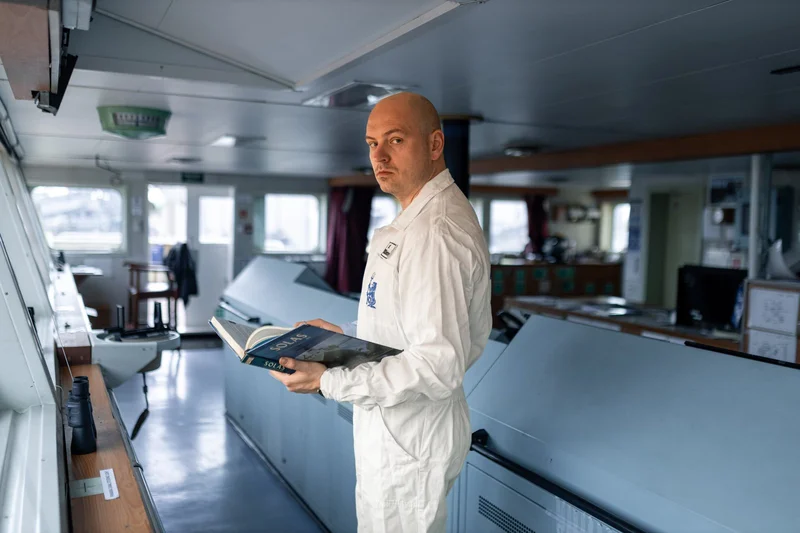
The maritime regulatory landscape is evolving rapidly, with a strong focus on decarbonization and safety. Marine engineering decisions in 2026 are heavily influenced by a framework of international and regional rules that dictate vessel design, equipment, and operation. Compliance is not optional; it is a prerequisite for global trade.
The most significant driver is the IMO's environmental agenda. The IMO 2023 GHG Strategy, with its target of net-zero emissions by around 2050, directly impacts newbuilding designs and existing fleet modifications. Regulations such as the Energy Efficiency Existing Ship Index (EEXI) and the Carbon Intensity Indicator (CII) require engineering solutions, from engine power limitations to the adoption of wind-assisted propulsion and alternative fuels. Consultancy services are vital for evaluating the most cost-effective compliance pathways for a specific vessel type and trading pattern.
Classification Society rules from IACS members like DNV, Lloyd's Register, and ABS form the bedrock of vessel integrity. Their unified requirements (URs) provide detailed technical standards for hull structure, machinery, and electrical systems. Any newbuilding or major conversion must undergo a rigorous plan approval process and on-site surveys to receive class certification, which is essential for insurance and chartering. Engineering consultants act as a vital interface with class, ensuring designs meet these stringent standards from the outset.
Furthermore, conventions like SOLAS (Safety of Life at Sea) and MARPOL (Marine Pollution) continue to be updated. Recent amendments may mandate new safety equipment, fire suppression systems, or environmental protection technologies. A core function of marine engineering consultancy is to ensure that any project, whether a new vessel or a retrofit, incorporates the latest mandatory requirements, avoiding costly modifications or potential port state control detentions later.
What common pitfalls exist in new construction and modernization projects?
Even with experienced teams, major maritime engineering projects are susceptible to common pitfalls that can lead to budget overruns, delays, and long-term operational problems. Proactive identification and mitigation of these risks are a primary function of a dedicated consultancy team. Based on our experience supervising projects in major shipbuilding hubs, several recurring challenges emerge.
One of the most frequent issues is an incomplete or ambiguous technical specification. A specification that lacks detail on critical components, from the brand of a main engine governor to the specific grade of steel for cargo tanks, creates contractual loopholes. Shipyards may then substitute lower-cost alternatives that meet the bare minimum of class rules but compromise long-term reliability. A robust, detailed specification is the single most important document for protecting an owner's investment.
Inadequate on-site supervision is another critical failure point. Trusting the shipyard's internal quality control is insufficient. An owner's site team must be present to witness crucial construction stages, such as block welding, coating application, and machinery alignment. Without this constant oversight, quality defects can be literally covered up, only to emerge as costly warranty claims or failures years after delivery. For example, improper surface preparation before painting can lead to premature corrosion, requiring extensive steel renewal at the first special survey.
Finally, a failure to properly manage 'maker's list' negotiations can be costly. The list of approved equipment suppliers (the maker's list) is a key part of the shipbuilding contract. Allowing the yard too much flexibility can result in the installation of unfamiliar or poorly supported equipment to save costs, creating a future maintenance and spare parts burden for the vessel's crew and technical superintendents. Diligent consultancy ensures the maker's list specifies reliable, well-supported equipment familiar to the owner's fleet.
Related Reading
- Maritime Technical Services in 2026: A Complete Guide
- Vessel Inspection Solutions in 2026: A Complete Guide
- Bulk Carrier Management in 2026: A Technical Guide
How to discuss your engineering project with Trident Maritime?
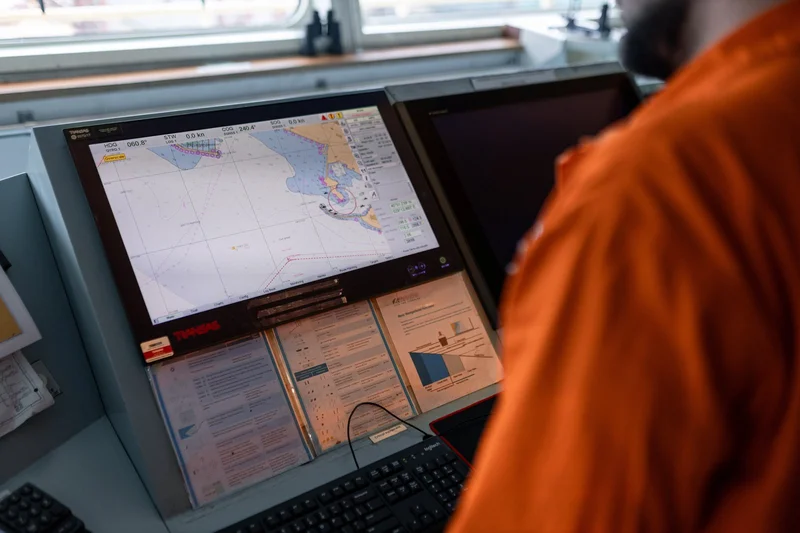
Trident Maritime provides expert, independent marine engineering consultancy and project management services for shipowners worldwide. As a BIMCO member with ISO 9001, 14001, and 45001 certifications, we bring a systematic, quality-focused approach to every newbuilding, retrofit, and advisory project. Our teams in Odesa, Hamburg, Dubai, and Hong Kong provide global reach with local expertise.
We have successfully managed projects for a diverse fleet of tankers, gas carriers, containerships, and bulkers. Our services are designed to protect your asset's value, ensure regulatory compliance, and deliver projects on time and within budget. We act as your trusted technical partner, providing the oversight needed for success.
For a confidential discussion about your upcoming engineering requirements, contact info@trident-maritime.com or visit our contacts page.
Frequently Asked Questions (FAQ)
What is the primary role of a marine engineering consultant during newbuilding?
The primary role is to act as the shipowner's expert representative at the shipyard. This involves verifying that the vessel is constructed exactly according to the contract specifications, approved plans, and classification society rules. Consultants conduct daily inspections, witness equipment tests, manage communication with the yard, and provide the owner with detailed progress reports to mitigate risks and ensure the final asset meets all quality and performance standards.
How do you ensure the quality of a vessel built in a foreign shipyard?
Quality is ensured through a permanent on-site supervision team at the shipyard, regardless of its location in Europe or Asia. This team, comprising experienced project managers, naval architects, and inspectors, implements a rigorous inspection and testing plan. They work directly with the shipyard's quality control department and class surveyors, providing an independent layer of verification at every critical stage of construction, from steel cutting to sea trials.
Can you assist with retrofitting an existing vessel for new environmental regulations?
Yes, this is a core service. We manage retrofit projects to ensure compliance with regulations like EEXI, CII, and the Ballast Water Management Convention. Our services include conducting initial feasibility studies, selecting the right equipment, developing the engineering package for class approval, and supervising the installation work at a shipyard during a planned dry-docking to minimize vessel downtime.
What commercial models are available for your consultancy services?
Our commercial models are flexible and tailored to the project's scope. For full newbuilding supervision, a fixed monthly fee for the on-site team is common. For smaller projects like plan approval or retrofit studies, a lump-sum fee can be arranged. Pricing is by arrangement and depends on the project complexity, duration, and the size of the required supervision team. Contact us for a formal proposal based on your specific needs.
How does your consultancy help manage project costs and avoid budget overruns?
We manage costs through several key actions. First, we ensure a highly detailed technical specification to prevent costly change orders later. Second, our team's constant on-site presence identifies and resolves construction issues early, before they become expensive to fix. Finally, we rigorously manage the contractual payment milestones, ensuring they are only approved when all technical requirements for that stage are fully met and documented.
What vessel types does your engineering consultancy specialize in?
Our core expertise covers commercial cargo vessels, specifically tankers (from chemical tankers to VLCCs), gas carriers (LPG/LNG), containerships, and bulk carriers of all sizes from Handysize to Capesize. While this is our primary focus, our engineering principles and project management methodologies can be applied to related maritime assets, and advisory for other vessel types is available on request.
How to contact Trident Maritime?
Need a consultation or proposal? Reach out through any of the channels below — we respond within one business day.
- Phone: +380487373735
- Email: info@trident-maritime.com