Vessel Inspection Solutions in 2026: A Complete Guide
- What Are Vessel Inspection Solutions and Why Are They Critical in 2026?
- How Does the Pre-Purchase Inspection (PPI) Process Unfold?
- Navigating SIRE 2.0 and RightShip RISQ Vetting Inspections
- What Are the Key Differences Between Inspection Types?
- How Do Port State and Flag State Inspections Impact Operations?
- What is the Role of Technology in Modern Inspections?
- Discuss Vessel Inspection Solutions with Trident Maritime
- Contact Trident Maritime
Vessel inspection solutions in 2026 are critical for regulatory compliance, charter party acceptance, and asset valuation. Key frameworks include OCIMF's SIRE 2.0 for tankers, RightShip's RISQ for bulkers, and comprehensive pre-purchase inspections for S&P transactions. These services mitigate operational and financial risks for shipowners and charterers.
Comprehensive vessel inspection solutions provide the technical data required to assess a ship's condition, compliance, and operational readiness, directly impacting commercial viability and safety.
Trident Maritime delivers this scope as commercial vessel inspection services — pre-purchase, pre-vetting, condition and flag-state attendance, quoted per vessel and trading area.
What Are Vessel Inspection Solutions and Why Are They Critical in 2026?
Vessel inspection solutions encompass a range of specialised surveys and audits designed to verify a ship's physical condition, operational status, and compliance with international regulations. These services are not merely procedural; they are fundamental to risk management for shipowners, charterers, and financiers. The scope includes pre-purchase inspections (PPI), pre-vetting for oil and chemical majors (SIRE 2.0, CDI), dry cargo vetting (RightShip), on/off-hire surveys, and condition assessments.
The regulatory landscape, governed by bodies like the International Maritime Organization (IMO), continuously evolves, making third-party verification essential. For instance, data from the Paris MoU on Port State Control shows a detention rate of 4.03% in 2024, highlighting the tangible risk of non-compliance. Inspections provide objective evidence that a vessel adheres to mandatory codes such as SOLAS, MARPOL, and the ISM Code, which are prerequisites for global trading.
Ultimately, a thorough inspection report is a critical tool for commercial decision-making, influencing asset valuation, charter party negotiations, and insurance coverage. In our experience, any technical assessment is based on available documents, vessel condition at the time of inspection, and the access granted onboard by the vessel's command. A robust inspection framework mitigates unforeseen operational downtime and protects financial investments.
How Does the Pre-Purchase Inspection (PPI) Process Unfold?
A Pre-Purchase Inspection (PPI) is a comprehensive assessment conducted on behalf of a potential buyer to determine a vessel's condition and identify potential liabilities before a sale is finalised. The process is systematic, beginning with a thorough review of the vessel's documentation. This includes class records, statutory certificates, planned maintenance system (PMS) history, and records of previous dry-dockings and major repairs.
The physical inspection is exhaustive, covering the hull and deck structures, cargo containment and handling systems, ballast tanks, and accommodation areas. The machinery space is a key focus, with inspectors assessing the main engine, auxiliary engines, boilers, and all associated systems. Operational tests of key equipment, such as steering gear, mooring winches, and cargo pumps, are performed where permissible. According to the IACS Annual Review 2025, its 12 member societies cover over 90% of the world's cargo-carrying tonnage, making their records a cornerstone of any credible PPI.
Following the onboard survey, the inspector compiles a detailed report outlining findings, deficiencies, and recommendations, often accompanied by photographic evidence. This report provides the buyer with a clear, factual basis for valuation and negotiation, highlighting necessary repairs or upgrades. A detailed PPI is the cornerstone of due diligence in any sales and purchase transaction.
Navigating SIRE 2.0 and RightShip RISQ Vetting Inspections
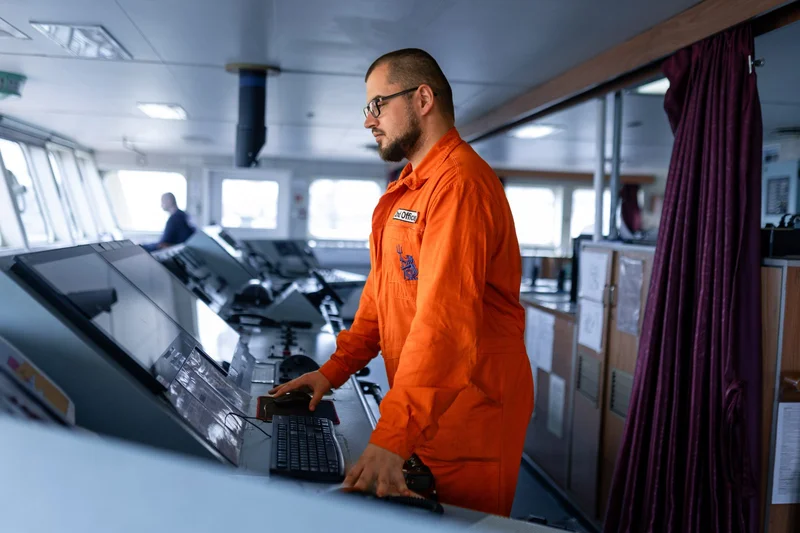
For tanker and dry bulk operators, passing vetting inspections is a prerequisite for securing charters with major energy companies and commodity traders. The two dominant frameworks are the Ship Inspection Report Programme (SIRE 2.0) from the Oil Companies International Marine Forum (OCIMF) for tankers, and the RightShip Inspection Ship Questionnaire (RISQ) for the dry cargo sector. Both systems have evolved to become more rigorous and data-driven.
SIRE 2.0, which became mandatory on 2 September 2024, replaced the legacy VIQ7 with a tablet-based, risk-focused inspection regime. Industry analysis shows that SIRE 2.0 inspections typically identify 20-30 findings per vessel, a significant increase from the 2-4 common under VIQ7. This is because the new system empowers inspectors to use their professional judgement to assess human factors, onboard procedures, and equipment condition in greater depth, moving beyond a simple checklist approach. A detailed guide on preparing for such inspections can be found in our pre-vetting inspection tanker walkthrough.
For bulk carriers, RightShip's RISQ framework serves a similar purpose, providing a standardised tool for charterers to assess vessel quality and safety management. Preparation for both SIRE 2.0 and RISQ requires a proactive approach, including crew training, rigorous self-assessment, and addressing potential deficiencies before the inspector boards. These vetting programmes directly influence a vessel's commercial attractiveness and are a core component of modern technical management.
What Are the Key Differences Between Inspection Types?
While all vessel inspections aim to assess a ship's condition, their objectives, scope, and end-users differ significantly. Understanding these distinctions is crucial for owners and operators to deploy the right resources. A pre-purchase inspection (PPI) is commissioned by a potential buyer, whereas a pre-vetting inspection is required by a potential charterer.
"A common misconception is treating a pre-vetting audit like a pre-purchase inspection. The former focuses on operational compliance against a charterer's specific standards, like SIRE 2.0, while the latter is a deep dive into the asset's physical condition and long-term value for a potential new owner. They are fundamentally different tools for different commercial decisions."
— Capt. Oleksiy Smolyar, Master Mariner / CEO Trident Maritime
The table below outlines the primary differences between these key inspection types, providing clarity on their distinct roles in the maritime industry.
| Criterion | Pre-Purchase Inspection (PPI) | Pre-Vetting Inspection (e.g., SIRE 2.0) |
|---|---|---|
| Primary Objective | To assess the vessel's physical condition, value, and potential liabilities for a prospective buyer. | To verify operational compliance with a charterer's safety and quality standards. |
| Commissioned By | Potential Buyer / Financial Institution | Shipowner/Operator (in preparation for a charterer's vetting) |
| End User | Buyer, for valuation and negotiation. | Oil Major / Charterer, for commercial approval. |
| Key Focus Areas | Structural integrity (hull, tanks), machinery condition, class status, long-term maintenance needs. | Procedural compliance, crew competency, ISM/TMSA implementation, specific equipment readiness. |
| Governing Framework | Buyer's specific requirements, general marine survey practice. | Standardised questionnaires (e.g., OCIMF SIRE 2.0, CDI, RightShip RISQ). |
| Typical Duration | 2-4 days, depending on vessel size and type. | 1-2 days. |
| Outcome | Detailed condition report with recommendations for repairs and cost estimates. | A report of observations/findings uploaded to a shared database for charterer review. |
These distinctions highlight why a vessel might pass a pre-purchase inspection with flying colours but still face significant challenges in a pre-vetting audit if operational procedures are not aligned with charterer expectations.

How Do Port State and Flag State Inspections Impact Operations?
Port State Control (PSC) and Flag State inspections are non-commercial, regulatory audits that have a direct and immediate impact on a vessel's ability to trade. PSC is the inspection of foreign ships in national ports to verify that the condition of the ship and its equipment comply with the requirements of international conventions and that the vessel is manned and operated in compliance with these rules. Regional agreements, known as Memoranda of Understanding (MoU), coordinate these inspections, such as the Paris MoU in Europe and the Tokyo MoU in Asia-Pacific.
According to the Tokyo MoU's 2024 annual report, authorities recorded 1,189 detentions and 77,526 deficiencies, demonstrating the rigour of these inspections. Common grounds for detention include faulty safety equipment (LSA/FFA), MARPOL violations like malfunctioning oil filtering equipment, and serious breaches of the Maritime Labour Convention (MLC) 2006. An MLC-related deficiency can have severe consequences, as the convention governs the welfare and working conditions for the approximately 1.2 million seafarers covered by the STCW Convention (IMO, 2025).
The Flag State holds the primary responsibility for ensuring its registered vessels comply with international regulations. Flag State inspections serve to confirm this compliance, acting as the owner's first line of regulatory defence. A poor record with either Port State or Flag State authorities can lead to increased inspection frequency, commercial shunning, and ultimately, detention, making proactive compliance a critical aspect of crew and technical management.
What is the Role of Technology in Modern Inspections?
Technology is transforming the execution and effectiveness of vessel inspection solutions, moving from purely manual processes to data-rich, digitally-enabled assessments. The adoption of digital platforms for reporting, like the tablets used in SIRE 2.0, ensures consistency, provides immediate data access, and creates a searchable history of a vessel's performance. This digitalisation is a key trend within the broader ship management market, which is projected to grow at approximately 9% CAGR through 2035 according to Business Research Insights.
Advanced inspection tools are also becoming standard. Unmanned Aerial Vehicles (UAVs), or drones, are now routinely used for inspecting large cargo holds, superstructures, and ballast tanks, reducing the need for costly and time-consuming staging or rafting. Similarly, Remote Operated Vehicles (ROVs) can perform Underwater Inspections in Lieu of Drydocking (UWILD), providing high-definition imagery of the hull, propeller, and rudder without taking the vessel out of service. This aligns with the goals of efficient third-party ship management.
Furthermore, techniques like thermal imaging can identify potential electrical or mechanical failures in switchboards and engines before they escalate. The integration of these technologies provides a more comprehensive and accurate picture of a vessel's condition. This data-driven approach allows for predictive maintenance and more targeted risk assessment, enhancing both safety and operational efficiency.
Related Reading
- Ship Commercial Management in 2026: A Guide for Owners
- Pre-Vetting Inspection Tanker Guide for 2026
- Third-Party Ship Management in 2026: A Shipowner's Guide
Discuss Vessel Inspection Solutions with Trident Maritime
Trident Maritime provides a comprehensive suite of vessel inspection solutions for tankers, gas carriers, containerships, and bulkers. As a BIMCO member with ISO 9001, 14001, and 45001 certifications, our experienced surveyors and technical superintendents deliver objective, detailed assessments to support your commercial and operational decisions. With a global presence including offices in Odesa, Hamburg, Dubai, and Hong Kong, we offer a responsive, 24/7 service.
Our inspection services are tailored to meet the specific requirements of pre-purchase due diligence, SIRE 2.0 and RightShip pre-vetting preparation, on/off-hire surveys, and flag state compliance. We leverage deep operational experience to provide insights that go beyond a standard checklist, helping you mitigate risk and maximise asset value. All vessel inspections, audits, and surveys are conducted in strict accordance with flag-state, class, and port-state requirements.
For a confidential discussion about your inspection needs, contact info@trident-maritime.com or request a vessel inspection from our service page.
Contact Trident Maritime
Need a consultation or proposal? Reach out through any of the channels below — we respond within one business day.
- Phone: +380487373735
- Email: info@trident-maritime.com