Marine insurance in 2026: A Technical Guide for Shipowners
Marine insurance in 2026 encompasses Hull & Machinery (H&M), Protection and Indemnity (P&I), and Freight, Demurrage, and Defense (FD&D) cover for commercial vessels. Operators must align policy terms with IACS class requirements and ISM Code compliance to maintain validity. Discover the core frameworks shaping fleet risk transfer, vetting alignment, and claims management for modern cargo operations.
The global shipping industry relies heavily on robust risk transfer mechanisms to protect high-value assets and manage complex liabilities across international jurisdictions. The IACS comprises 12 member classification societies covering more than 90% of the world's cargo-carrying tonnage (IACS Annual Review 2025). Maintaining valid coverage requires operators to strictly adhere to these classification rules alongside international statutory frameworks.
- How does risk transfer function in 2026?
- Core components of marine insurance policies
- How do IACS class records impact coverage?
- What role does the ISM Code play in risk evaluation?
- How do international conventions shape liability?
- Comparing H&M and P&I cover: What are the differences?
- How to prepare a vessel for underwriting surveys?
How does risk transfer function in 2026?
Vessel operators face a highly regulated environment where technical compliance directly dictates the validity of their coverage. Modern policies demand continuous adherence to the International Safety Management (ISM) Code and specific flag state regulations. Failure to maintain these statutory certificates can immediately void coverage during an incident, leaving owners fully exposed to financial loss.
Integrating risk management with daily operations is a standard requirement for third-party managers and technical superintendents. Superintendents must ensure that all planned maintenance systems (PMS) are up to date, accurately logged, and transparently accessible. For deeper operational integration, owners often rely on technical ship management frameworks to maintain asset integrity and document compliance.
Underwriters increasingly utilize data-driven assessments to evaluate fleet risk profiles before binding coverage. This includes monitoring port state control (PSC) performance, deficiency ratios, and vetting inspection outcomes. A proactive approach to these technical metrics secures more favorable terms during policy renewals and reduces the likelihood of contested claims.
Core components of marine insurance policies
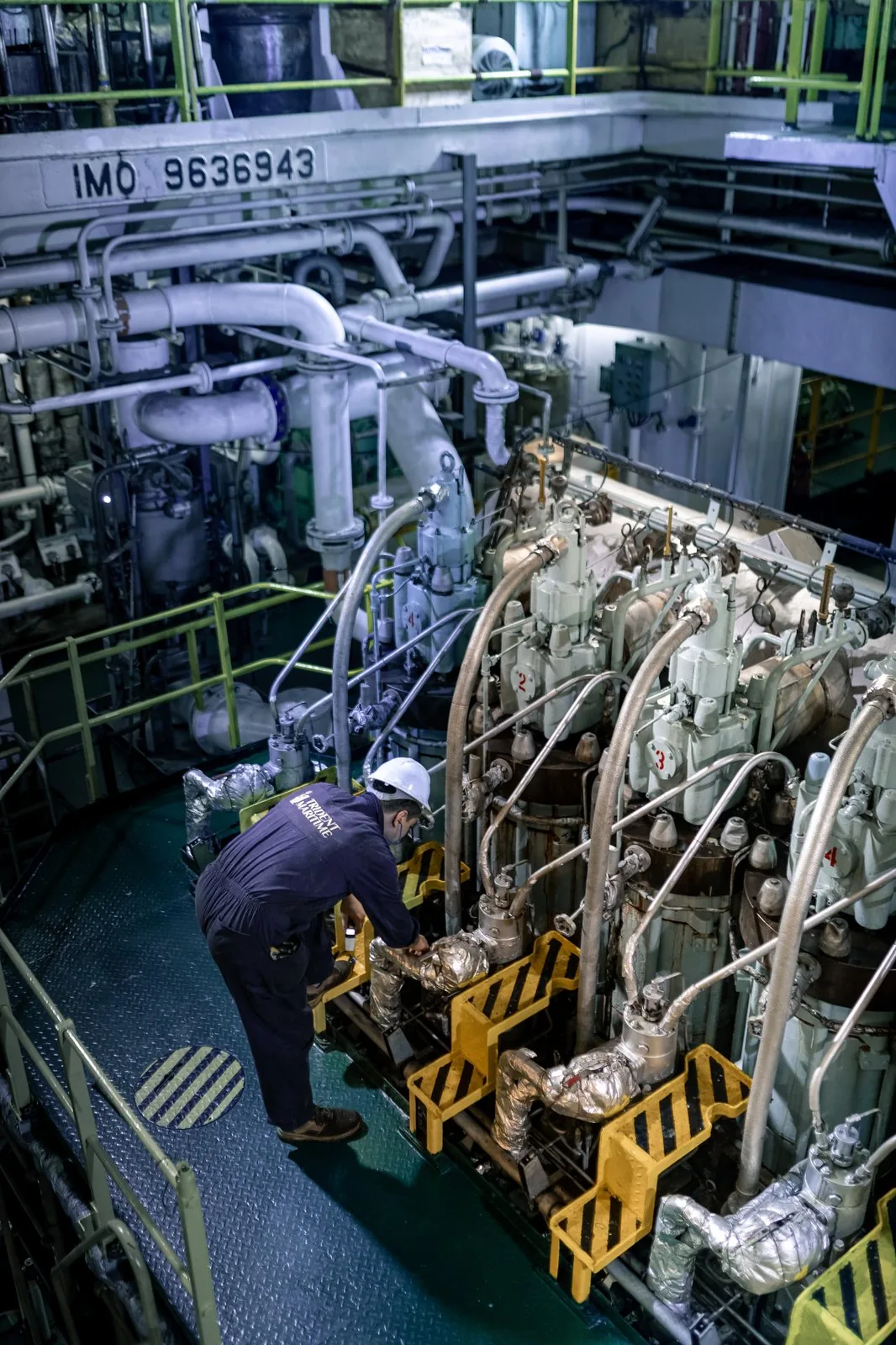
The architecture of maritime coverage is divided into distinct segments addressing specific operational risks and liabilities. Hull and Machinery (H&M) covers physical damage to the vessel, its propulsion systems, and onboard equipment against marine perils. Protection and Indemnity (P&I) is provided by mutual clubs to cover third-party liabilities, including crew welfare, cargo damage, and environmental incidents.
Beyond these primary pillars, operators utilize Freight, Demurrage, and Defense (FD&D) for legal cost coverage during charter party disputes. War Risks cover is activated when vessels transit designated high-risk areas identified by the Joint War Committee (JWC), requiring additional premiums based on transit duration. Specialized policies also exist for Kidnap and Ransom (K&R) and Loss of Hire (LOH), providing financial continuity during extended off-hire periods.
Structuring these policies requires a deep understanding of the vessel's specific trading patterns, cargo types, and geographic exposure. Engaging with professional commercial management teams helps align coverage limits with actual chartering exposures. Properly calibrated marine insurance prevents both underinsurance in high-risk trades and unnecessary premium expenditure.
How do IACS class records impact coverage?
Classification societies act as the technical benchmark for underwriters evaluating a vessel's structural seaworthiness and mechanical reliability. Maintaining class without outstanding conditions of class (CoC) is a strict warranty in nearly all standard hull and machinery policies. If a vessel loses its class status or operates beyond class-imposed limitations, the associated coverage is typically suspended automatically.
Underwriters review the vessel's class records, including survey history, dry-docking reports, and thickness measurement data, prior to binding risks. Vessels with a history of deferred maintenance, frequent class interventions, or overdue surveys face higher premiums or restricted terms. Transparency with the classification society and the underwriter is non-negotiable for fleet managers aiming to optimize their risk transfer costs.
During major repairs or dry docking, class surveyors must approve all structural modifications and machinery overhauls. Independent verification through marine consultancy ensures that shipyard work meets both class rules and underwriter expectations. This dual oversight mitigates the risk of claims being contested due to unapproved alterations or substandard repair materials.
What role does the ISM Code play in risk evaluation?
The ISM Code mandates the implementation of a Safety Management System (SMS) to ensure safe vessel operations and pollution prevention. Underwriters require a valid Document of Compliance (DOC) for the company and a Safety Management Certificate (SMC) for the ship to bind coverage. Any major non-conformity raised during an external audit threatens policy validity and can trigger a suspension of terms.
Incident investigations routinely examine SMS records to determine if the crew followed established procedures prior to a casualty. If an underwriter discovers that a vessel operated with systematic safety failures or ignored fundamental SMS protocols, they may invoke the unseaworthiness defense to deny a claim. Operators must therefore treat the SMS as a living operational framework rather than a mere documentation exercise.
The International Maritime Organization continuously updates safety frameworks, requiring operators to adapt their SMS accordingly. Regular internal audits, management reviews, and crew familiarization drills are critical to demonstrating compliance to P&I correspondents. A robust safety culture, backed by verifiable records, is the strongest defense against liability claims and underwriter scrutiny.
How do international conventions shape liability?
Global regulatory frameworks establish the baseline for maritime liability, directly dictating the scope of P&I coverage required by operators. The IMO STCW Convention applies to approximately 1.2 million certificated seafarers on over 50,000 vessels worldwide (IMO, 2025). Compliance with STCW certification and rest-hour mandates is heavily scrutinized by insurers following any navigational incident or crew injury.
Environmental liabilities are governed by strict international treaties, most notably MARPOL and the Civil Liability Convention (CLC) for oil pollution. P&I clubs issue vital documentation, such as the Certificate of Financial Responsibility (COFR), which guarantees the vessel has sufficient backing to cover statutory pollution limits. Without these underwriter-backed certificates, vessels are legally barred from entering major international ports.
Crew welfare liabilities are similarly standardized by global labor agreements. The Maritime Labour Convention 2006 (MLC) is in force in countries representing over 97% of world gross shipping tonnage (ILO, 2026). P&I clubs require strict adherence to MLC provisions regarding seafarer repatriation, medical care, and employment conditions, stepping in to cover costs when owners face financial default.
Comparing H&M and P&I cover: What are the differences?
Understanding the boundary between physical asset protection and third-party liability coverage is essential for technical buyers and fleet managers. H&M is typically placed in the commercial market through syndicates, while P&I is provided by mutual associations owned by shipowners. The table below outlines the primary distinctions between these two critical components of marine insurance.
| Criterion | Hull & Machinery (H&M) | Protection & Indemnity (P&I) |
|---|---|---|
| Primary Focus | Physical damage to the vessel and machinery. | Third-party liabilities and operational risks. |
| Provider Type | Commercial syndicates and corporate underwriters. | Mutual clubs (International Group members). |
| Key Coverages | Collisions, grounding, engine breakdowns, fire. | Cargo damage, pollution, crew injury, wreck removal. |
| Claim Trigger | Direct physical loss or damage to the asset. | Legal liability to a third party from operations. |
| Premium Basis | Fixed premium based on agreed asset value. | Advance calls with potential for supplementary calls. |

While H&M covers the physical repair costs after a collision, the P&I club handles the resulting liability claims from the other vessel, cargo owners, or injured parties. Navigating the intersection of these policies during a major casualty requires experienced claims handlers who understand the specific deductibles and exclusions of both frameworks. Organizations like BIMCO provide standardized contract clauses that help owners align their charter party liabilities with their P&I coverage.
How to prepare a vessel for underwriting surveys?
Underwriters frequently mandate independent condition surveys for older tonnage, vessels changing ownership, or fleets with deteriorating loss records. A failed survey can result in immediate cancellation of cover, increased deductibles, or the imposition of strict operational warranties. Technical superintendents must systematically prepare the vessel to demonstrate high maintenance standards and regulatory compliance.
- Review class records. Ensure all statutory certificates are valid, continuous synopsis records are updated, and no overdue conditions of class exist.
- Conduct internal inspections. Utilize a comprehensive vessel condition survey checklist to identify and rectify minor defects before the official surveyor arrives.
- Test critical machinery. Verify the operational readiness of emergency fire pumps, steering gear, life-saving appliances, and emergency generators.
- Organize documentation. Prepare the latest oil record book, PMS logs, deck logs, and rest-hour records for immediate review on the bridge.
- Brief the crew. Ensure the Master and Chief Engineer are prepared to discuss operational procedures, safety management protocols, and recent maintenance confidently.

For tanker operators, vetting outcomes also heavily influence risk assessments by marine insurance underwriters. SIRE 2.0 became the mandatory tanker vetting standard on 2 September 2024, replacing VIQ7 (OCIMF, 2024). Aligning condition survey preparations with SIRE 2.0 requirements creates a unified standard of excellence onboard, satisfying both charterers and insurers simultaneously.
Discuss marine insurance with Trident Maritime
Navigating the complexities of maritime risk transfer requires deep technical expertise and strict regulatory alignment. Trident Maritime provides comprehensive support for shipowners, ensuring vessels meet the rigorous standards demanded by IACS classes, flag states, and P&I clubs. Our ISO 9001/14001/45001 certified teams in Odesa, Hamburg, Dubai, and Hong Kong operate 24/7 to maintain fleet compliance and operational readiness. For a confidential discussion, contact info@trident-maritime.com or visit our contacts page.
Frequently Asked Questions
What does marine insurance cover for cargo vessels?
Marine insurance covers a broad spectrum of risks for commercial cargo vessels, primarily divided into Hull & Machinery (H&M) for physical asset damage and Protection & Indemnity (P&I) for third-party liabilities. Coverage extends to collisions, engine breakdowns, cargo damage, crew injuries, environmental pollution, and wreck removal, subject to policy terms and class maintenance warranties.
How does the ISM Code affect marine insurance validity?
Compliance with the ISM Code is a fundamental warranty in modern marine insurance policies. Underwriters require vessels to maintain a valid Safety Management Certificate (SMC) and the operating company to hold a Document of Compliance (DOC). If an incident is caused by systematic SMS failures, insurers may deny the claim citing unseaworthiness.
What is the difference between H&M and P&I marine insurance?
H&M insurance protects the shipowner against physical damage to the vessel and its machinery, usually provided by commercial underwriting syndicates. P&I insurance covers third-party liabilities arising from vessel operations, such as pollution, cargo claims, and crew injuries. P&I is typically provided by mutual associations known as P&I clubs.
How do classification societies influence marine insurance premiums?
Classification societies dictate the technical standards for vessel seaworthiness. Underwriters rely on IACS class records to assess risk; vessels with clean survey histories and no outstanding conditions of class receive favorable premiums. Conversely, vessels with deferred maintenance or frequent class interventions face higher costs or strict operational warranties.
What are the standard exclusions in a marine insurance policy?
Standard exclusions in marine insurance typically include loss caused by ordinary wear and tear, inherent vice, willful misconduct by the insured, and delays. Additionally, unless specifically endorsed, damages resulting from war, strikes, terrorism, and radioactive contamination are excluded and require separate War Risks or specialized coverage.
How does OCIMF SIRE 2.0 impact tanker marine insurance?
SIRE 2.0 vetting outcomes provide underwriters with deep insights into a tanker's operational quality and human element performance. Consistently poor vetting results signal elevated risk, which can lead to increased P&I premiums or demands for independent condition surveys. Strong SIRE 2.0 compliance demonstrates proactive risk management to insurers.
Contact Trident Maritime
Need a consultation or proposal? Reach out through any of the channels below - we respond within one business day.
- Phone: +380487373735
- Email: info@trident-maritime.com