Maritime Manager Roles in 2026: A Shipowner's Guide
- What Are the Core Responsibilities of a Maritime Manager?
- How Does a Third-Party Maritime Manager Integrate with an Owner's Operations?
- What is the Regulatory Framework Governing Ship Management in 2026?
- What are the differences between in-house and outsourced marine management?
- How Do You Select a Competent Maritime Manager?
- What are Common Pitfalls in Ship Management Agreements?
- Related Reading
- Discuss Your Ship Management Needs with Trident Maritime
- Contact Trident Maritime
The third-party ship management segment is projected to grow at approximately 9% CAGR through 2035, according to Business Research Insights (2025). This growth reflects a strategic shift by shipowners to delegate complex operational, regulatory, and crewing functions to a specialist maritime manager. This role is no longer just an agent but a fiduciary partner responsible for asset value preservation and commercial optimisation.
A maritime manager is the shipowner's delegated authority for vessel operations, ensuring compliance with IMO conventions (SOLAS, MARPOL, ISM), managing crew under STCW and MLC, and optimizing commercial performance. Their function is central to asset protection, regulatory compliance, and profitability in a complex 2026 maritime environment.
What Are the Core Responsibilities of a Maritime Manager?
A maritime manager's responsibilities are broadly divided into four pillars: technical, crewing, commercial, and compliance. These functions are interconnected and executed through a documented Safety Management System (SMS) as required by the International Safety Management (ISM) Code. The ultimate goal is to ensure the vessel is operated safely, efficiently, and in full compliance with international and local regulations.
The technical function, often detailed under technical management, encompasses planned maintenance, dry-docking supervision, procurement of spares and stores, and emergency technical support. A key role within this structure is the Designated Person Ashore (DPA), who serves as a direct link between the vessel's command and the highest level of management ashore. This ensures that safety and pollution prevention receive priority in all operational decisions.
Crewing involves the entire lifecycle of seafarers, from recruitment and training to payroll and repatriation, governed by the STCW and MLC 2006 conventions. The commercial aspect includes chartering, voyage planning, and post-fixture operations. A proficient maritime manager acts as the shipowner's trusted representative, safeguarding the asset's physical condition and commercial viability. The successful execution of these duties directly impacts a vessel's operational availability and profitability.
How Does a Third-Party Maritime Manager Integrate with an Owner's Operations?
The integration of a third-party manager begins with a formal vessel takeover process. This involves a thorough inspection of the vessel, its documentation, and a review of its current operational status, including class and flag state records. A detailed takeover plan is agreed upon, outlining timelines for transferring ISM/ISPS/MLC responsibilities, changing crew, and migrating procurement and accounting systems.
Effective communication protocols are central to a seamless partnership. This typically involves daily, weekly, and monthly reporting structures covering vessel position, performance data, maintenance status, and financial summaries. The manager provides the owner with secure access to a digital portal for real-time data on OPEX, crew status, and upcoming maintenance schedules. Quarterly performance reviews are standard practice to align on strategic objectives and budget adherence.
"The transition to a new manager must be seamless to the charterer and crew. Our process focuses on front-loading the due diligence - verifying all certificates, assessing crew competence, and pressure-testing the SMS before the formal handover. A successful takeover is measured by zero operational downtime and immediate compliance from day one."
- Capt. Oleksiy Smolyar, CEO / Director, Trident Maritime
Financial integration is managed through a transparent system of budget proposals and expenditure approvals. The maritime manager prepares an annual operating expense (OPEX) budget for the owner's approval. All subsequent expenditures are tracked against this budget, with clear authorisation levels for non-budgeted items, ensuring the owner retains full financial control while delegating day-to-day management.
What is the Regulatory Framework Governing Ship Management in 2026?
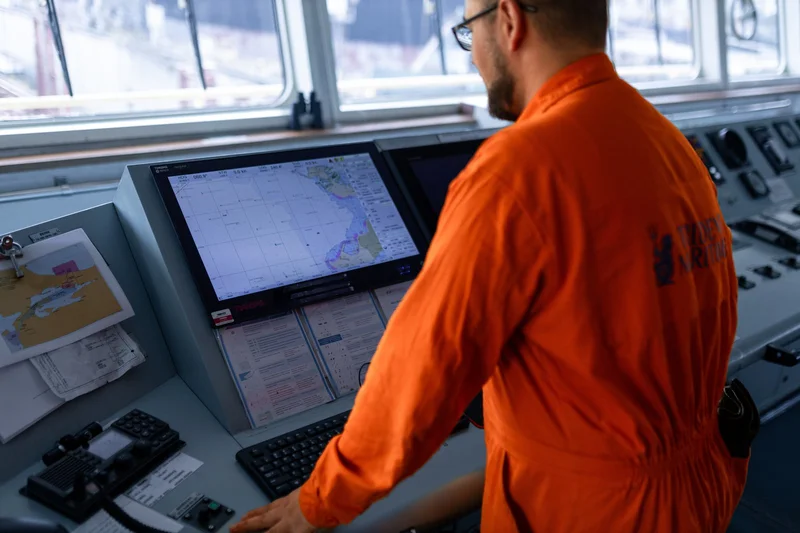
The regulatory landscape for ship management is shaped by the International Maritime Organization (IMO), flag states, port states, and classification societies. In 2026, compliance extends beyond traditional safety and environmental rules to include stringent decarbonisation and cybersecurity mandates. The IMO's 2023 GHG Strategy, with its target of at least a 20% emissions reduction by 2030, is a driving force behind technical and operational decisions.
Key conventions forming the bedrock of compliance include SOLAS, MARPOL, STCW, and the MLC 2006. The MLC is particularly significant, as it is now in force in countries representing over 97% of the world's gross shipping tonnage (ILO, 2026). A maritime manager must ensure every managed vessel meets these standards to avoid Port State Control (PSC) detention, which according to the Paris MoU Annual Report 2024, occurred at a rate of 4.03% for inspections in its region.
Furthermore, regional and commercial requirements add layers of complexity. For tankers, compliance with OCIMF's SIRE 2.0 vetting programme is non-negotiable for trading with major oil companies. Similarly, bulk carriers must often satisfy RightShip's RISQ framework. A competent manager must have deep expertise in these specific regimes, maintaining the vessel and its crew in a constant state of readiness for inspection. This requires a proactive, system-driven approach rather than reactive preparation.
What are the differences between in-house and outsourced marine management?
Shipowners must decide whether to manage vessels in-house or delegate to a third-party maritime manager. The choice depends on fleet size, trading patterns, in-house expertise, and strategic focus. An in-house team offers direct control but requires significant investment in personnel, systems, and certifications.
The table below compares the two models across key operational and financial criteria:
| Criterion | In-House Management | Third-Party Maritime Manager |
|---|---|---|
| Cost Structure | High fixed costs (salaries, office, IT systems, certifications). Costs are fixed regardless of fleet size fluctuations. | Variable cost model, typically a fixed management fee per vessel per day. Economies of scale on procurement, insurance, and crewing. |
| Access to Expertise | Limited to the expertise of hired personnel. May struggle to cover all vessel types or specialised regulations. | Access to a large pool of specialists (technical, marine, legal, crewing) across various vessel segments and global regulations. |
| Regulatory Burden | Owner bears the full responsibility and cost of maintaining ISM, ISPS, MLC, and ISO certifications. | Manager maintains all necessary Documents of Compliance and certifications, audited by multiple flag states and class societies. |
| Scalability | Difficult to scale up or down quickly. Adding or selling vessels requires significant HR and administrative effort. | Highly scalable. Fleet size can be adjusted with minimal disruption as the manager's infrastructure supports a large portfolio. |
| Vetting & Inspection Performance | Performance is dependent on the in-house team's experience with specific vetting regimes like SIRE 2.0 or RightShip. | Managers often have dedicated vetting departments and leverage cross-fleet learnings to maintain high pass rates. |
| Geographic Reach | Limited by the location of the owner's office. May require extensive travel or local agents. | Global office networks (e.g., Odesa, Hamburg, Dubai, Hong Kong) provide local support and on-the-ground presence in key maritime hubs. |
Outsourcing to a third-party manager allows shipowners to focus on their core business of investment and chartering while leveraging the manager's established systems and scale. This model transforms fixed overheads into a predictable variable cost, providing operational and financial flexibility.
How Do You Select a Competent Maritime Manager?
Selecting the right maritime manager is a critical decision that impacts asset value and revenue. The due diligence process should extend beyond a simple fee comparison to a rigorous assessment of the manager's systems, personnel, and performance track record. A primary indicator of quality is a robust set of internationally recognised certifications, such as ISO 9001 (Quality), ISO 14001 (Environment), and ISO 45001 (Health & Safety).
Prospective partners should be evaluated on their experience with the specific vessel type in question. A manager proficient in VLCCs may not have the nuanced expertise required for specialised gas carriers. Requesting anonymised performance data, such as crew retention rates, Lost Time Injury Frequency (LTIF), and PSC detention history, provides objective evidence of their capabilities. Membership in industry bodies like BIMCO or InterManager also signals a commitment to industry best practices.
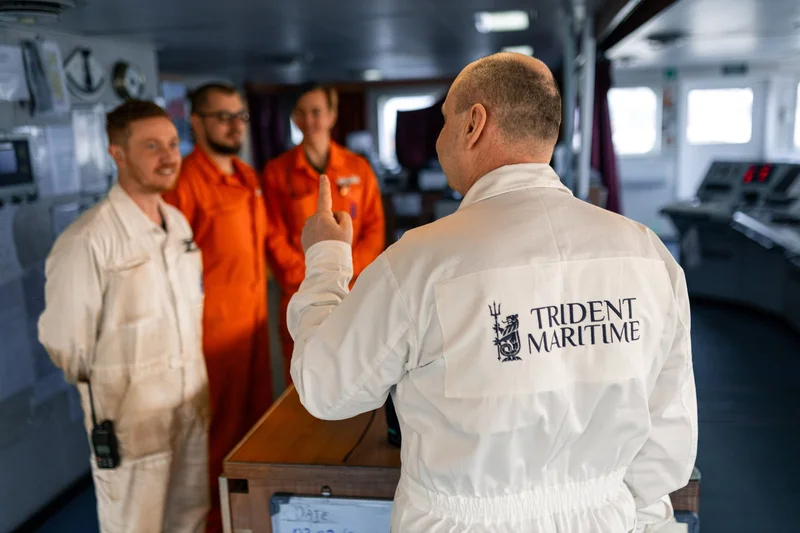
Finally, assess the quality and experience of the shore-based team, particularly the designated technical and marine superintendents. These are the individuals who will have day-to-day responsibility for the vessel. A shipowner should have confidence in their competence, communication skills, and ability to respond effectively in an emergency. A transparent and collaborative culture is as important as any technical KPI.
What are Common Pitfalls in Ship Management Agreements?
The ship management agreement, typically based on a standard industry contract like BIMCO's SHIPMAN 2024, forms the legal basis of the relationship. While these forms are comprehensive, pitfalls can arise from poorly defined clauses or a lack of clarity on specific responsibilities. One common issue is ambiguity in the budget and expenditure authority. The agreement must clearly state the manager's spending limit for non-budgeted items without prior owner approval.
Another area requiring careful definition is performance metrics. Vague statements like "best industry practice" are unenforceable. Instead, the agreement should include specific Key Performance Indicators (KPIs) related to vessel downtime, OPEX variance, crew retention, and vetting observations. These KPIs should be reviewed regularly and tied to the manager's performance evaluation.
Termination clauses also warrant close scrutiny. The agreement should provide a clear and fair process for termination by either party, including notice periods and procedures for a smooth handover of management responsibilities. A well-drafted agreement protects both the owner and the manager, setting clear expectations and providing a framework for a long-term, successful partnership built on trust and mutual understanding.

Related Reading
For a deeper understanding of related topics, we recommend the following articles from our blog:
- Third-Party Ship Management in 2026: A Shipowner's Guide
- Maritime Technical Services in 2026: A Complete Guide
- What Is a Maritime Company? A 2026 Operations Guide
Discuss Your Ship Management Needs with Trident Maritime
Trident Maritime is a BIMCO-member ship management and marine services provider with a proven track record in the tanker, gas carrier, container, and bulker sectors. Our ISO 9001, 14001, and 45001 certified systems ensure operational excellence and regulatory compliance. With offices in Odesa, Hamburg, Dubai, and Hong Kong, we provide global reach with local expertise.
Our approach as a maritime manager is built on transparency, partnership, and a deep commitment to preserving asset value. We offer a full suite of services, from crew management to comprehensive technical and commercial management. For a confidential discussion about your fleet's specific requirements, contact info@trident-maritime.com or visit our contacts page.
Contact Trident Maritime
Need a consultation or proposal? Reach out through any of the channels below - we respond within one business day.
- Phone: +380487373735
- Email: info@trident-maritime.com