vessel condition survey report: 2026 Fleet Guide
- What does a vessel condition survey report cover?
- How do inspectors evaluate hull and machinery?
- Why is class and statutory documentation critical?
- How to prepare for a condition survey?
- Condition survey vs. Pre-purchase inspection: What is the difference?
- How do regulatory frameworks impact survey outcomes?
- Related reading
- Discuss vessel condition surveys with Trident Maritime
- Frequently Asked Questions
- Contact Trident Maritime
The Paris MoU detention rate rose to 4.03% in 2024, up from 3.81% in 2023 (Paris MoU Annual Report 2024). This escalating regulatory enforcement makes rigorous independent technical inspections essential for commercial fleet operations. A comprehensive assessment identifies structural deficiencies and mechanical anomalies before port state control interventions occur.
A vessel condition survey report provides an independent, evidence-based assessment of a ship's structural integrity, machinery status, and regulatory compliance. Owners and charterers use these documents to evaluate asset risk, plan dry-docking scopes, and ensure adherence to IACS standards. The process covers hull condition, cargo gear, engine room performance, and statutory certificates.
A standard vessel condition assessment takes two to three days to compile onboard and highlights immediate operational risks across tankers, bulkers, and gas carriers.
What does a vessel condition survey report cover?
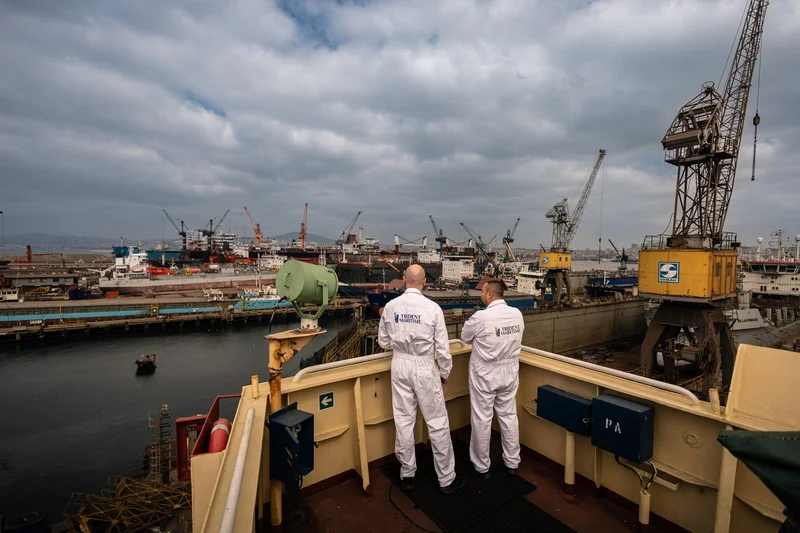
Generating a rigorous ship condition report requires evaluating multiple technical domains across the ship. Surveyors inspect the external hull, main deck, cargo spaces, and ballast tanks for coating breakdown, corrosion, and structural deformation. The assessment also scrutinizes the engine room, focusing on main propulsion, auxiliary engines, purifiers, and pollution prevention equipment.
The documentation review is equally critical to the physical inspection. Surveyors verify that the vessel maintains valid certificates from recognized organizations. The IACS comprises 12 member classification societies covering more than 90% of the world's cargo-carrying tonnage (IACS Annual Review 2025).
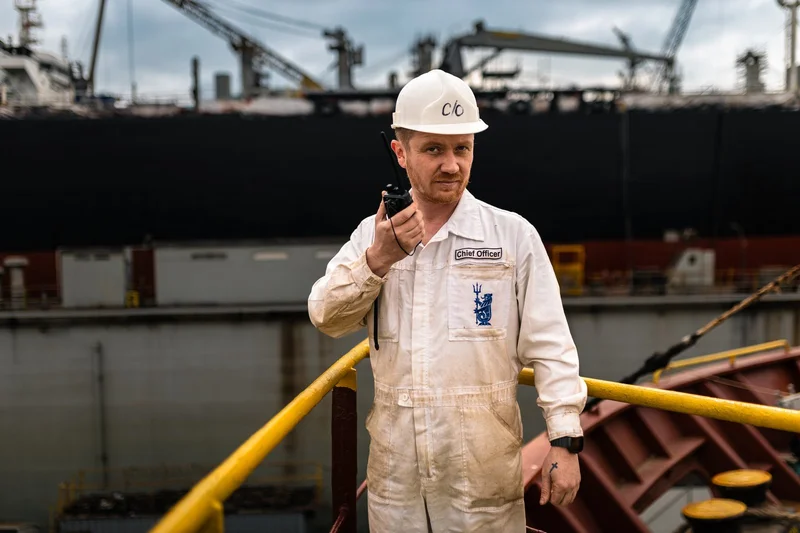
Through dedicated Marine consultancy, technical superintendents cross-reference observed conditions against class records. Any technical assessment is based on available documents, vessel condition at the time of inspection and access granted onboard.
How do inspectors evaluate hull and machinery?
Inspectors utilize visual examination, non-destructive testing, and operational checks to determine the true state of hull and machinery. For the hull, ultrasonic thickness measurements help quantify steel wastage in critical areas like the wind-and-water line and cargo hold frames. Inspectors examine hatch covers for watertight integrity, testing rubber packings and securing mechanisms.
In the machinery spaces, the focus shifts to planned maintenance execution and system reliability. Surveyors observe running parameters of generators, check for oil leaks, and review lube oil analysis trends. They also test critical safety systems, including the quick-closing valves, emergency fire pumps, and oily water separators.
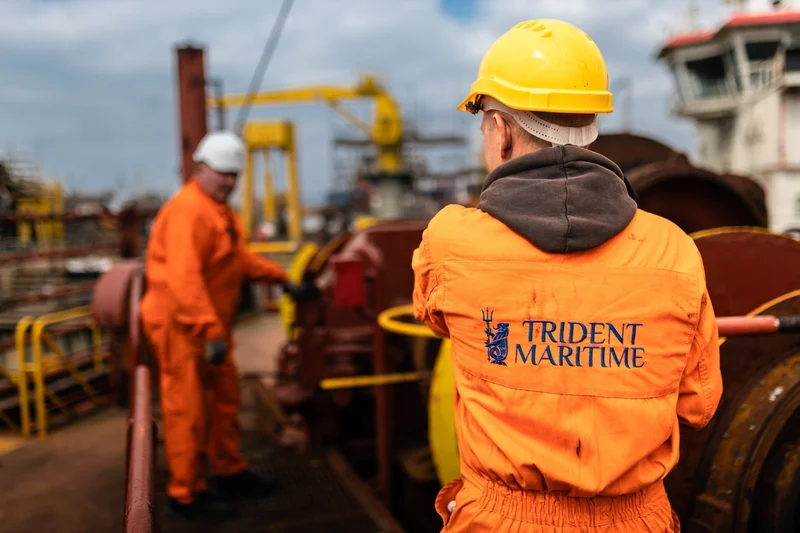
With 21 years in operation, our core technical team of 38 specialists routinely identifies hidden defects that standard crew routines might overlook. Operating across 4 primary global hubs, including Hamburg and Dubai, superintendent interventions prevent minor mechanical wear from escalating into off-hire events.
Why is class and statutory documentation critical?
A vessel's physical condition must align with its statutory documentation to trade legally. Surveyors audit the Continuous Synopsis Record, Safety Management Certificate, and International Ship Security Certificate to ensure compliance with IMO mandates. Discrepancies between the paper trail and the physical reality often trigger immediate port state control detentions.
Crew certification and welfare documentation form another major pillar of the survey. The IMO STCW Convention applies to approximately 1.2 million certificated seafarers on over 50,000 vessels worldwide (IMO, 2025). Furthermore, the Maritime Labour Convention 2006 (MLC) is in force in countries representing over 97% of world gross shipping tonnage (ILO, 2026).
Proper Crew management ensures that all work and rest hour logs, medical certificates, and employment agreements meet these stringent international standards. Incomplete MLC documentation is a leading cause of administrative deficiencies during third-party audits.
How to prepare for a condition survey?
Preparing for this technical inspection involves systematic coordination between the ship's command and shore-based management. A proactive approach minimizes delays and ensures surveyors can access all necessary spaces efficiently.
- Organize statutory certificates. Arrange all class, flag, and statutory documents in a central location for rapid review.
- Update maintenance logs. Ensure the Planned Maintenance System (PMS) is current, with all critical spare parts inventoried.
- Prepare cargo spaces. Clean and ventilate cargo holds or tanks to allow safe entry and visual inspection.
- Test emergency equipment. Verify the operational readiness of emergency generators, fire pumps, and life-saving appliances.
- Brief the crew. Instruct officers to facilitate surveyor requests and provide accurate operational data without hesitation.
"Final scope, cost and timeline depend on vessel condition, class/flag requirements, trading area and yard/service-provider availability."
- Capt. Oleksiy Smolyar, CEO / Director, Deep Sea Captain
Early preparation directly correlates with fewer adverse findings and a smoother inspection process.

Condition survey vs. Pre-purchase inspection: What is the difference?
While both assessments evaluate a ship's physical state, their objectives and depths differ significantly. Routine condition surveys focus on ongoing compliance and maintenance verification for current owners or charterers. Pre-purchase inspections are heavily geared toward asset valuation and identifying capital expenditure risks for prospective buyers.
| Criterion | Condition Survey | Pre-Purchase Inspection |
|---|---|---|
| Primary Objective | Verify operational readiness and compliance. | Assess asset value and hidden liabilities. |
| Typical Client | Current owner, charterer, P&I club. | Prospective buyer, financial institution. |
| Scope Depth | Standard hull, machinery, and safety checks. | Deep dive into structural life extension and CAPEX. |
| Record Review | Recent class and maintenance logs. | Historical class records, thickness measurement history. |
Effective Commercial management relies on understanding these distinctions to commission the correct type of survey for specific strategic goals.
How do regulatory frameworks impact survey outcomes?
The maritime regulatory environment dictates the baseline standards that condition surveys measure against. For the tanker sector, vetting requirements have become exceptionally stringent. SIRE 2.0 became the mandatory tanker vetting standard on 2 September 2024, replacing VIQ7 (OCIMF, 2024).
This shift has dramatically increased the scrutiny on human factors and operational procedures. SIRE 2.0 inspections typically identify 20-30 findings per vessel, versus the 2-4 typical under VIQ7 (industry analysis, 2024). Surveyors now evaluate how crew members interact with equipment, not just the physical state of the machinery itself.
Compliance requires continuous alignment with guidelines published by the Oil Companies International Marine Forum (OCIMF) and the International Maritime Organization (IMO). Vessels failing to meet these evolving standards face immediate commercial exclusion from major charterers.
Related reading
To deepen your understanding of fleet operations and technical oversight, explore our dedicated resources. Learn more about About Trident Maritime and our approach to modern ship management.
- What Is a Maritime Company? A 2026 Operations Guide
- Maritime Technical Services in 2026: A Complete Guide
Discuss vessel condition surveys with Trident Maritime
Trident Maritime is a BIMCO-member ship management provider, fully certified to ISO 9001, ISO 14001, and ISO 45001 standards. Operating from our headquarters in Odesa, with established offices in Hamburg, Dubai, and Hong Kong, we deliver uncompromising technical oversight for tankers, gas carriers, containerships, and bulkers. Our 24/7 emergency response and dedicated superintendents ensure your fleet remains compliant, operational, and commercially viable. For a confidential discussion, contact info@trident-maritime.com or visit our contacts page.
Frequently Asked Questions
Contact Trident Maritime
Need a consultation or proposal? Reach out through any of the channels below - we respond within one business day.
- Phone: +380487373735
- Email: info@trident-maritime.com