IMO Net-Zero shipping in 2026: Targets and Compliance
- What is the IMO Net-Zero shipping framework in 2026?
- How does the 2030 target impact technical ship management?
- What are the compliance pathways for tankers and bulkers?
- How to prepare a vessel for emission reduction upgrades?
- How does crew training support emission reduction targets?
- How does CII rating affect commercial management?
- Related reading on maritime compliance
- Frequently Asked Questions (FAQ)
- Discuss IMO Net-Zero shipping compliance with Trident Maritime
- Contact Trident Maritime
IMO Net-Zero shipping in 2026 requires a 20-30% reduction in greenhouse gas emissions by 2030 compared to 2008 baseline levels. Technical ship managers achieve this through energy efficiency upgrades, alternative fuel readiness, and continuous Carbon Intensity Indicator (CII) monitoring. Understanding these regulatory milestones is critical for maintaining commercial asset value and charterability across bulkers, tankers, and gas carriers.
The IMO Net-Zero shipping framework, agreed in April 2025, targets net-zero emissions from international shipping by approximately 2050 (IMO MEPC 83). The IMO 2023 GHG Strategy targets at least a 20% reduction (striving for 30%) in maritime greenhouse emissions by 2030 versus 2008 levels (IMO MEPC 80). Meeting these aggressive milestones requires immediate technical and operational action from shipowners and operators.
What is the IMO Net-Zero shipping framework in 2026?
The maritime regulatory landscape shifted significantly with recent Marine Environment Protection Committee (MEPC) resolutions. This global decarbonization framework establishes strict trajectories for all commercial cargo vessels above 5,000 GT. This includes mandatory compliance with both the Energy Efficiency Existing Ship Index (EEXI) and the operational Carbon Intensity Indicator (CII).
These stringent regulations compel shipowners to adopt immediate technical and operational measures to remain compliant. Navigating these complex requirements requires robust marine consultancy to ensure vessels do not face operational downtime or port state detentions. Superintendents must now calculate baseline emissions and project annual reductions for every vessel in the fleet.
Early adoption of energy-saving technologies prevents premature asset obsolescence and maintains fleet competitiveness. Robust compliance strategies protect asset values in an increasingly heavily regulated global market.
How does the 2030 target impact technical ship management?
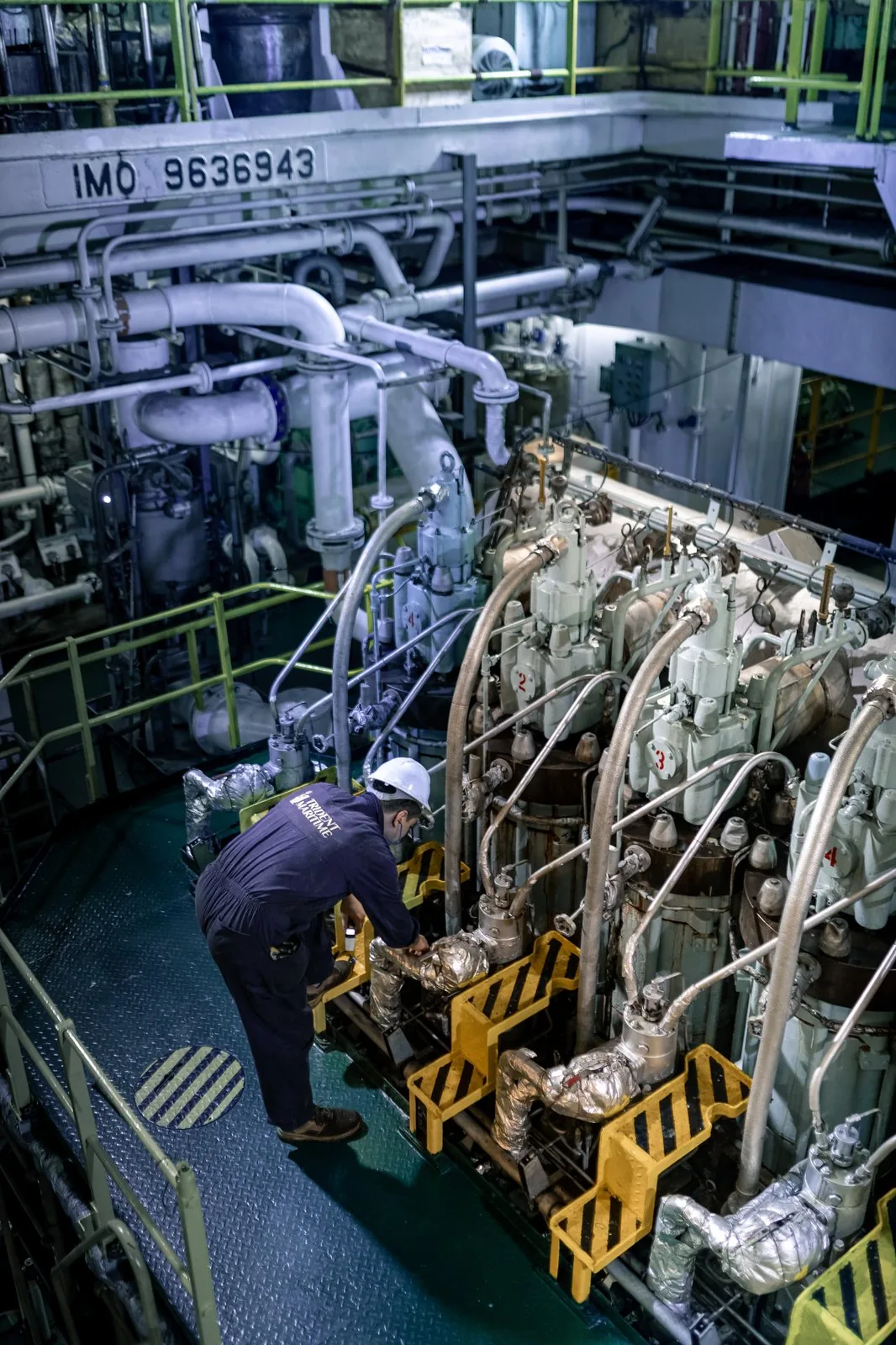
Technical managers must integrate emission reduction strategies directly into standard maintenance cycles and dry docking schedules. Upgrading propulsion systems and optimizing hull hydrodynamics are now standard procedures rather than optional enhancements. The International Association of Classification Societies, comprising 12 member classification societies covering more than 90% of the world's cargo-carrying tonnage, enforces strict unified requirements for these modifications.
Through comprehensive technical management, superintendents monitor engine performance continuously to ensure ongoing compliance with EEXI limits. Implementing these technical changes during regular class renewal surveys minimizes costly off-hire periods. Furthermore, robust Ship Energy Efficiency Management Plans (SEEMP Part III) are audited annually to verify continuous improvement.
Integrating environmental compliance into daily technical operations ensures that vessels meet regulatory standards without compromising cargo-carrying efficiency.
What are the compliance pathways for tankers and bulkers?
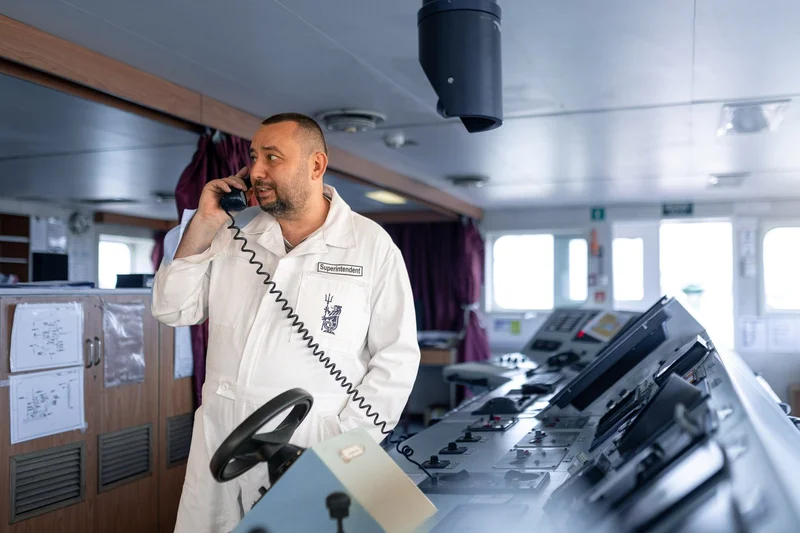
Tankers and bulkers face different operational profiles, necessitating tailored approaches to emissions reduction across the fleet. Deep-sea vessels often rely on slow steaming, Engine Power Limitation (EPL), and advanced hull friction reduction coatings as immediate compliance steps. For long-term viability, operators are actively evaluating alternative fuels like methanol or ammonia, though global supply chain maturity remains variable.
Partnering with experienced technical managers ensures that commercial management teams can accurately project voyage costs under these new fuel regimes. Selecting the right compliance pathway requires balancing upfront capital expenditure with long-term charter competitiveness. Our technical superintendents typically observe that older tonnage relies heavily on power limitation, while newer builds integrate mechanical efficiency devices.
| Compliance Strategy | Applicability | Implementation Timeline |
|---|---|---|
| Engine Power Limitation (EPL) | Older tankers and bulkers (15+ years) | Immediate (Next scheduled dry dock) |
| Energy Saving Devices (ESD) | All commercial cargo vessels | Short to medium term (1-3 years) |
| Alternative Fuel Retrofit | Vessels under 10 years old | Long term (2030 and beyond) |
| Advanced Hull Coatings | High-utilization deep-sea routes | Immediate (During next scheduled hull cleaning) |
A data-driven approach to selecting compliance pathways maximizes return on investment while ensuring uninterrupted global trading.
How to prepare a vessel for emission reduction upgrades?
Retrofitting a vessel for enhanced energy efficiency requires meticulous planning, precise engineering, and comprehensive class approval. The process involves coordinating closely with naval architects, shipyards, and flag state authorities months in advance. Expanding the vessel inspection scope is essential when assessing a ship for major structural or mechanical modifications.
- Initial Feasibility Assessment. Evaluate the vessel's current EEXI baseline and operational profile to identify viable technical upgrades.
- Engineering and Design. Develop detailed technical drawings for Energy Saving Devices (ESDs) such as Mewis ducts or rotor sails.
- Class Society Approval. Submit comprehensive plans to the relevant IACS member society for rigorous safety and compliance review.
- Shipyard Selection. Identify dry dock facilities in key maritime hubs like Singapore or Dubai with proven experience in executing specific retrofitting tasks.
- Installation and Sea Trials. Execute the physical upgrades and conduct comprehensive testing to verify projected efficiency gains against the baseline.
Structured preparation ensures that complex retrofits are completed safely, strictly on schedule, and within budget parameters.
How does crew training support emission reduction targets?

Transitioning to advanced propulsion systems and alternative fuels demands specialized seafarer competencies and updated certification. The International Maritime Organization STCW Convention applies to approximately 1.2 million certificated seafarers on over 50,000 vessels worldwide (IMO, 2025). As fleets adopt methanol, ammonia, or LNG, training matrices must be updated to cover the safe handling of toxic and highly flammable substances.
Effective crew management practices ensure that only appropriately certified and experienced personnel are deployed on dual-fuel vessels. Furthermore, recent STCW amendments require electronic certificates of competency effective from 2025 (IMO MSC.535(107)), streamlining the verification process for port state control. Continuous onboard training is a critical component of safe, efficient, and compliant technical operations.
Investing in specialized crew training is non-negotiable for operating next-generation, low-emission commercial vessels safely.
How does CII rating affect commercial management?

The Carbon Intensity Indicator (CII) directly impacts a vessel's commercial viability, market positioning, and daily charter rates. A poor CII rating (D or E) can lead to exclusion from premium charter markets and increased scrutiny during pre-vetting processes. Furthermore, Paris MoU port state control, which inspects approximately 17,500 individual ships per year, increasingly scrutinizes environmental compliance documentation.
Commercial operators must ensure that seafarers execute optimized voyage plans, manage ballast efficiently, and maintain precise emission logs. Charterers increasingly demand specific BIMCO CII operations clauses in their contracts, shifting operational parameters to protect the vessel's rating. The Paris MoU detention rate rose to 4.03% in 2024, up from 3.81% in 2023 (Paris MoU Annual Report 2024), highlighting the risks of documentary non-compliance.
Proactive CII management bridges the gap between technical efficiency and commercial profitability in modern shipping.
Related reading on maritime compliance
Staying updated on regulatory frameworks is essential for shipowners and fleet managers navigating the 2026 landscape. Proper preparation prevents port state control detentions and maintains asset charterability. We recommend reviewing the following technical guides.
- Technical Ship Management in 2026: A Guide for Owners
- Vessel Condition Survey Checklist in 2026: A Guide
- Maritime compliance in 2026: A Technical Guide
These resources detail the intersection of technical maintenance, regulatory surveys, and continuous operational compliance.
Frequently Asked Questions (FAQ)
How does the updated IMO framework affect existing vessel EEXI compliance?
The revised regulations require existing vessels to demonstrate technical efficiency through the Energy Efficiency Existing Ship Index (EEXI). Vessels failing to meet their required baseline must undergo immediate modifications, such as installing Engine Power Limitation (EPL) systems or Energy Saving Devices (ESDs), before their next annual class survey.
What are the penalties for a non-compliant CII rating in 2026?
A non-compliant CII rating (D for three consecutive years, or E for one year) requires the submission of an approved corrective action plan within the SEEMP Part III. Failure to implement this plan results in restricted trading capabilities, exclusion from major charterer vetting approvals, and heightened targeting by Paris and Tokyo MoU port state control inspectors.
Which alternative fuels align with the 2050 maritime decarbonization goals?
Green methanol, green ammonia, and advanced biofuels are currently the primary alternative fuels capable of meeting long-term net-zero goals. While LNG provides an interim 20-30% reduction in CO2 emissions, it does not achieve absolute zero emissions and is viewed strictly as a transitional fuel for vessels operating through the 2030s.
How long does an energy-saving device (ESD) retrofit take?
An ESD retrofit typically takes between 10 to 21 days during a scheduled dry docking, depending on the complexity of the device. Installing a Mewis duct or propeller boss cap fins (PBCF) is relatively rapid, whereas integrating rotor sails or air lubrication systems requires extensive structural reinforcement and takes significantly longer.
Does STCW require specific training for alternative fuels?
Yes, the STCW convention mandates specific IGF Code (International Code of Safety for Ship Using Gases or Other Low-flashpoint Fuels) training for crews handling alternative fuels. As fleets transition to methanol and ammonia, advanced firefighting and chemical handling certifications become mandatory to safely manage the toxicity and flammability risks associated with these new bunker types.
How do charterers view vessels with D or E CII ratings?
Major charterers, particularly in the energy and bulk sectors, actively avoid vessels with D or E CII ratings due to corporate ESG commitments. These vessels face discounted daily freight rates, shorter charter fixtures, and mandatory inclusion of strict BIMCO CII clauses that force the owner to absorb the costs of speed reduction and route deviation.
Discuss IMO Net-Zero shipping compliance with Trident Maritime
Navigating the complexities of maritime environmental regulations requires a proven, highly capable technical partner. Trident Maritime is an ISO 9001, 14001, and 45001 certified ship management provider operating from offices in Odesa, Hamburg, Dubai, and Hong Kong. Our BIMCO-member team provides 24/7 technical support, ensuring your fleet meets all current and upcoming emission targets efficiently.
Pricing is by arrangement and depends on vessel type, flag, trading area, and contract scope. For a confidential discussion regarding your fleet's compliance strategy, contact info@trident-maritime.com or visit our contacts page.
Contact Trident Maritime
Need a consultation or proposal? Reach out through any of the channels below - we respond within one business day.
- Phone: +380487373735
- Email: info@trident-maritime.com
- Telegram: @tridentmaritime